Residential Roof Replacement in Merrill OR
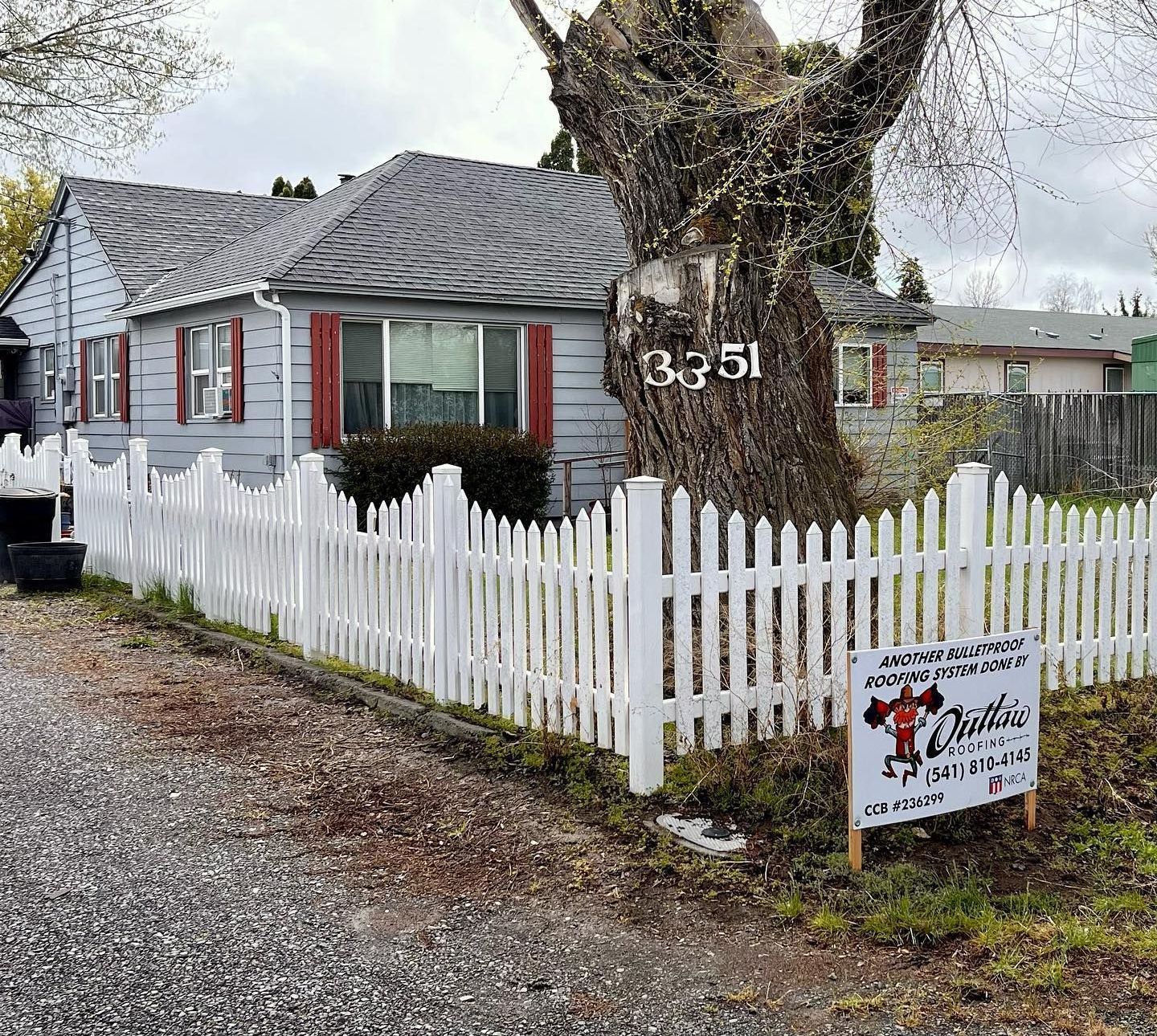
Roof Replacement in Merrill, OR , What Agricultural Irrigation Does to Valley Flashings and What Long-Held Family Properties Carry That Nobody Documented
Merrill sits in the Lost River basin on Highway 39, a small farming and ranching community where field irrigation operates through the growing season from spring into late summer. The elevated ambient humidity that irrigation creates on properties adjacent to the irrigated fields is not the same thing as rainfall. It does not produce ceiling stains or roof leaks. It holds moisture against valley flashing metal surfaces during weeks when no precipitation has fallen, sustaining the corrosion process at the flashing edges through the summer months rather than allowing the dry-interval pauses that give metal flashings their natural recovery time.
The gap between an $11,000 Merrill quote and a $15,500 Merrill quote on the same ranch home along Highway 39 typically traces to three items. The lower contractor has not assessed the irrigation-season valley flashing corrosion specifically, treating the valley intersections as standard rural Klamath County scope rather than as locations that have been under sustained seasonal moisture loading from adjacent field irrigation. The lower contractor has not checked the Klamath County permit history to identify whether the prior installation was documented, which changes the deck repair allowance and the compliance baseline for the new installation.
Outlaw Roofing, veteran-owned and based in Klamath Falls, treats Merrill as home-county work under CCB#236299. Three generations of Southern Oregon roofing experience. GAF, IKO, CertainTeed, WeatherBond, and PolyGlass certified. GreenSky financing up to 100 percent for qualified homeowners. Military discount for veterans and active service members. Call (541) 275-6189.
Signs a Merrill, OR Agricultural Corridor Property Has Reached Replacement Age


Valley Flashing Corrosion From Lost River Irrigation Season Humidity
Standard galvanized valley flashing corrodes at the exposed metal edges when sustained moisture contact prevents the dry-interval oxide formation that protects the metal between precipitation events. On Merrill properties along Highway 39 and Merrill Road adjacent to irrigated agricultural fields, the growing season irrigation that runs from April through September elevates ambient humidity in ways that keep valley flashing surfaces at or near the corrosion threshold for extended periods even when no rain has fallen.
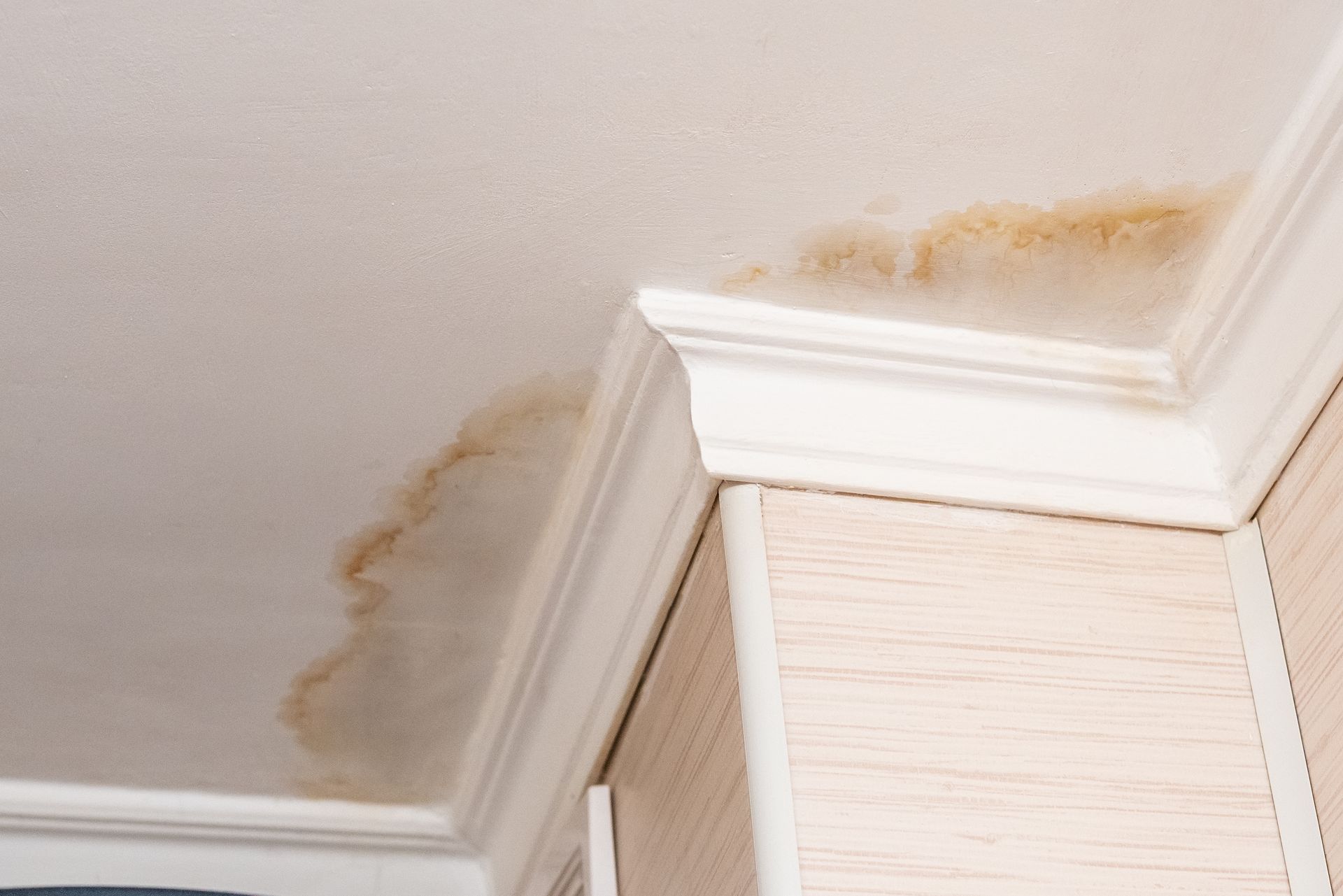
Undocumented Prior Work on Merrill Long-Held Agricultural Properties
Merrill properties that have been in the same family for two or three decades carry roofing histories built from memory rather than documentation. A homeowner on Merrill Road who knows the roof was redone around 2010 but cannot produce a permit or a contractor name is describing most of the long-held agricultural properties Outlaw inspects in this community. The absence of documentation does not confirm the work was done incorrectly. It means the installation standard cannot be verified from any source other than the current physical inspection.
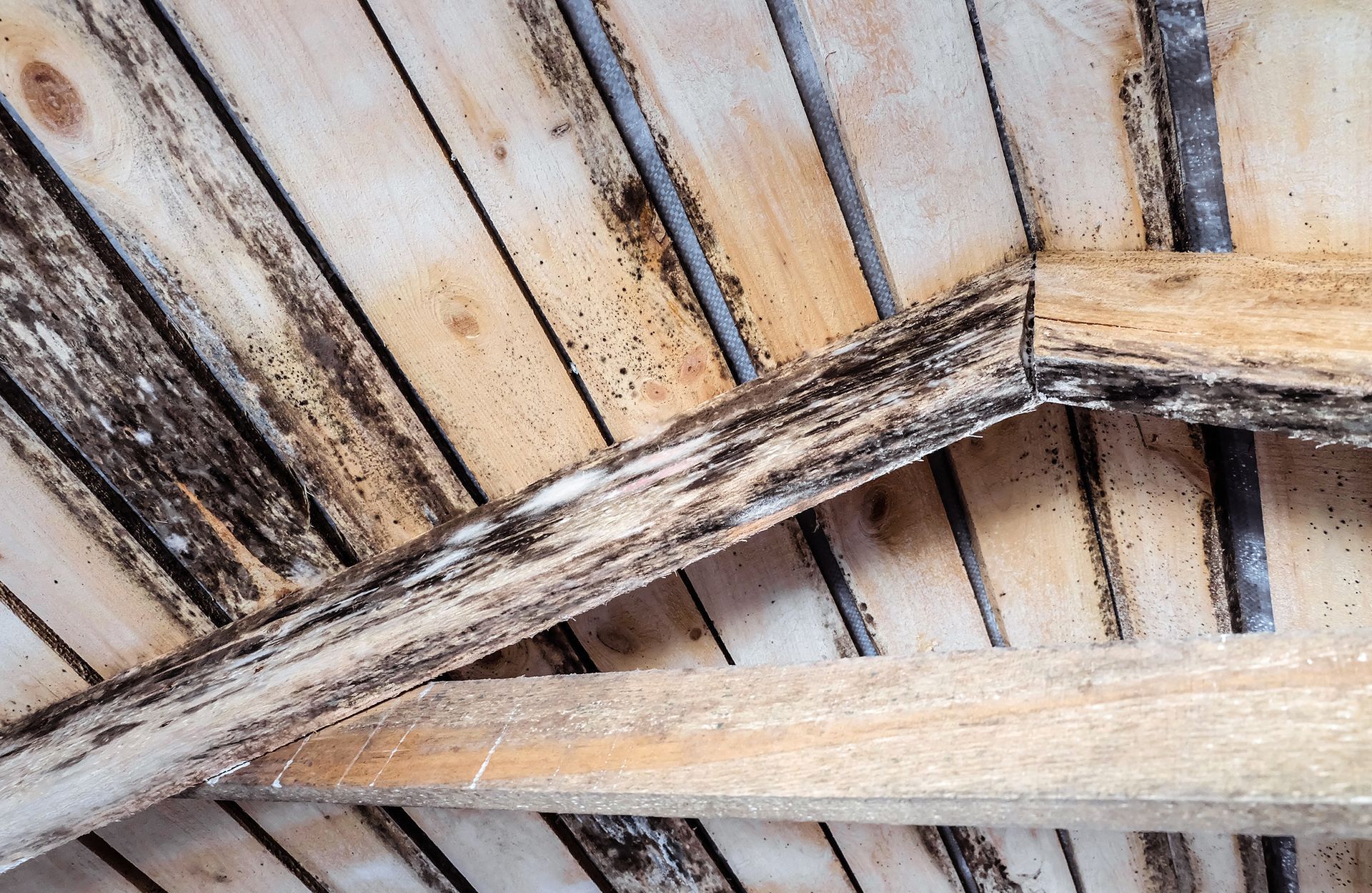
UV Wear on South and West Slopes From Open Klamath Basin Exposure
Merrill's position on the open Lost River basin floor delivers Klamath Basin summer UV to south and southwest-facing slopes without meaningful terrain shading. Surface temperatures on those faces reach 150 to 160 degrees on clear Klamath County summer afternoons. The UV mechanism on Merrill south slopes advances in parallel with the irrigation-season corrosion mechanism on valley intersections, creating properties where two primary failure modes are active on different parts of the same roofline through alternating seasons.
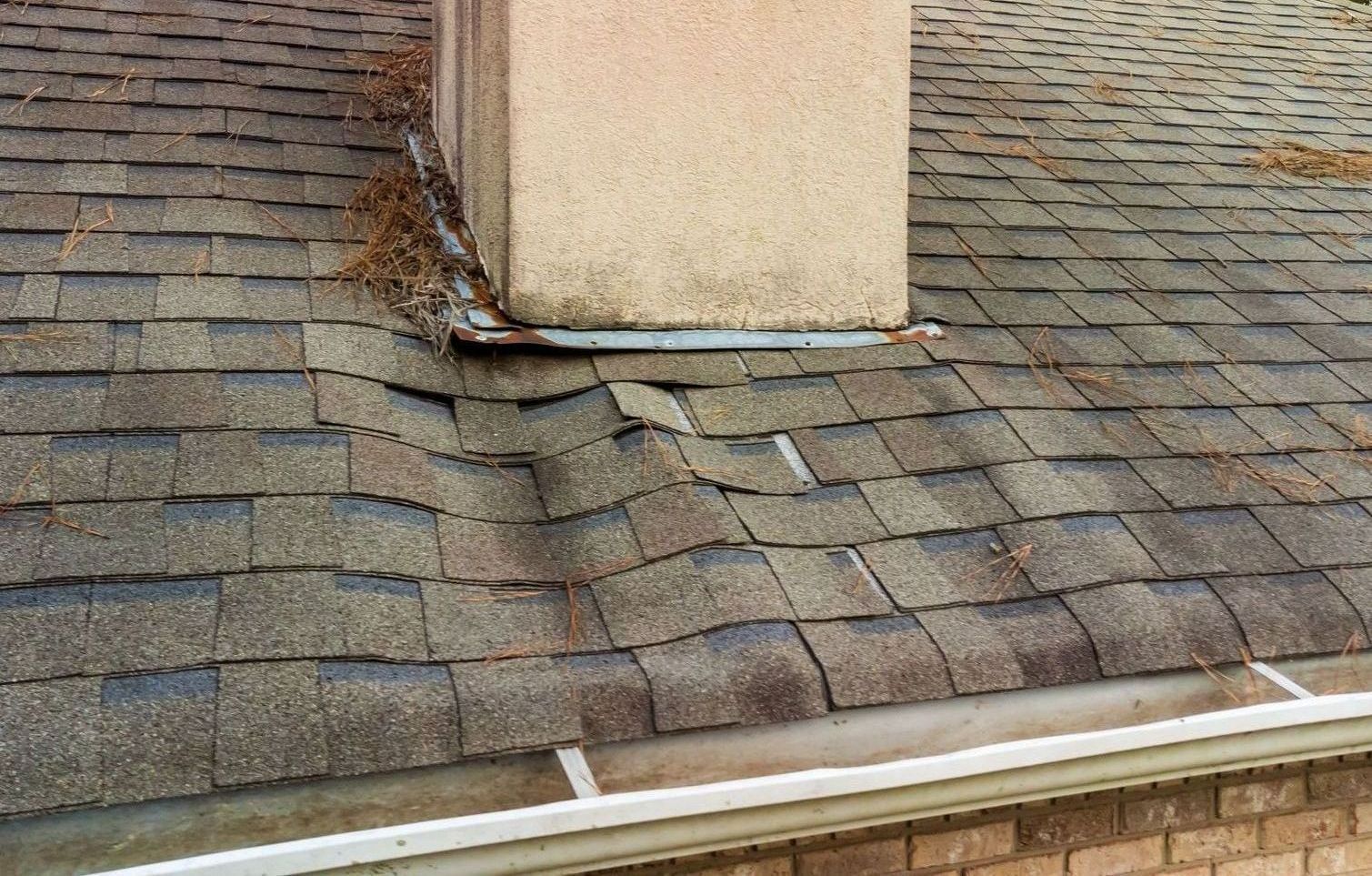
Freeze-Thaw and Snow Load on Merrill's Older Ranch and Farmhouse Inventory
A 1960s farmhouse chimney on Merrill Road has completed more than 60 complete Klamath Basin freeze-thaw cycles at every mortar joint and flashing embedment point. Each cycle expands and contracts the metal-to-masonry interface slightly. Over six decades that movement accumulates into the visible separation, caulk layering, and staining that Outlaw documents on older Merrill masonry during the inspection.
What to Look for on a Merrill, OR Property Before the Replacement Conversation
Valley Margin Staining and the Irrigation Season Indicator on Merrill Road Properties
On any Merrill property adjacent to irrigated agricultural fields, look at valley intersections from the yard specifically for the dark mineral staining at the flashing margin that indicates irrigation-season corrosion byproduct deposits on the adjacent shingle surface. This staining differs from debris accumulation by its color and location: it is a dark metallic-looking stain running from the valley center outward onto the shingle surface rather than a brown organic accumulation at the valley low point.
Verifying the Prior Permit History Before Any Replacement Is Authorized
Before discussing scope with any contractor for a Merrill replacement, checking the Klamath County Building Department permit records for the property address establishes whether prior roofing work was permitted and by whom. This check takes minutes and provides the factual baseline for the replacement discussion: either the prior installation is documented and verifiable, or it is not and the replacement creates that documentation for the first time.
Chimney Flashing Indicators on Merrill Ranch and Farmhouse Properties
On older Merrill ranch homes and farmhouse structures along Merrill Road with original brick or block chimneys, look at the chimney stack from every accessible angle for visible mortar gaps at the counter-flashing embedment courses, staining on the chimney face below the flashing line from water that has been entering above the flashing assembly, or any visible separation at the step flashing base where it meets the adjacent shingle course.
How Outlaw Roofing Manages Replacement Projects in Merrill, OR

Step 1 - Free Inspection Including Permit History Review and Irrigation Corridor Assessment
Every Outlaw inspection in Merrill checks the Klamath County Building Department permit history for the property address before the roofline assessment begins. The inspection then documents the valley intersection condition specifically for irrigation-season corrosion indicators on properties adjacent to the Lost River basin agricultural corridors. Chimney masonry condition is assessed at the counter-flashing embedment points on older farmhouse and ranch structures. Attic moisture history is reviewed where access is available.
Step 2 - Written Proposal With Irrigation Corridor Valley Scope and Permit Named
The Outlaw written proposal for every Merrill replacement names the specific product being installed, identifies the valley flashing specification for irrigation-adjacent intersections where the seasonal moisture loading warrants upgraded gauge, states the Klamath County Building Department permit fee as a separate line item, and lists deck repair allowance, labor, tear-off, and disposal each separately.
Step 3 - Klamath County Building Department Permit Before Any Tear-Off
Merrill is unincorporated Klamath County. Every roofing replacement files with the Klamath County Building Department. Outlaw submits the application before tear-off begins, manages the county inspection schedule, and delivers the permit closeout documentation to the Merrill homeowner at project completion.
Step 4 - Full Flashing Replacement With Irrigation-Aware Valley Specification
Ice and water shield at all eave edges and valley intersections is standard on every Outlaw Merrill replacement. On properties adjacent to the Lost River irrigation corridor where the inspection identified irrigation-season corrosion at valley intersections, valley flashing is specified at the gauge appropriate to the sustained seasonal moisture exposure those locations carry. Synthetic underlayment across the complete deck surface. New drip edge at all eave and rake edges. Complete pipe boot replacement at every plumbing penetration.
Step 5 - Cleanup, Permit Inspection, and Documentation Package
All debris removed. Magnetic sweep. Homeowner walkthrough. Klamath County permit closeout record and manufacturer warranty documentation delivered at project completion.
Replacement Material Choices for Merrill, OR Lost River Basin Properties
Architectural Asphalt With Irrigation-Corridor Valley Specification
GAF Timberline HDZ, IKO Cambridge, and CertainTeed Landmark architectural shingles are the standard replacement specification for Merrill residential and agricultural residential properties. On Merrill properties adjacent to irrigated Lost River basin fields, the valley flashing specification accompanying the installation determines how well the new system manages the seasonal moisture loading those intersections carry. Outlaw specifies valley flashing gauge at the level appropriate to each Merrill property's specific irrigation corridor exposure context based on the inspection findings rather than applying standard gauge to all intersections uniformly.
Standing Seam Metal for Merrill Long-Term Agricultural Property Owners
Standing seam metal eliminates the valley overflow vulnerability at irrigation-season moisture-exposed intersections by replacing open valley flashing with the concealed or closed panel system that metal installation uses. No open valley surface accumulating irrigation-season mineral deposits between wet events. No granule degradation under the Klamath Basin summer UV that Merrill's open Lost River basin position delivers to all slope orientations. Service life of 40-plus years.
What the Valley Flashing Line Item Reveals in a Competing Merrill Quote
A Merrill replacement proposal that does not separately address valley flashing gauge for properties adjacent to the Lost River irrigation corridor is treating all Merrill valley intersections as equivalent to valley intersections on non-irrigation-adjacent rural properties. The homeowner cannot evaluate this from a bundled materials total. An Outlaw proposal names the gauge at each valley intersection and identifies the irrigation corridor context where an upgrade over standard specification is warranted.
Repair or Replacement for Merrill, OR Agricultural Corridor Properties
When Targeted Repair Makes Sense on a Merrill Property
A Merrill ranch with a documented Oregon-permitted installation from 2013 with sound surrounding system condition where the inspection finds a single cracked pipe boot and no concurrent valley corrosion is a repair candidate. The irrigation corridor context does not make targeted repair impossible on a properly specified recent installation.
When Irrigation History and Undocumented Prior Work Make Replacement the Right Call
A Merrill Road property where the Klamath County permit history shows no prior documented installation, the inspection finds corrosion staining at two of three valley intersections consistent with irrigation-season moisture loading, no ice and water shield at either eave edge, cracked pipe boots at all four plumbing penetrations, and south-slope granule depletion consistent with a system at the end of its UV service window presents a clear case for replacement.
How Lost River Irrigation and Klamath Basin Climate Shape Roofline Conditions in Merrill, OR
A Merrill Road Property in June: What Irrigation Season Does to Valley Flashings Between Rain Events
Picture a Merrill Road ranch home backing to an irrigated barley field in the third week of June. No rain has fallen for 18 days. The irrigation system running on the adjacent field has been operating on a schedule since April, and the evaporation from that continuous soil moisture keeps the ambient humidity in the immediate vicinity at levels well above what the surrounding open Klamath Basin high desert would produce without irrigation. The valley flashing on the north-facing valley intersection at the rear of the ranch, the one closest to the irrigated field margin, has not been dried by precipitation in 18 days but has been experiencing nightly condensation from the elevated humidity the irrigation season sustains. Standard galvanized flashing forms its protective zinc oxide layer during dry intervals. Those dry intervals are not arriving at this valley intersection the way they arrive at the valley on a property a half-mile from the nearest irrigated field. The flashing surface that should be passivating between wet events is instead holding mineral-laden moisture from irrigation evaporation against the metal continuously. Six years of Lost River growing seasons running this cycle on the same valley intersection produce the corrosion pattern that distinguishes Merrill irrigation-corridor valleys from comparable-age valleys in dry-plain communities.
Klamath Basin Freeze-Thaw and Winter Precipitation on the Lost River Corridor
When the irrigation season ends in late September, the Merrill roofline transitions from the agricultural moisture environment of the growing season to the standard Klamath Basin winter: freeze-thaw cycling at every flashing joint and seal strip, occasional snow load depending on the year, and the concentrated winter precipitation events that test every valley and eave assembly.
High Desert Summer UV on Open Lost River Basin Properties
Merrill's position on the open Lost River basin floor delivers Klamath Basin summer UV across all slope orientations without terrain shading. South-facing slopes on Merrill properties along Highway 39 reach surface temperatures of 150 to 160 degrees on clear summer afternoons.
The Residential Character of Merrill, OR Along Highway 39, Merrill Road, and the Lost River Corridor
Merrill's housing stock reflects its character as a working agricultural community in the Lost River basin. Ranch homes and original farmstead structures from the 1950s through 1970s along Highway 39 and Merrill Road represent the oldest residential inventory, built during the period when the Lost River basin irrigation farming economy was at its most productive and housing supply followed agricultural employment.
More recent construction from the 1980s through early 2000s on residential lots in the community represents a smaller but present cohort approaching or entering the first replacement window.
A Recent Roof Replacement in Merrill, OR: What 12 Years of Undocumented Installation History Actually Looked Like
Two seasons ago Outlaw completed a full replacement on a 1968 ranch home on Merrill Road that backed to an irrigated field within 30 feet of the rear lot line. The homeowner had owned the property for nine years and had been told at purchase that the roof was about three years old, making it roughly 12 years old at the time of the inspection.
The inspection found the north and northwest valley intersections showing the irrigation-corridor corrosion staining pattern at both margins, with the northwest valley, which faced the irrigated field boundary, showing deeper staining consistent with more years of sustained seasonal moisture exposure than the north valley farther from the field edge. In the attic, staining at the base of the northwest valley confirmed that the corrosion had progressed to through-corrosion at the flashing edges. The south slope showed granule depletion consistent with a 12-year-old system in the open Lost River basin UV environment. Two of four pipe boots showed collar cracking. The chimney counter-flashing had been caulked at the rear face. No ice and water shield was present at either eave edge. The layer count during tear-off confirmed the prior installation had been applied over the original 1968 roofing material as a second layer, meaning the property was at the Oregon code maximum for roofing layers and required full tear-off to the original deck. Outlaw's scope: full two-layer tear-off, deck board replacement at the northwest valley base stain location, CertainTeed Landmark architectural asphalt, heavier gauge valley flashing at the northwest irrigation-adjacent valley, standard gauge at the two remaining valleys, ice and water shield at both eave edges and all valley intersections, complete chimney flashing restoration with mortar repointing at the caulked rear face, four new pipe boots, synthetic underlayment, new drip edge, and Klamath County Building Department permit. Total: $15,800.
Why Merrill, OR Homeowners Choose Outlaw Roofing for Agricultural Corridor Replacements
- Klamath Falls Based With Lost River Basin Agricultural Knowledge
Outlaw Roofing operates from Klamath Falls and serves Merrill as a regular part of the Klamath County service area.
- CCB#236299 Verifiable at oregon.gov/ccb
Pull up oregon.gov/ccb, enter CCB#236299, and current registration status comes back immediately.
- Manufacturer Certified for Extended Warranty Coverage on Merrill Replacements
GAF, IKO, CertainTeed, WeatherBond, and PolyGlass certifications allow Outlaw to issue the extended manufacturer warranty tiers that require certified installation.
- Klamath County Building Department Permit Filed on Every Merrill Project
Outlaw submits the Klamath County Building Department permit application before any Merrill tear-off is scheduled, tracks the county inspection appointments, and puts the completed closeout record in the homeowner's hands the day the job finishes.
- Free Inspection Including Prior Permit History Assessment
Every Merrill inspection is free and includes the Klamath County permit history check as a standard first step. The written assessment documents irrigation-corridor valley condition, chimney masonry status on older properties, and the prior installation compliance baseline before any scope or cost is discussed.
What Roof Replacement Actually Costs in Merrill, OR
Merrill replacement costs reflect the irrigation-corridor valley specification items and the two-layer tear-off situations that undocumented prior installation history creates more frequently here than in communities with more consistent permit documentation.
Ranch Homes Along Highway 39 and Merrill Road: $12,000 to $17,000
Ranch homes from the 1950s through 1970s along Highway 39 and Merrill Road in the 1,000 to 1,800 square foot range typically run $12,000 to $17,000 for standard architectural asphalt with irrigation-corridor valley flashing specification where warranted, ice and water shield throughout, complete pipe boot replacement, and Klamath County permit. Properties requiring full two-layer tear-off add $1,000 to $2,000 depending on measured roof area.
Older Farmsteads and Properties With Chimney Restoration Scope: $14,000 to $20,000
Farmstead properties with brick or block chimney restoration scope, second-layer tear-off, and deck repair at irrigation-corridor valley stain locations typically run $14,000 to $20,000. Standing seam metal on Merrill agricultural properties runs $30,000 to $46,000 depending on roof area. Klamath County permit fees included as separate line items. GreenSky financing up to 100 percent for qualified homeowners.
What Experienced Roofers Need to Know About Merrill, OR Agricultural Properties
Layer Count Assessment Before Any Merrill Proposal Is Finalized
Merrill properties with undocumented prior installation histories carry an elevated probability of two-layer situations compared to communities with more consistent permit records. Outlaw establishes the layer count during the inspection phase, before any proposal is finalized, so the homeowner understands whether full two-layer tear-off is required under Oregon code before any cost is committed.
Klamath County Building Department for All Merrill Replacements
No city-level permit office exists in Merrill. The Klamath County Building Department is the sole permitting authority.
How Long a New Roof Lasts on a Merrill, OR Lost River Basin Property
Architectural Asphalt With Irrigation-Corridor Specification
Quality architectural asphalt installed with irrigation-corridor valley flashing specification at field-adjacent intersections, ice and water shield at all eave edges and valleys, complete chimney flashing restoration where warranted, and a Klamath County-permitted installation delivers 22 to 26 years of reliable service on south-facing slopes and 24 to 27 years on north-facing slopes with less UV loading.
Architectural Asphalt With Irrigation-Corridor Specification
Quality architectural asphalt installed with irrigation-corridor valley flashing specification at field-adjacent intersections, ice and water shield at all eave edges and valleys, complete chimney flashing restoration where warranted, and a Klamath County-permitted installation delivers 22 to 26 years of reliable service on south-facing slopes and 24 to 27 years on north-facing slopes with less UV loading.
Maintenance for Merrill Irrigation Corridor Properties
Clear valley intersections at the end of each irrigation season before Klamath Basin wet-season precipitation arrives. This single action, specific to Merrill's agricultural irrigation context, removes the season's accumulated mineral deposits from the valley surface before they hold additional winter moisture against the flashing edges.

Quick Answers - Roof Replacement in Merrill, OR
Frequently Asked Questions - Roof Replacement in Merrill, OR
Residential Roofing Services We Provide in Merrill, OR
Residential Roof Replacement
Complete roofing system replacements for Merrill, OR agricultural corridor properties along Highway 39 and Merrill Road. Prior permit history review before scope is proposed. Irrigation-corridor valley flashing gauge specified by intersection. Two-layer tear-off where required by Oregon code. Klamath County Building Department permit management. CCB#236299.
Residential Roofing Contractor
For Merrill homeowners assessing whether irrigation-corridor valley corrosion warrants full replacement or targeted repair, the complete repair versus replacement decision framework for Lost River basin agricultural properties is on our Merrill residential roofing contractor page.
Residential Roof Repair
For Merrill properties where the system still has life and failures are isolated, Outlaw scopes targeted repair as a standalone written proposal: irrigation-corridor valley replacement, farmhouse chimney flashing restoration, individual pipe boot failures. Written scope and fixed price before any work begins. CCB#236299.
Metal Roofing
Standing seam metal for Merrill agricultural property owners ending the irrigation-season valley corrosion cycle permanently. No open valley surface accumulating Lost River basin irrigation humidity between precipitation events. No undocumented installation history to inherit. Documented 40-plus year service life.

Schedule Your Free Roof Replacement Estimate in Merrill Today
The Lost River irrigation season loads valley flashings on Merrill agricultural corridor properties with moisture that no rain chart reflects and no standard Klamath County scope specifically addresses. Riley comes to Merrill, maps each valley intersection against the adjacent field boundary, checks the Klamath County permit history before proposing any scope, and delivers a written proposal with irrigation-aware valley specification and every other cost element named before any commitment is made. Call (541) 275-6189 or visit outlawroofing.net to schedule your free Merrill inspection. Veteran-owned. CCB#236299.