Residential Roof Replacement in Lithia Park OR
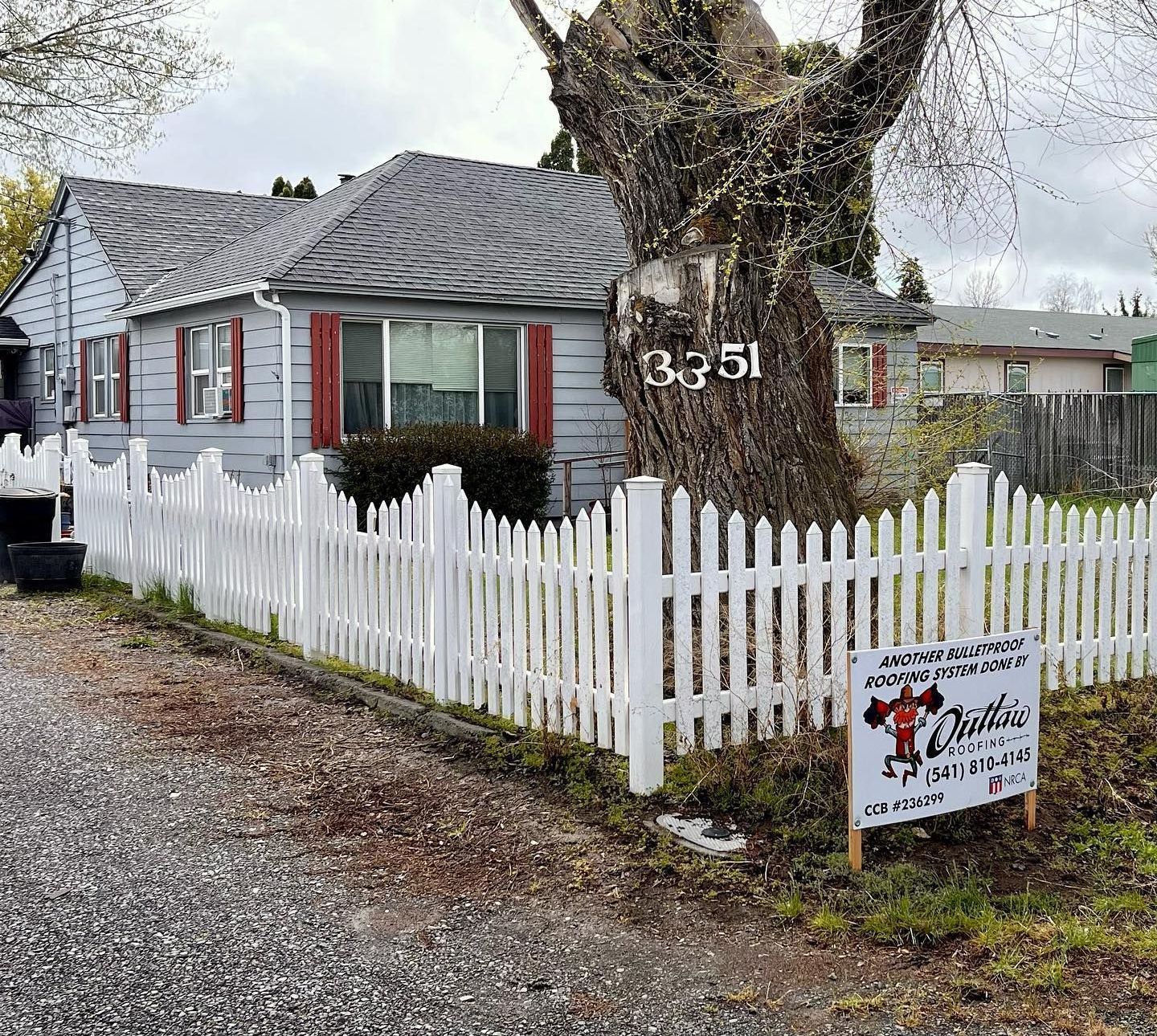
Roof Replacement in Lithia Park, OR , What Urban Tree Canopy Does to Valley Intersections and Why the City of Klamath Falls Permit Is the One That Counts Here
Lithia Park is an established residential neighborhood in Klamath Falls adjacent to Moore Park, with the mature tree canopy that marks older urban residential development throughout the area. Those trees are the defining roofing variable for Lithia Park properties along South 6th Street and Klamath Avenue that do not exist for Klamath Falls properties in newer developments without comparable canopy coverage. Mature conifers and deciduous trees depositing needles, leaves, seed pods, and debris into valley intersections throughout the year sustain biological growth and debris accumulation on shaded north and west slope surfaces at levels that open-sky Klamath Falls properties do not experience.
The second Lithia Park-specific fact is the permit authority. Lithia Park is within Klamath Falls city limits. Every roofing replacement in this neighborhood files with the City of Klamath Falls Building Department, not with the Klamath County Building Department that covers the rural and unincorporated communities Outlaw also serves. A contractor who habitually works in unincorporated Klamath County and files every permit with the county may file the wrong authority on a Lithia Park project. The City of Klamath Falls permit is the one that creates the legally compliant installation record for this address. The gap between an $11,500 Lithia Park quote and a $15,000 Lithia Park quote typically traces to three things: the City of Klamath Falls permit fee omitted, standard valley gauge on canopy-shaded intersections that warrant upgraded specification for the debris and moisture accumulation they carry, and algae-resistant product on canopy-shaded north and west slopes where the debris layer sustains biological growth.
Veteran-owned and based two miles from Moore Park, Outlaw carries CCB#236299 and Riley's three generations of Klamath Falls roofing knowledge to every Lithia Park inspection. GAF, IKO, CertainTeed, WeatherBond, and PolyGlass certified. GreenSky financing up to 100 percent for qualified homeowners. Military discount for veterans and active service members. Call (541) 275-6189.
Signs a Lithia Park, OR Urban Residential Property Has Reached Replacement Age

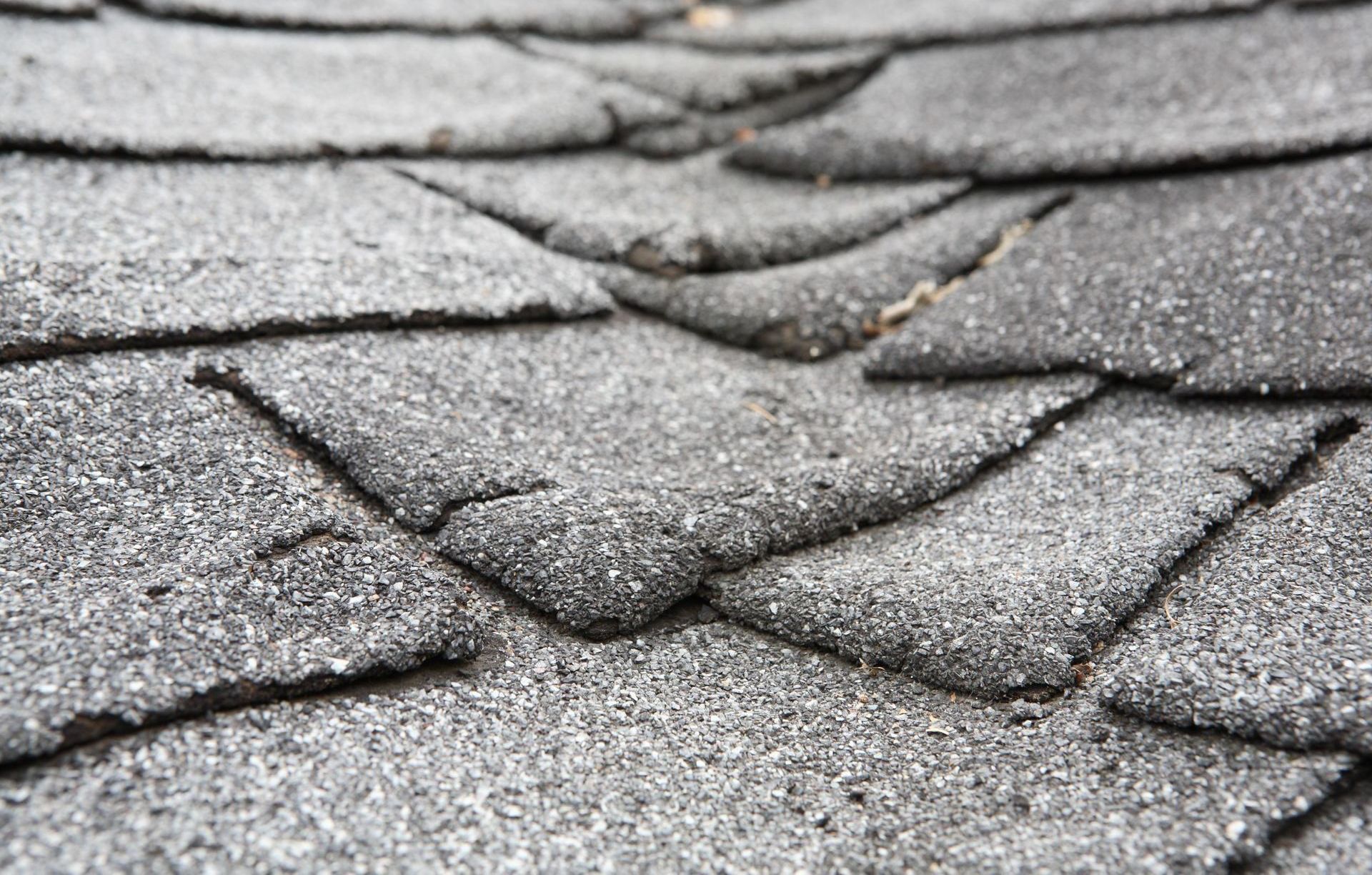
Debris-Loaded Valley Intersections Under Tree Canopy on South 6th Street and Klamath Avenue
Valley intersections on Lithia Park properties under mature conifer or deciduous canopy accumulate organic debris continuously throughout the year. Needle drop from conifers runs year-round. Leaf drop from deciduous trees concentrates in fall. Seed pod and organic material accumulation from multiple tree species creates a debris layer that compresses and holds moisture against the valley flashing surface between rain events. The metal at the flashing edges beneath that debris layer is in sustained contact with moist organic material rather than the clean-metal-to-air exposure that allows galvanized steel to maintain its protective oxide layer.
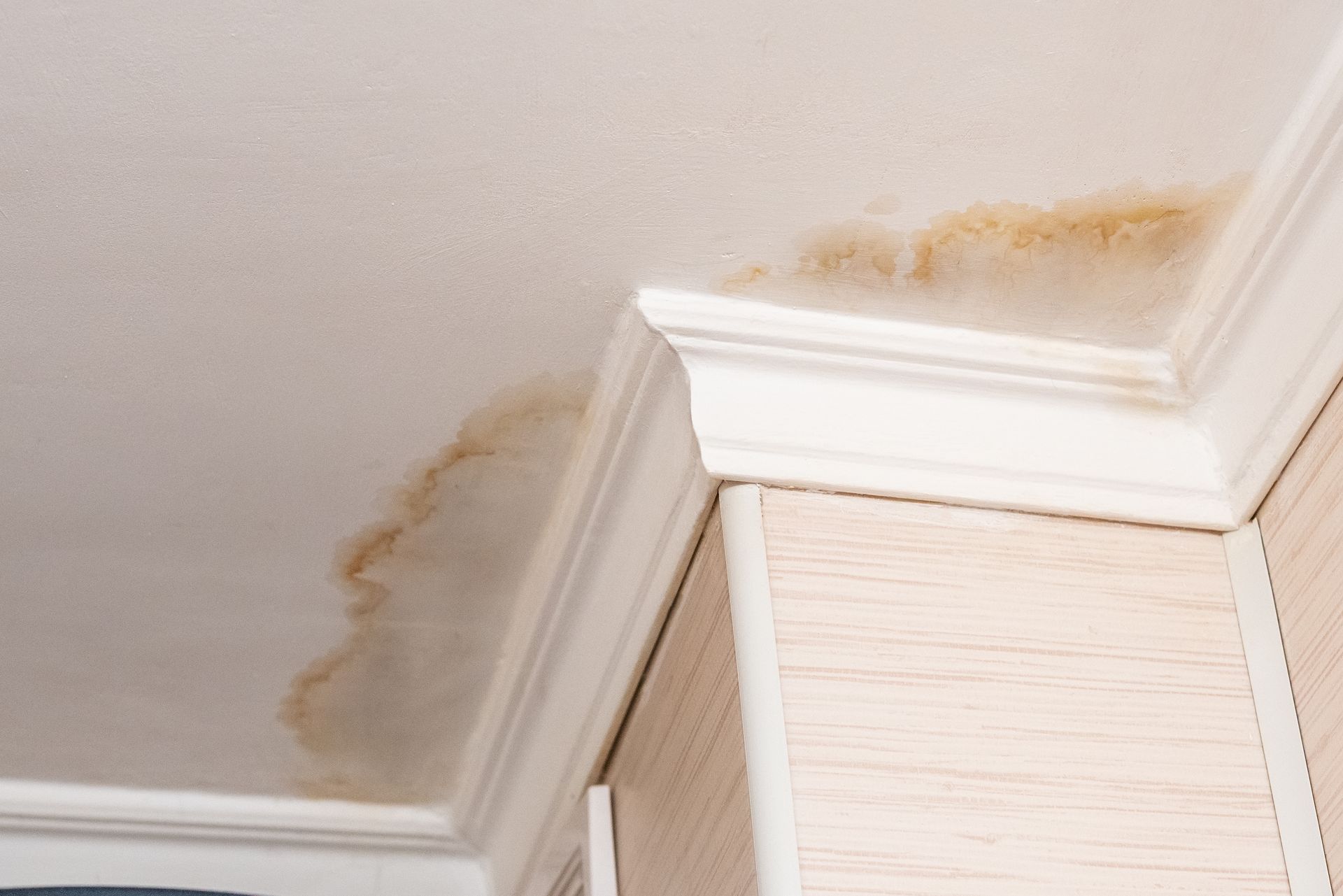
Biological Growth on North and West Slopes Shaded by Mature Urban Canopy
North and west-facing slopes on Lithia Park properties that are partially or fully shaded by adjacent mature trees carry biological growth conditions that differ from open-sky Klamath Falls residential properties. Shade reduces the UV exposure that would otherwise inhibit biological growth establishment on those faces. Combined with the moisture the debris layer holds against the shingle surface on canopy-shaded slopes, these faces sustain biological growth at the kind of pace typically associated with Pacific Northwest coastal properties rather than the high-desert Klamath Basin environment most Klamath Falls lots experience.
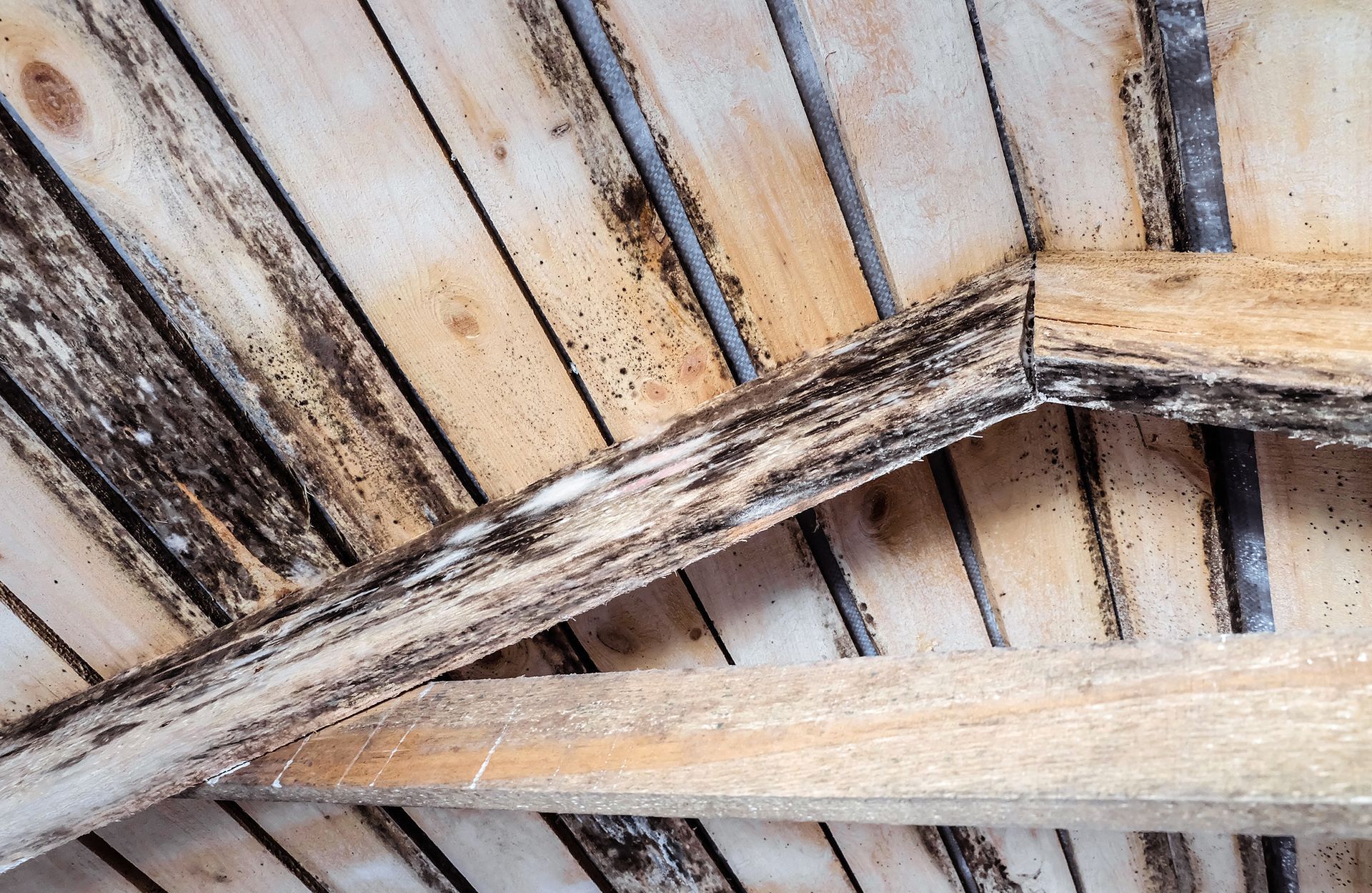
UV Wear on South-Facing Open-Sky Slopes From Klamath Basin Summer Heat
Lithia Park south-facing slopes that extend beyond canopy cover toward open sky receive the Klamath Basin summer UV loading without terrain shading. Surface temperatures on those exposed south faces reach 150 to 160 degrees on clear summer afternoons.
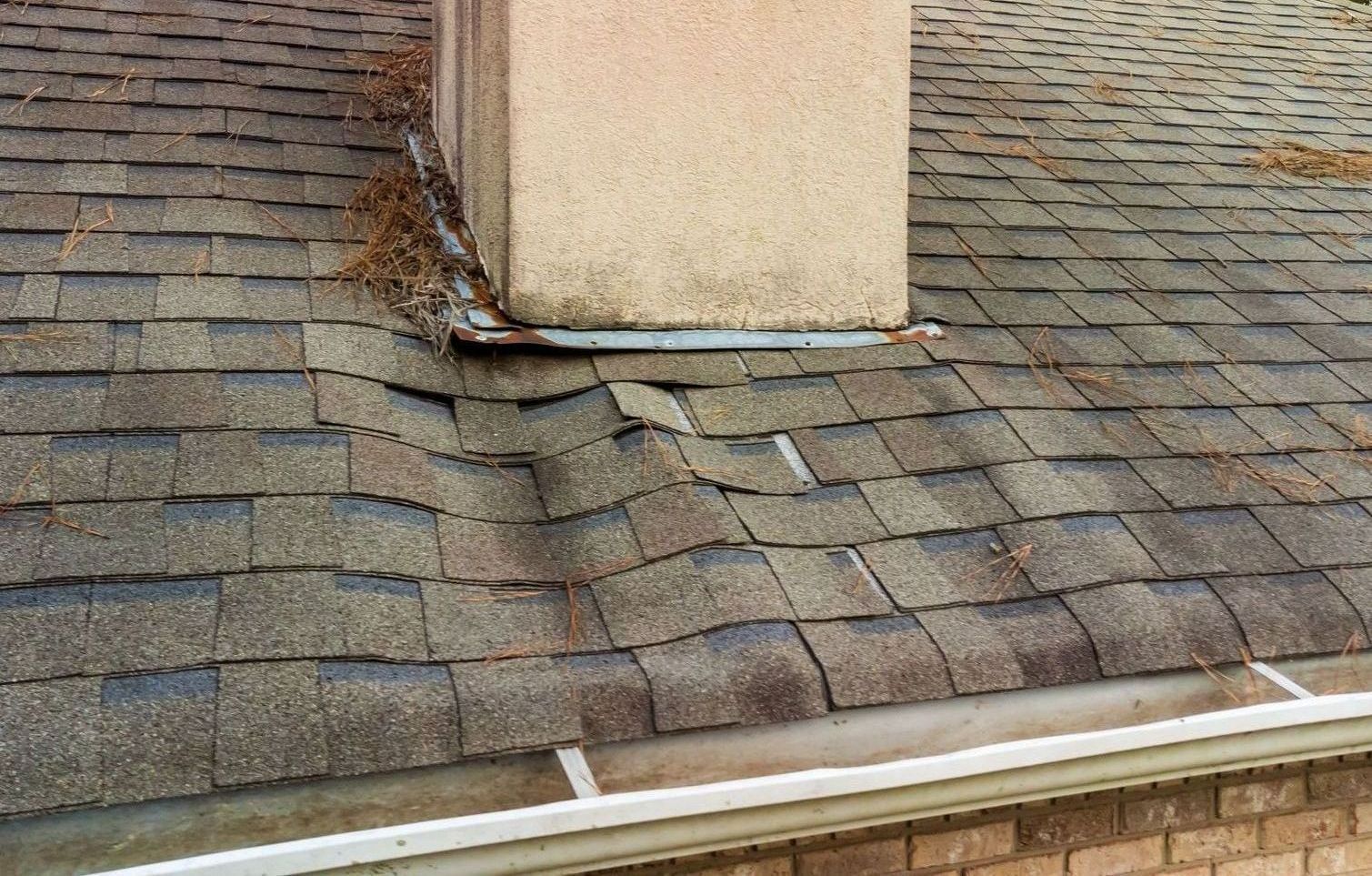
Klamath Basin Winter Cycling on Older Lithia Park Urban Residential Stock
Lithia Park's established residential inventory includes homes from the 1940s through 1970s that have been through 50 to 80 Klamath Basin winters. Every chimney flashing joint and seal strip on those older structures carries the accumulated wear of the freeze-thaw cycling at Klamath Falls elevation.
What to Look for on a Lithia Park, OR Property Before Calling for an Estimate
Valley Condition Check as the Primary Lithia Park Canopy-Property Indicator
On any Lithia Park property with mature canopy overhead, valley intersections should be inspected from the ground for debris accumulation depth and for the dark organic staining at the flashing margins that indicates the debris-moisture mechanism has been operating at that valley surface. A valley intersection on a Lithia Park property that shows organic dark staining running from the flashing center outward onto the adjacent shingle surface has been carrying the debris-moisture corrosion cycle long enough to deposit visible byproduct at the margin.
Canopy-Shaded Slope Surface Inspection
Look at north and west-facing slopes that receive significant shade from adjacent mature trees specifically for early-stage biological growth discoloration before coverage is established. On Lithia Park properties under heavy conifer canopy, dark streaking running downslope from the ridge on shaded faces indicates algae colony tracks following moisture flow.
City of Klamath Falls Permit History Verification
Before any Lithia Park replacement is authorized, checking the City of Klamath Falls Building Department permit records for the property address establishes whether prior roofing work was filed under the correct city authority. Properties where prior work was permitted under Klamath County Building Department rather than the City of Klamath Falls carry a permit record in the wrong database for the actual jurisdiction.
How Outlaw Roofing Manages Replacement Projects in Lithia Park, OR

Step 1 - Free Inspection With Canopy Context Assessment and City Permit Verification
Every Outlaw inspection in Lithia Park identifies the canopy coverage over each roofline slope, documents valley intersection debris accumulation depth and flashing margin staining condition, assesses biological growth status on shaded north and west slopes, and verifies the City of Klamath Falls permit history for the address. All findings are photographed and documented before any scope discussion.
Step 2 - Written Proposal With Canopy-Specific Valley and Algae-Resistant Scope Named
The Outlaw written proposal for every Lithia Park replacement names the algae-resistant product specification for canopy-shaded slopes, identifies valley flashing gauge for debris-loaded intersections where the canopy context warrants upgraded specification, states the City of Klamath Falls Building Department permit fee as a separate line item, and lists every other cost element separately.
Step 3 - City of Klamath Falls Building Department Permit Before Tear-Off
City of Klamath Falls Building Department jurisdiction covers every Lithia Park address. Outlaw files the city permit application before scheduling any tear-off, manages every required city inspection, and puts the permit closeout documentation in the homeowner's hands the day the project wraps.
Step 4 - Canopy-Aware Installation With Full Flashing Scope
Every Lithia Park replacement Outlaw performs specifies algae-resistant product on canopy-shaded orientations and assesses each valley intersection individually for the debris accumulation depth that indicates whether standard or upgraded gauge flashing is warranted at that specific location. Ice and water shield at all eave edges and valley intersections. Synthetic underlayment across the complete deck surface. New drip edge at all eave and rake edges.
Step 5 - Cleanup and City Permit Closeout
Full debris removal including any organic material dislodged from valley and eave locations during installation. Magnetic sweep. Homeowner walkthrough. City of Klamath Falls permit closeout record and manufacturer warranty documentation in hand at project completion.
Replacement Material Choices for Lithia Park, OR Urban Canopy Properties
Algae-Resistant Asphalt Standard on All Canopy-Shaded Slopes
GAF Timberline HDZ, IKO Cambridge, and CertainTeed Landmark with algae-resistant copper granule technology are the standard specification for Lithia Park canopy-shaded slope orientations. Algae-resistant specification on Lithia Park shaded north and west slopes is the correct material response to the combined shade and debris-moisture environment those faces carry under mature urban canopy. On south-facing slopes receiving direct Klamath Basin summer UV, the same products deliver the UV resistance appropriate to the open-sky exposure.
Standing Seam Metal for Lithia Park Long-Term and Canopy-Heavy Properties
Metal roofing permanently eliminates the biological growth surface and debris-driven valley corrosion on Lithia Park canopy properties. No granule surface for biological growth to colonize on shaded slopes. Metal valley systems shed organic debris rather than accumulating it against the flashing surface. Class A fire rating. Service life of 40-plus years. For Lithia Park homeowners who have managed biological growth and valley debris accumulation across prior replacement cycles under established canopy that is not being removed, metal addresses the root cause rather than the symptom.
What the Algae-Resistant and Valley Gauge Items Reveal in a Competing Lithia Park Quote
A Lithia Park replacement proposal that does not separately name algae-resistant product for shaded slopes is treating a canopy-adjacent urban property the same as an open-sky Klamath Falls property. A proposal that does not address valley flashing gauge for debris-loaded intersections is applying standard specification to locations that carry a sustained organic moisture environment.
Repair or Replacement for Lithia Park, OR Urban Residential Properties
When Targeted Repair Makes Sense on a Lithia Park Property
A Lithia Park property with a documented city-permitted installation from 2015 using algae-resistant product, where the inspection finds a single failed pipe boot and minimal biological growth on shaded slopes consistent with good recent product performance, is a repair candidate. The canopy environment does not rule out repair on well-specified recent installations.
When Canopy Wear History Makes Replacement the Right Call
A Lithia Park property on South 6th Street where the inspection finds biological growth covering 50 percent of canopy-shaded slope surfaces, organic debris-loaded valley intersections showing flashing margin staining at two of three valleys, UV granule depletion on the south-facing open slope, and no prior city permit record for the current installation represents a replacement.
How Urban Tree Canopy and the Klamath Basin Climate Create Lithia Park's Specific Roofing Environment
A South 6th Street Property in October: What Canopy Drop Season Does to Valley Intersections
Picture a South 6th Street property with a mature ponderosa pine on the north lot line and a large cottonwood on the west side. October leaf drop from the cottonwood combined with year-round needle accumulation from the pine fills both valley intersections on the north-facing slopes within a week of each major wind event. The debris in those valleys does not dry out the way debris does in valleys on open-sky lots. The canopy above keeps those valley surfaces in partial shade through most of the day, and the organic layer that accumulates holds moisture from the previous rain event against the flashing surface until the next precipitation arrives. Between October and March, both valley intersections on that property's north slopes may spend the majority of days with organic debris in sustained contact with the flashing metal rather than the clean-dry-between-events exposure that allows galvanized steel to maintain its protective layer.
Klamath Basin Winter on Urban Klamath Falls Properties
Lithia Park's position within Klamath Falls city limits at roughly 4,100 feet delivers the same Klamath Basin freeze-thaw cycling and occasional snow load that every Klamath Falls residential property carries through winter. The canopy context that distinguishes Lithia Park adds a debris accumulation component to the standard winter moisture load on valley intersections and eave edges.
Summer UV on the Open and Shaded Slopes of the Same Lithia Park Roofline
The UV exposure differential between canopy-shaded north slopes and open-sky south slopes on the same Lithia Park roofline produces two distinct primary wear mechanisms on opposite faces simultaneously. South slopes age through UV granule depletion at the Klamath Basin baseline. Shaded north and west slopes age through biological growth and debris-moisture mechanical edge lifting.
The Residential Character of Lithia Park, OR Near Moore Park and the Link River Corridor
Lithia Park's residential character reflects its position as one of Klamath Falls' established older neighborhoods, with housing stock ranging from Craftsman and bungalow construction from the 1920s through 1940s in the blocks nearest Moore Park to mid-century ranch homes from the 1950s and 1960s along South 6th Street and the connecting corridors.
Properties in the oldest section of Lithia Park, the blocks between Moore Park and the main residential corridors, carry the deepest canopy coverage and the most complex prior roofing histories. Some properties have been in families long enough that the current owners cannot fully document prior replacement cycles. Others have been through the institutional ownership period that many older urban properties experience, where maintenance records are inconsistent.
A Recent Roof Replacement in Lithia Park, OR: What the Debris Layer Had Been Hiding
Last fall Outlaw replaced the full system on a 1952 ranch on South 6th Street with a ponderosa pine on the north lot line whose canopy covered the rear two-thirds of the north slope. The homeowner had purchased the property three years earlier and had been told the roof was approximately 10 years old.
The inspection found both north-facing valley intersections loaded with compacted needle debris, the organic layer approximately 2 inches deep at the valley low points. Pulling back the debris layer at the northeast valley revealed flashing margin corrosion consistent with four to six years of sustained organic moisture contact, with the metal surface visibly pitted at the lower flashing edge. In the attic, staining at the northeast valley base confirmed that the corrosion had progressed to intermittent through-corrosion during heavy precipitation events. The north and northwest shaded slopes carried biological growth at approximately 40 percent coverage. The south slope showed UV granule depletion consistent with 11 years of Klamath Basin summer exposure. Outlaw's scope: GAF Timberline HDZ with algae-resistant specification across all slopes, heavier gauge valley flashing at both north-facing debris-loaded intersections, standard gauge at the remaining south-facing valley, ice and water shield throughout, complete pipe boot and chimney flashing replacement, deck board replacement at the northeast valley base stain location, synthetic underlayment, new drip edge, and City of Klamath Falls permit. Total: $14,800.
Why Lithia Park, OR Homeowners Choose Outlaw Roofing for Urban Canopy Replacements
- Klamath Falls Home Office , Lithia Park Is Local Territory
Outlaw operates from Klamath Falls. Lithia Park is a neighborhood Riley drives through regularly. The urban canopy conditions, the older housing stock near Moore Park, and the City of Klamath Falls permit authority that applies here are all part of the local market knowledge built over three generations of Southern Oregon roofing experience in this basin.
- CCB#236299 , Confirmed in Seconds at oregon.gov/ccb
Enter CCB#236299 at oregon.gov/ccb before authorizing any Lithia Park replacement. Current registration status returns immediately. Any contractor without a verifiable active Oregon CCB number has no legal authorization to perform roofing work at a Lithia Park address.
- Manufacturer Certified Including Algae-Resistant Product Expertise
GAF, IKO, CertainTeed, WeatherBond, and PolyGlass certifications allow Outlaw to issue the extended warranty tiers restricted to certified contractors. The GAF System Plus Limited Warranty covering materials and workmanship, issued in the homeowner's name and transferable within the coverage period, is the verified installation record that future Lithia Park property transactions can reference.
- City of Klamath Falls Building Department Permit on Every Lithia Park Replacement
Every Lithia Park replacement files with the City of Klamath Falls Building Department, not with Klamath County. Outlaw confirms city jurisdiction for every Lithia Park address and delivers the city permit closeout documentation at project completion.
- Free Inspection Including Canopy Assessment and Prior Permit Verification
Every Lithia Park inspection is free. The written assessment documents canopy coverage by slope, valley debris and corrosion status, biological growth condition on shaded faces, and the City of Klamath Falls prior permit record before any cost is discussed.
What Roof Replacement Actually Costs in Lithia Park, OR
Three items push Lithia Park replacement costs above open-sky Klamath Falls comparables of similar square footage: algae-resistant product on canopy-shaded slopes, individual valley intersection gauge assessment for debris-loaded locations, and the City of Klamath Falls permit that open-lot contractors sometimes omit.
Older Ranch and Bungalow Properties Near Moore Park: $13,000 to $18,000
Ranch homes and bungalows from the 1940s through 1960s in the blocks adjacent to Moore Park with mature canopy overhead typically run $13,000 to $18,000 for algae-resistant architectural asphalt with upgraded valley flashing gauge at canopy-loaded intersections, ice and water shield throughout, complete pipe boot and chimney flashing replacement, and City of Klamath Falls permit.
Mid-Century Ranch Properties Along South 6th Street: $12,000 to $16,500
Ranch homes from the 1950s and 1960s along South 6th Street and connecting corridors with moderate canopy coverage typically run $12,000 to $16,500. Standing seam metal on Lithia Park properties runs $32,000 to $48,000. City of Klamath Falls permit fees included as separate line items. GreenSky financing up to 100 percent for qualified homeowners.
What Experienced Roofers Need to Know About Lithia Park, OR Urban Canopy Properties
City of Klamath Falls Versus Klamath County Permit Authority
Lithia Park is within Klamath Falls city limits and files with the City of Klamath Falls Building Department. A contractor accustomed to filing Klamath County permits for rural and unincorporated work may file the wrong authority on a Lithia Park project. Outlaw confirms city jurisdiction for every Lithia Park address before any application is submitted.
Debris-Load Assessment at Each Valley Intersection
On Lithia Park canopy properties, each valley intersection is assessed individually for debris accumulation depth and the flashing margin condition beneath the debris layer before any proposal is finalized.
How Long a New Roof Lasts on a Lithia Park, OR Urban Canopy Property
Algae-Resistant Asphalt on Canopy-Shaded Lithia Park Slopes
Quality algae-resistant architectural asphalt installed with upgraded valley flashing gauge at debris-loaded intersections, ice and water shield throughout, and City of Klamath Falls-permitted installation delivers 20 to 25 years on canopy-shaded north and west slopes and 22 to 26 years on open-sky south slopes. The algae-resistant specification extends the shaded slope range by inhibiting biological growth establishment under the combined shade and debris-moisture environment.
Metal Roofing on Lithia Park Urban Properties
Standing seam metal delivers 40-plus years on Lithia Park properties with no biological growth surface on shaded slopes and no open valley accumulating organic debris under tree canopy.
Quick Answers - Roof Replacement in Lithia Park, OR
Frequently Asked Questions - Roof Replacement in Lithia Park, OR
Residential Roofing Services We Provide in Lithia Park, OR
Residential Roof Replacement
Complete roofing system replacements for Lithia Park, OR urban canopy properties near Moore Park. Algae-resistant specification standard on canopy-shaded slopes. Valley flashing gauge assessed individually at debris-loaded intersections. City of Klamath Falls Building Department permit management. CCB#236299.
Residential Roofing Contractor
Still determining whether canopy-driven valley corrosion or shaded-slope biological growth justifies full replacement versus targeted repair on your Lithia Park property? The detailed assessment framework for urban canopy situations is on our Lithia Park residential roofing contractor page.
Residential Roof Repair
Targeted repair for Lithia Park canopy-loaded valley flashing corrosion, biological growth infiltration on shaded slopes, pipe boot failures, and chimney flashing restoration on older Moore Park-adjacent properties. Written scope and fixed price before any work. CCB#236299.
Metal Roofing
Standing seam metal for Lithia Park homeowners permanently eliminating biological growth on canopy-shaded slopes and organic debris accumulation in valley intersections under established urban tree canopy. No granule surface to colonize. Metal valleys shed debris rather than collecting it. 40-plus year service life. WeatherBond and PolyGlass certified
Schedule Your Free Roof Replacement Estimate in Lithia Park Today
The organic debris that Lithia Park's mature urban canopy deposits into valley intersections every year is not going away, and neither is the biological growth it sustains on shaded north slopes under ponderosa pine and cottonwood canopy adjacent to Moore Park. Riley comes to Lithia Park, removes the debris from each canopy-loaded valley during the inspection to assess the actual flashing condition beneath it, confirms the City of Klamath Falls permit authority before any application is filed, and delivers a written proposal with canopy-aware specification on every slope that faces the trees. Call (541) 275-6189 or visit outlawroofing.net for your free Lithia Park inspection. Veteran-owned. CCB#236299.