Residential Roof Replacement in Central Point OR
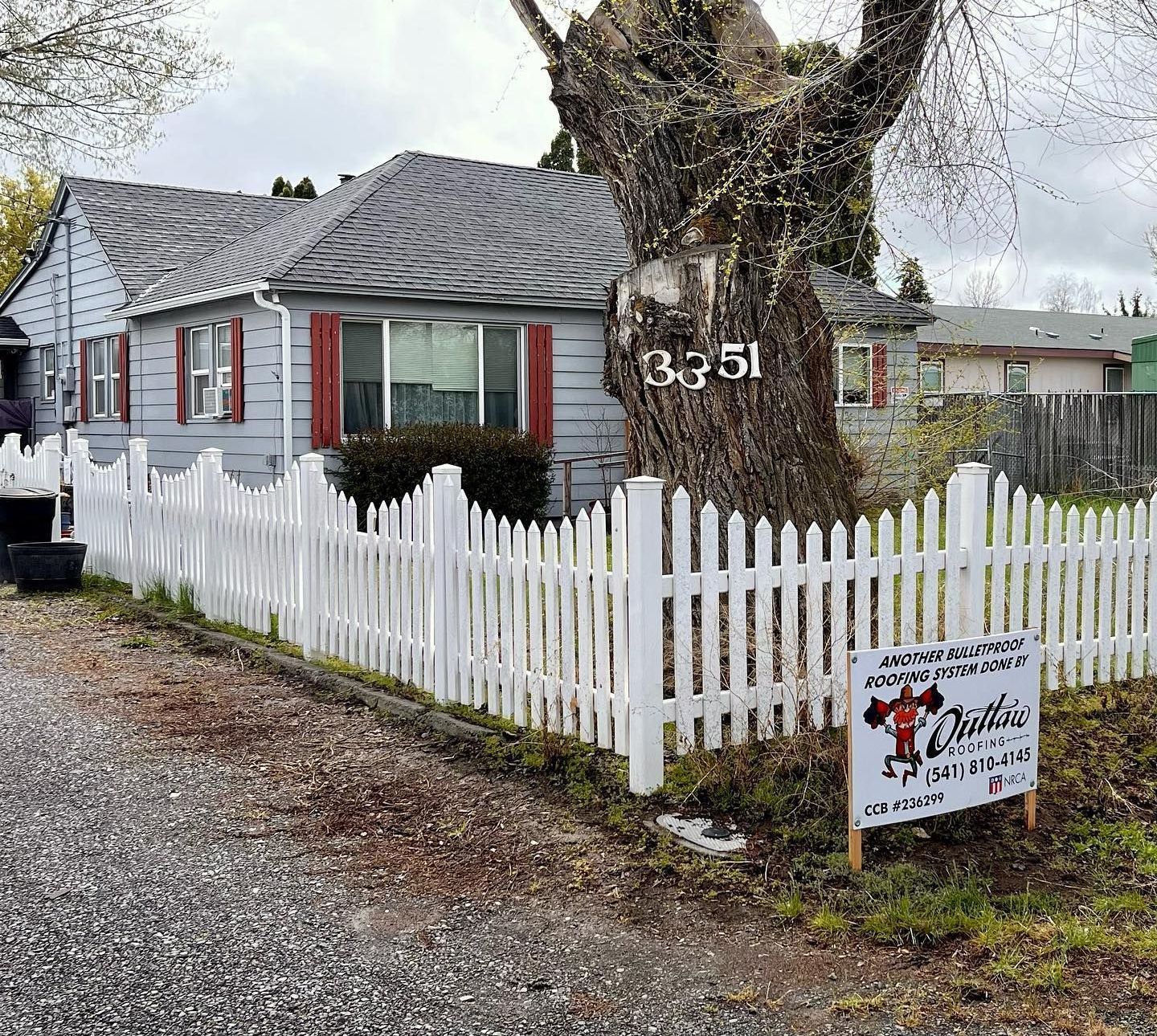
Roof Replacement in Central Point, OR , What Builder-Grade Shingles Actually Deliver After Twenty Rogue Valley Summers
Most Central Point homes built along Hamrick Road, Beall Lane, and the Freeman Road corridor between 1993 and 2008 came with the same thing on the roof: three-tab or entry-level architectural shingles installed to the builder's cost minimum. That product was code-compliant at installation. It was not installed with the homeowner's 25-year service life expectation in mind. It was installed to meet the minimum specification that allowed the builder to close the project at a price that moved the home.
That first replacement decision is also the one that attracts the most contractor confusion. Central Point's production build cohort is hitting the replacement window simultaneously, and when every third house on a Hamrick Road street is replacing a roof in the same three-year window, door-knock operators and low-bid contractors follow the demand. The gap between a $9,500 quote and a $14,000 quote on the same Central Point ranch is not contractor margin. It is usually a permit the cheaper contractor intends to skip, ice and water shield omitted at the eave edges, builder-grade product not named in the quote, and a deck repair allowance absent because the contractor plans to add that cost after tear-off begins.
Outlaw Roofing, veteran-owned and operating under Oregon CCB license #236299, serve Central Point homeowners along Hamrick Road, Beall Lane, Freeman Road, and the Highway 99 corridor with three generations of Rogue Valley roofing experience. GAF, IKO, CertainTeed, WeatherBond, and PolyGlass certified. GreenSky financing up to 100 percent for qualified homeowners. Military discount for veterans and active service members. Call (541) 275-6189.
How to Tell a Central Point, OR Production Home Has Reached Replacement Age

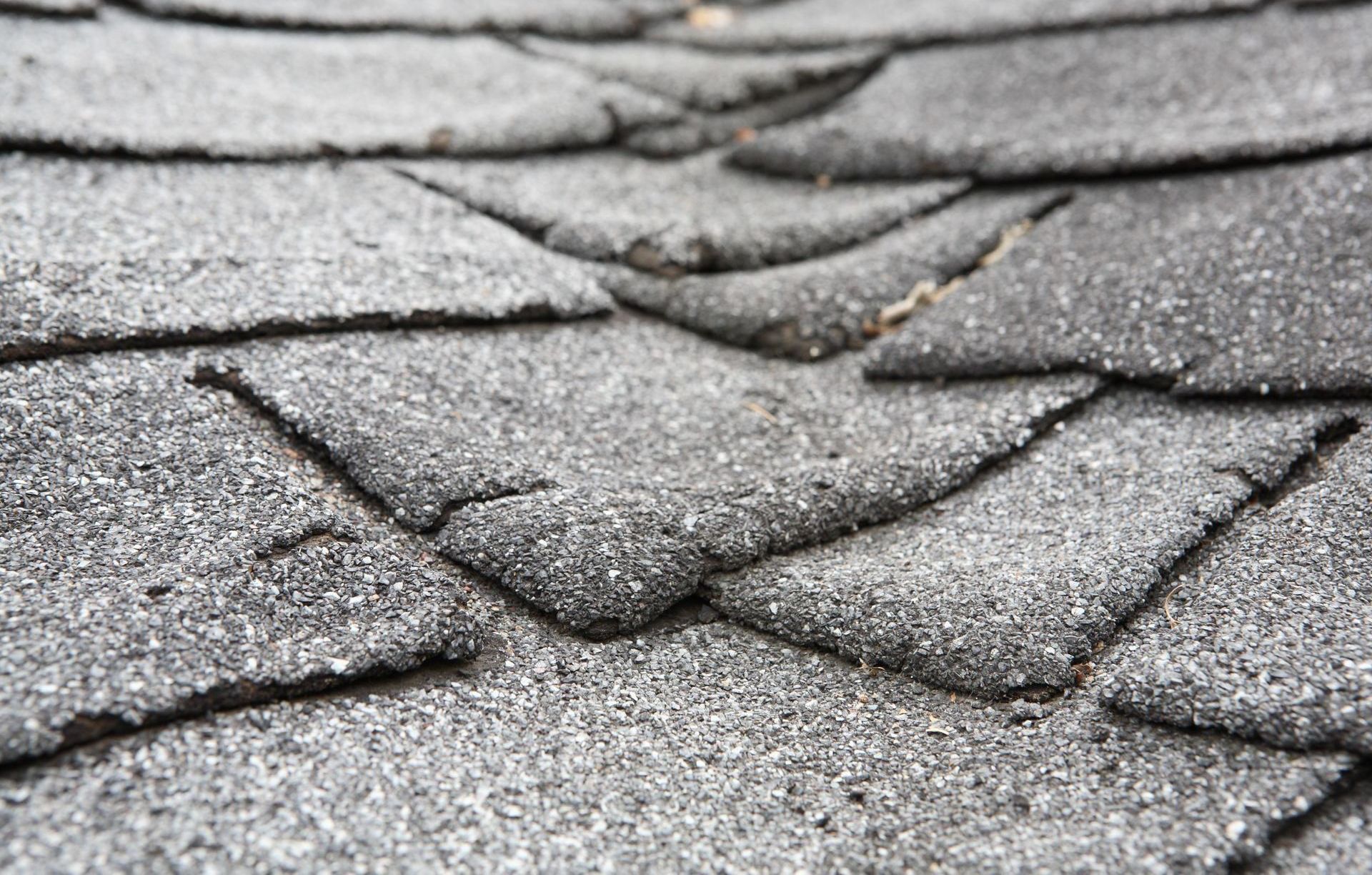
Builder-Grade Seal Strips That Have Completed Their Service Life on Open Hamrick Road Slopes
The seal strips on three-tab and entry-level architectural shingles installed on Central Point production homes in the late 1990s through mid-2000s were engineered to a cost point, not to a 25-year service life in the Rogue Valley's UV environment. On the south and west-facing slopes of open suburban lots along Hamrick Road and the Beall Lane corridor, where no terrain feature or tree canopy reduces solar exposure, those seal strips have been cycling through temperatures above 150 degrees every summer for two decades. Fatigued seal strips no longer hold the shingle tab flat against the course below it.
Granule Depletion on Central Point South Slopes , The UV Shield Has Already Failed
Granule accumulation in the gutters of a Central Point production home after rain is not the beginning of a problem. It is confirmation that a problem has already been running for months or years. The granules embedded in asphalt shingles are the UV shield between the sun and the raw asphalt binder beneath. Once granule adhesion fails on south-facing slopes along Freeman Road and Highway 99, those slopes are receiving direct UV on the asphalt core every clear summer day. Surface temperatures on dark asphalt shingles on open Central Point lots regularly reach 155 to 165 degrees from June through September. That sustained heat hardens and cracks the asphalt compound that holds the shingle together.
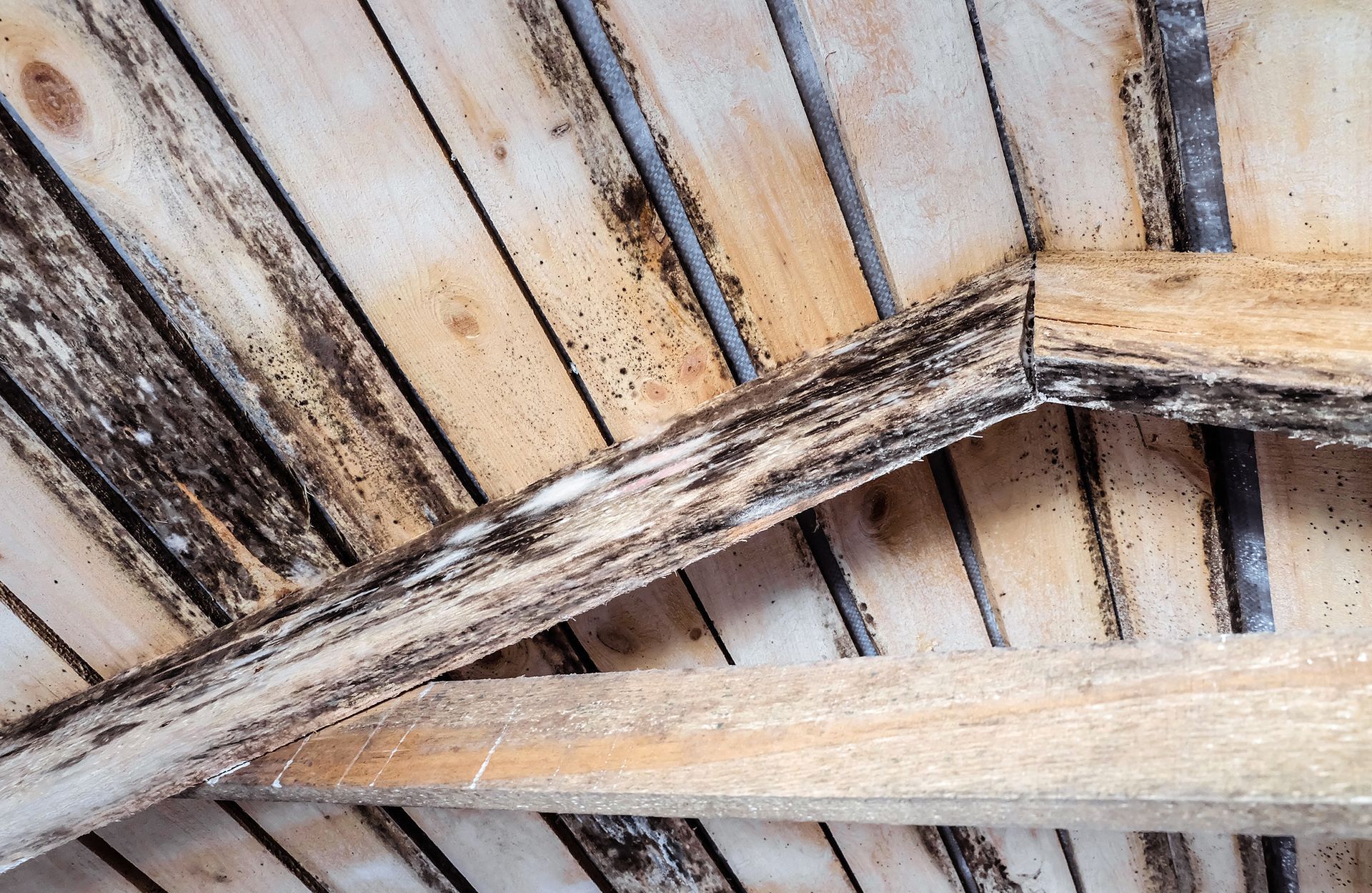
A Stain That Appeared After Winter and Dried by Spring Is Still an Active Problem
A ceiling stain on a Central Point home that showed up in December after heavy rain and was dry by March has not resolved. The eave-edge ice dam formation, valley flashing failure, or step flashing separation that produced it in December is still present and unchanged. The following wet season will find the same entry point and produce the same stain, plus one additional season of moisture exposure on the deck boards beneath the surface material.
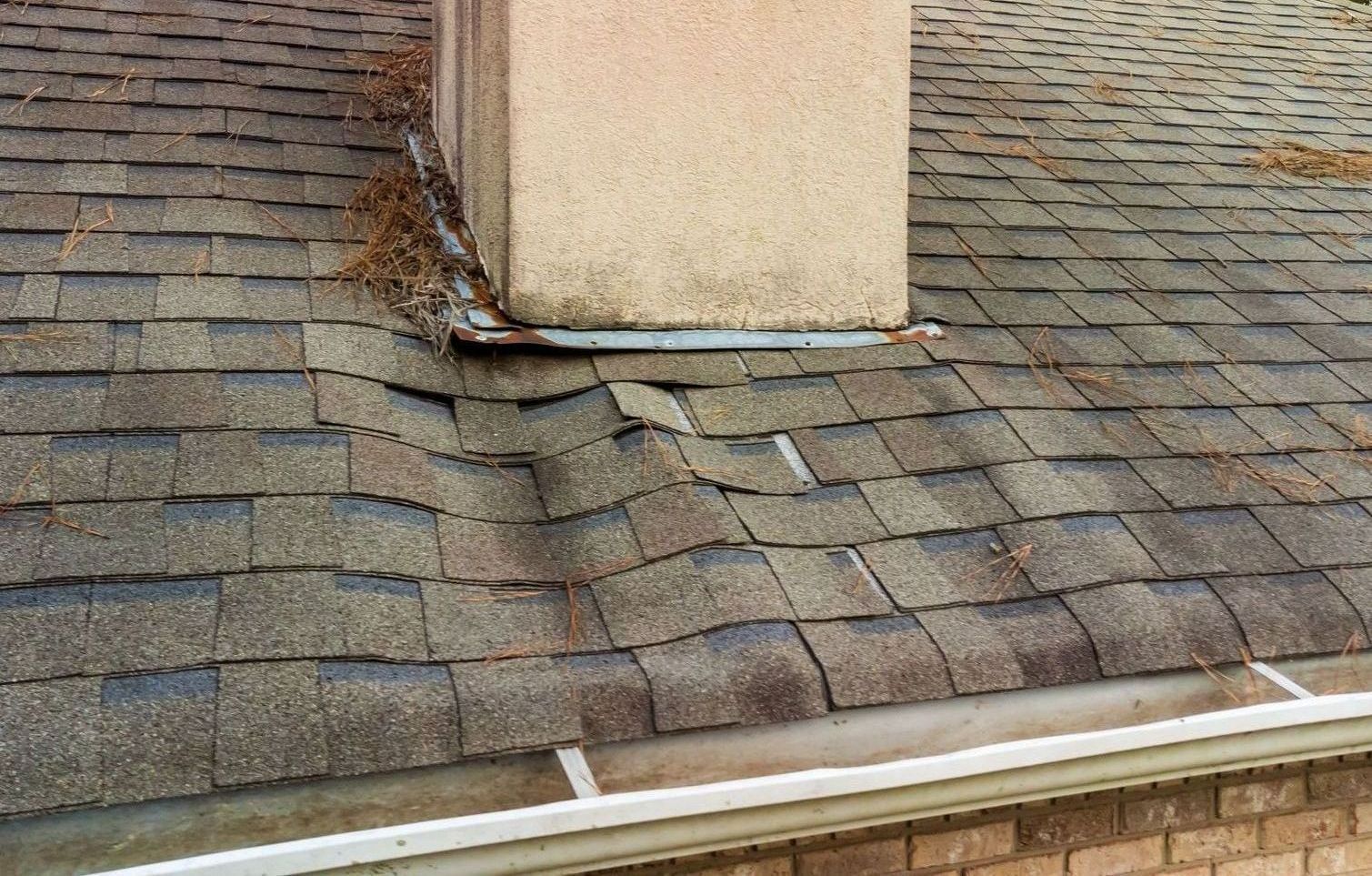
A Central Point Production Roof Past 20 Years Is Past Its South-Slope Service Life
Builder-grade architectural asphalt installed on a Central Point production home in the late 1990s or early 2000s on a south-facing slope exposed to full Rogue Valley UV has consumed its reliable service life. The manufacturer's 25 to 30-year estimate was not calibrated to Central Point's open suburban exposure, summer highs above 90 degrees, or four consecutive months of peak UV intensity. On open lots along Hamrick Road without tree shading, south-facing slopes on these systems are delivering 18 to 22 years before seal strip failure and granule loss reach the level where the system can no longer maintain weatherproofing.
What to Look for on a Central Point, OR Production Home Before Calling for an Estimate
Ground-Level Indicators on Hamrick Road and Beall Lane Production Homes
Stand at the street and look at each roofline face on a Central Point production home built between 1993 and 2008. On south and west slopes, look for color banding across the shingle field. Alternating bands of slightly different color running horizontally across the slope indicate differential granule loss between courses that aged at slightly different rates. This is the UV degradation pattern specific to builder-grade shingles in the Rogue Valley's open suburban exposure.
Attic Conditions on Central Point Production Builds
Central Point production homes from the late 1990s and early 2000s were built with attic ventilation systems sized to the code minimum of their construction era. In the Rogue Valley's summer heat environment, inadequate attic ventilation creates heat accumulation that degrades the roofing system from below at the same time UV degrades it from above. A correctly ventilated attic in Central Point should not exceed ambient outdoor temperature by more than 10 to 15 degrees.
Post-Storm Indicators After Rogue Valley Wind Events
After any significant Rogue Valley wind event, walk the perimeter of the Central Point property and look at the ridge line from every accessible angle. Ridge cap displacement on a production home whose seal strips have been fatigued by 20 Rogue Valley summers is the most common post-storm finding Outlaw encounters on these properties.
What Happens on Your Central Point, OR Property During a Full Roof Replacement

Step 1 - Free Inspection Including Ventilation Assessment on Production Build Properties
Every Outlaw inspection on a Central Point production home specifically assesses attic ventilation balance alongside the standard slope-by-slope condition evaluation, flashing integrity check at every pipe boot, chimney, and valley, and deck condition through attic access where available.
Step 2 - Written Proposal With Every Cost as a Separate Line Item
The written proposal Outlaw delivers for every Central Point replacement names the specific GAF, IKO, or CertainTeed product being installed, lists the deck repair allowance as a visible line item based on inspection findings, includes the City of Central Point Building Department permit fee, and states the labor scope, tear-off, and disposal separately.
Step 3 - City of Central Point Building Department Permit Before Any Tear-Off
All roofing replacements in Central Point file with the City of Central Point Building Department. Outlaw submits the permit application before any tear-off is scheduled, coordinates all required city inspections during installation, and delivers the permit closeout documentation to the Central Point homeowner at project completion.
Step 4 - Ventilation Correction, Ice and Water Shield, and Full System Installation
Where the inspection identified ventilation deficiency on a Central Point production build, ridge vent or exhaust vent correction is included in the scope before the new surface material goes on. Ice and water shield at all eave edges and valley intersections is standard on every Outlaw Central Point replacement. Synthetic underlayment across the complete deck after ice and water shield. New drip edge at all eave and rake edges.
Step 5 - Cleanup, Permit Closeout, and Documentation
Complete debris removal from the Central Point property. Magnetic nail sweep across driveway, lawn, and all accessible areas. Final walkthrough with the homeowner before the job closes. City of Central Point permit closeout documentation and manufacturer warranty documentation delivered at project completion.
Choosing Replacement Materials for Your Central Point, OR Production Home
Architectural Asphalt: The Right Answer for the Mid-Hold Central Point Homeowner
GAF Timberline HDZ, IKO Cambridge, and CertainTeed Landmark represent a meaningful performance upgrade over the builder-grade product they are replacing on Central Point production homes. These are the correct specification for the homeowner who plans to own the property for 10 to 20 more years and wants a documented replacement with a named manufacturer warranty rather than another builder-grade system at minimum spec.
Standing Seam Metal: The Right Answer for the Long-Term Central Point Homeowner Done With the Replacement Cycle
Standing seam metal makes sense for the Central Point homeowner who has been in the property since the original purchase, watched the builder-grade system age across two decades, and is making a deliberate decision that this replacement is the last one they intend to manage. The economics look fundamentally different when measured across 40 years rather than comparing today's installation cost against an asphalt quote. No granule surface degrading under Central Point's open-lot UV loading. No seal strip adhesion failing after another 20 Rogue Valley summers. Class A fire rating.
What the Product Name in Your Central Point Quote Tells You
The most revealing comparison between Central Point replacement quotes is whether the product is specifically named. A proposal that says architectural shingles without naming the manufacturer and product line is not quoting the same thing Outlaw quotes when it writes GAF Timberline HDZ Class 4. Builder-grade architectural products, closeout inventory, and entry-level lines are all technically architectural shingles.
Repair or Replacement for Central Point, OR Production Build Homeowners
When Repair Still Makes Sense on a Central Point Property
A Central Point production home with a system installed in 2012 where the inspection identifies a single failed pipe boot at one plumbing penetration, sound seal strips across all slopes, and no deck moisture history is a repair. Isolated failure on a system with 10 or more years of reliable service remaining is not a replacement trigger.
When the Builder-Grade Age and Condition Make Replacement the Correct Investment
A Central Point production home along Hamrick Road where the inspection identifies fatigued seal strips across the south slope, granule depletion consistent with 20-plus Rogue Valley summers, a cracked pipe boot at two of three plumbing penetrations, and attic staining at the north eave from prior ice dam entry is a replacement. The cumulative cost of addressing each of those failure points individually on a system that needs full replacement within two to three years is paying twice for the same outcome.
Why Central Point, OR's Open Suburban Exposure Creates Specific Replacement Urgency
The Maximum UV Loading That Open Hamrick Road and Beall Lane Lots Deliver
Central Point's suburban lots along Hamrick Road and the Beall Lane corridor are primarily flat agricultural plain with minimal terrain shading. There are no hillsides reducing the afternoon solar angle on west slopes, no established canopy interrupting UV on south slopes. This open exposure means every roofline face on a Central Point production build receives the full Rogue Valley summer UV load without the partial relief that hillside position or mature tree canopy provides in other Jackson County communities. South-facing slopes on Central Point open-lot homes experience surface temperatures of 155 to 165 degrees on peak July and August afternoons.
Rogue Valley Temperature Swings and Freeze-Thaw Cycling in Winter
Southern Oregon's winter precipitation arrives as concentrated events with temperature swings that create freeze-thaw cycling at every flashing joint and seal point on a Central Point roofline. Daytime temperatures that briefly warm the roof surface followed by overnight freezes expand and contract every sealant bond and mortar joint on the property through the wet season. Builder-grade pipe boots installed on Central Point production homes in the early 2000s were manufactured from rubber compounds that have been cycling through this temperature range for 20-plus years.
Post-Almeda Fire Awareness Changing Material Decisions in Jackson County
The Almeda Fire in 2020 reached communities less than 10 miles from Central Point and demonstrated that ember cast from wildland fire events reaches residential rooftops throughout Jackson County, not only at the direct burn margin.
Central Point, OR's Production Build Character Along Hamrick Road, Beall Lane, and Freeman Road
Central Point's residential character is defined by the production build subdivisions that filled in the flat agricultural corridors along Hamrick Road, Beall Lane, and Freeman Road through the 1990s and 2000s. These are not custom homes.
That consistency is useful for replacement planning because the failure patterns are also consistent.
A Recent Roof Replacement in Central Point, OR: What the Builder Left Out
Last spring Outlaw replaced the full roofing system on a 2003 production build on a Beall Lane lot in Central Point. The homeowner had purchased the property new and had never replaced the roof.
Our Team's inspection found the south slope carrying advanced granule depletion consistent with the age of the system and Central Point's open-lot UV exposure, with visible bare asphalt patches on three shingle courses near the ridge. All three pipe boots showed rubber collar cracking and separation at the pipe flange. The seal strips across the south and west slopes had fatigued to the point where manual inspection confirmed lifting at more than a dozen locations. The attic showed original ventilation with only soffit intake and no functional ridge exhaust, running 38 degrees above outdoor ambient temperature on the afternoon of the inspection. Staining on the deck sheathing at the north eave confirmed ice dam entry during at least one prior winter. The $9,600 quote included none of the following: the City of Central Point permit, a ventilation correction, a deck repair allowance, ice and water shield at the eave edges, or a named product specification. Outlaw's written proposal for the same property: IKO Cambridge Class 4 architectural asphalt, ridge vent installation correcting the ventilation deficit, ice and water shield at all eave edges and in the single valley, three new pipe boots throughout, deck board replacement at the north eave stain location, complete flashing replacement, new drip edge, and City of Central Point permit filed and inspected. Total: $13,800.
Why Central Point, OR Homeowners Choose Outlaw Roofing for Their First Replacement
✓ Veteran-Owned and Transparent About What Every Quote Should Include
Riley built Outlaw on the accountability that military service produces.
✓ CCB#236299 - Verifiable at oregon.gov/ccb Before Any Work Is Authorized
Oregon CCB license CCB#236299 is searchable at oregon.gov/ccb in under one minute. Every Outlaw permit filed with the City of Central Point Building Department lists CCB#236299 as the contractor of record. Any Central Point contractor who cannot provide a current verifiable CCB registration number should not be on the roof.
✓ Manufacturer Certified for the Extended Warranty Tiers Builder-Grade Installation Never Delivered
GAF, IKO, CertainTeed, WeatherBond, and PolyGlass certifications allow Outlaw to issue the extended manufacturer warranty tiers that the original builder's minimum-spec installer was never certified to offer.
✓ City of Central Point Building Department Permit on Every Project
All roofing replacements in Central Point file with the City of Central Point Building Department. Outlaw files before any tear-off begins and delivers the permit closeout documentation to the homeowner at project completion.
✓ Free Inspection With No Obligation
Every Central Point inspection is free. The written assessment documents the actual condition of every slope, every pipe boot, the ventilation configuration, and the deck moisture history before any proposal number is discussed.
What Roof Replacement Actually Costs in Central Point, OR by Property Type
Outlaw's Central Point replacement projects over the past two years have ranged from $11,000 to $20,000.
1990s Production Builds Along Hamrick Road and Beall Lane: $11,000 to $15,500
Single-story production homes from the late 1990s and early 2000s in the 1,600 to 2,200 square foot range along Hamrick Road and Beall Lane typically run $11,000 to $15,500 for standard Class 4 architectural asphalt replacement with full flashing replacement, ice and water shield at all eave edges and valleys, ventilation correction where required, and City of Central Point permit. The range reflects deck condition.
2000s Two-Story Production Builds Along Freeman Road and the Highway 99 Corridor: $14,000 to $20,000
Two-story production homes from the mid-2000s in the 2,000 to 2,800 square foot range along Freeman Road and the Highway 99 corridor, with more complex roofline geometry and higher material handling labor, typically run $14,000 to $20,000 for Class 4 architectural asphalt. Upgrading to standing seam metal on Central Point production homes runs $35,000 to $50,000 depending on roof area and complexity. Class 4 impact-resistant specification adds roughly 15 to 20 percent over standard architectural pricing on any Central Point project and may be partially offset by Oregon insurance carrier premium discounts.
What Experienced Inspectors Check on Central Point, OR Production Build Replacements
Ventilation Assessment as a Required Step on Every Central Point Production Home
Attic ventilation on Central Point production homes built from the late 1990s through mid-2000s was installed to code minimums from the construction era, not to the balanced intake and exhaust standard current Oregon code requires.
Jackson County Permit Authority for Jacksonville Historic District Replacements
Original rubber pipe boot collars on Central Point production homes from 1995 to 2008 have been through 20-plus Rogue Valley temperature cycles. Outlaw specifically checks every pipe penetration for rubber collar cracking, collar-to-pipe separation, and any prior caulk repair over failing rubber rather than a boot replacement.
How Long a New Roof Lasts on a Central Point, OR Production Home
Asphalt Shingles on Central Point's Open-Lot Production Properties
Quality Class 4 architectural asphalt installed with ventilation correction, full ice and water shield at eave edges and valleys, and complete flashing replacement on a Central Point production home delivers 23 to 27 years of reliable service on south-facing slopes and 26 to 29 years on north-facing slopes in the Rogue Valley's climate. These are Central Point-specific estimates that account for the open suburban lot exposure and summer UV intensity this community experiences.
Maintenance That Protects Any Central Point Production Home System
Clear gutters before the Rogue Valley wet season begins to prevent ice dam formation at eave edges during the freeze-thaw events that follow the first winter precipitation. After any significant wind event, check the ridge line from multiple angles for displaced or missing ridge cap.
Metal Roofing on Central Point Open-Lot Production Properties
Standing seam metal on a Central Point production home delivers 40-plus years with no granule surface degrading under open-lot UV loading, no seal strip adhesion failing after 20 more Rogue Valley summers, and Class A fire rating for the wildland interface consideration that post-Almeda fire awareness has made relevant for properties in the southern portions of the city.
Quick Answers - Roof Replacement in Central Point, OR
How much does a roof replacement cost in Central Point, Oregon?
1990s production homes along Hamrick Road and Beall Lane typically run $11,000 to $15,500 for Class 4 architectural asphalt with full flashing scope and City of Central Point permit. 2000s two-story homes along Freeman Road and Highway 99 run $14,000 to $20,000. Standing seam metal runs $35,000 to $50,000.
Does Central Point require a permit for roof replacement?
Yes. All roofing replacements in Central Point file with the City of Central Point Building Department. Outlaw files the permit before any tear-off begins, coordinates all required city inspections, and delivers the permit closeout documentation to the homeowner at project completion.
How long does a roof replacement take on a Central Point production home?
Single-story production homes along Hamrick Road and Beall Lane typically complete in one to two days for architectural asphalt replacement. Two-story properties along Freeman Road or any home requiring ventilation correction and deck repair run two to three days.
My Central Point home was built in 2001. Should I replace the roof now?
A Central Point production home built in 2001 with the original roof is at or past its south-slope service life in the Rogue Valley's UV environment.
What is the best roofing material for a Central Point, Oregon production home?
For most Central Point homeowners replacing a 1990s-2000s system: IKO Cambridge, GAF Timberline HDZ, or CertainTeed Landmark in Class 4 impact-resistant configuration delivers the best balance of performance and cost for the open-lot UV and hail exposure these properties experience.
Residential Roofing Services We Provide in Central Point, OR
eResidential Roof Replacement
Complete roofing system replacements for Central Point production homes along Hamrick Road, Beall Lane, Freeman Road, and the Highway 99 corridor. Class 4 impact-resistant product specification, ventilation correction on original production build configurations, ice and water shield throughout, full pipe boot and flashing replacement, and City of Central Point Building Department permit management. CCB#236299.
Residential Roofing Contractor
If you are still in the assessment stage or uncertain whether your Central Point production home needs replacement or targeted repair, our Central Point residential roofing contractor page covers the full inspection process and repair vs replacement decision in detail.
Residential Roof Repair
When a Central Point production home has a genuinely isolated failure and meaningful system life remaining, targeted repair is the right answer.
Metal Roofing
Standing seam metal for Central Point homeowners ending the production build replacement cycle permanently. No open-lot UV granule degradation. No seal strip failure after 20 more Rogue Valley summers. Class A fire rating for wildland interface proximity. 40-plus year service life.
How it works

Schedule Your Free Roof Replacement Estimate in Central Point Today
A Central Point production home built in the late 1990s or early 2000s is making its first replacement decision right now, on a street where several neighbors are making the same decision simultaneously.
Riley comes to Central Point, assesses the actual condition of the Hamrick Road or Beall Lane production build rather than making assumptions from the street, and delivers a written proposal with every element listed before any commitment is made. Call (541) 275-6189 or visit outlawroofing.net to schedule your free Central Point inspection. Veteran-owned. CCB#236299.
Frequently Asked Questions - Roof Replacement in Central Point, OR
A contractor quoted my Central Point home $4,000 less than Outlaw. What is likely missing from their scope?
On a Central Point production build, the most common missing items in a lower quote are: the City of Central Point permit ($150 to $250), a deck repair allowance (any soft boards found during tear-off get added to the invoice after work starts without one), ice and water shield at the eave edges (required by Oregon code but omitted to hit a price point), the specific named product being installed, and ventilation correction when the original configuration is deficient. Ask the lower-quoting contractor to provide a written scope with every element listed separately.
Why was my Central Point production home built with substandard shingles?
It was not built with substandard shingles. It was built with code-compliant shingles installed to the builder's cost minimum. Builder-grade architectural products in 2001 met Oregon building code. They were not installed with a 25-year Southern Oregon service life expectation.
Does Outlaw correct attic ventilation as part of a Central Point replacement?
Yes, when the inspection identifies a ventilation deficiency. The ventilation assessment is included in the free inspection, and any correction required is scoped and priced as a separate line item in the written proposal.
How do I verify Outlaw Roofing's Oregon license before scheduling a Central Point inspection?
Search CCB#236299 at oregon.gov/ccb. Current license status is confirmed immediately.
What warranty does Outlaw provide on a Central Point replacement?
Every Central Point replacement Outlaw completes delivers two warranty documents at closeout: the manufacturer warranty covering the installed product and system components, and Outlaw's workmanship warranty.
What happens if Outlaw finds deck damage during my Central Point tear-off?
Work stops. Our team photographs the compromised section, identifies the affected square footage, and contacts the homeowner with a written scope and cost for the deck repair before any additional work proceeds. No additional scope advances without the homeowner's written approval.
Can I use GreenSky financing for a Central Point replacement?
Yes. GreenSky financing up to 100 percent of the project cost for qualified Central Point homeowners. Military discount for veterans and active service members.
Does Outlaw Roofing replace all pipe boots during a Central Point full replacement?
Yes. New pipe boots at every plumbing penetration is standard scope on every Outlaw full replacement on Central Point production homes. Original rubber collars from 1995 to 2008 production builds have been through 20-plus Rogue Valley temperature cycles.