Residential Roof Repair in Talent, OR
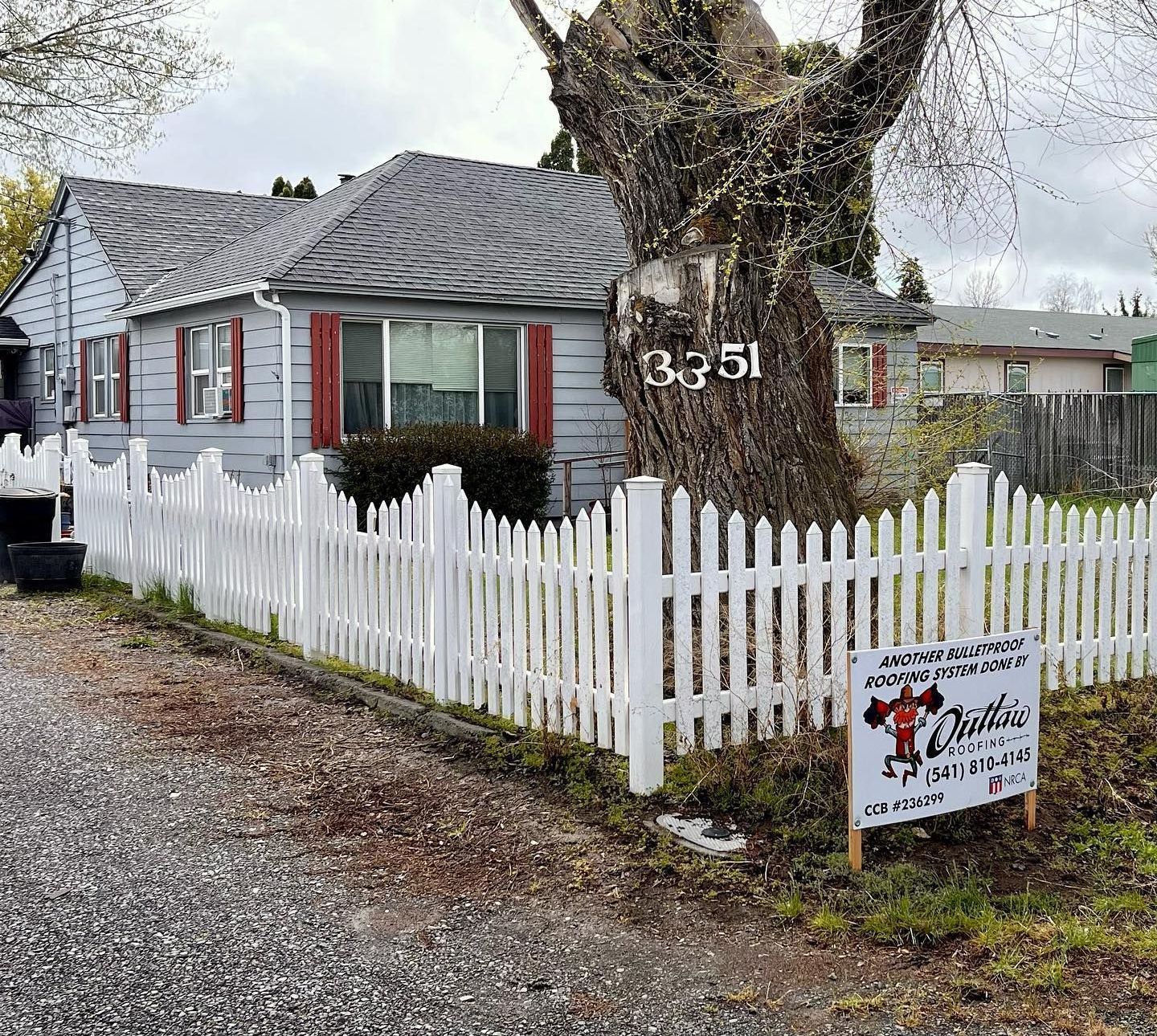
Roof Repair in Talent, OR: What Surviving the Almeda Fire Did to Roofs That Stayed Standing, and Why Most of Them Were Never Properly Inspected Afterward
On September 8, 2020, the Almeda Fire moved through Talent at wind-driven speed along the Bear Creek corridor, destroying roughly 700 homes in a community of around 7,000 people. The homes that burned are a documented loss. The homes that survived are a different kind of problem. Fire moves through neighborhoods by ember cast rather than by direct flame contact. When wind-driven embers land on a roofline for three to five seconds before being blown clear, they do not necessarily ignite the shingle surface. What they do is thermal-shock the granule layer at the point of contact, creating micro-fractures in the asphalt binder beneath the granule that accelerate surface degradation in the seasons that follow. The homes along Talent Avenue, Spring Street, and the residential streets east of Highway 99 that stayed standing in 2020 experienced ember cast events at roof surface temperatures that a standard post-storm roof inspection was not designed to assess.
Most of those roofs were checked by insurance adjusters in the weeks following the fire. Most adjusters confirmed no active fire damage and closed the file. What they did not assess was whether the thermal event had altered the granule adhesion rate on the surviving shingle surface. Five years later, those roofs are showing granule loss patterns inconsistent with their age, UV degradation on slope sections that face north rather than south, and shingle brittleness at impact that post-fire ember exposure can produce. If your Talent home survived the Almeda Fire and you have not had a professional roofing inspection since 2020, there is a specific set of conditions that inspection needs to cover.
Our team, veteran-owned and operating under Oregon CCB license #236299, provide written repair proposals for Talent properties that address both post-fire roofline conditions and the standard repair needs of Talent's older housing stock. City of Talent Community Development permit at 110 East Main Street, phone (541) 535-1566 ext. 3, filed where required before any repair work begins. GAF, IKO, CertainTeed, WeatherBond, and PolyGlass certified. GreenSky financing available. Military discount for veterans and active service members. Call (541) 275-6189.
What the Almeda Fire Did to Surviving Roofs That Most Inspections Did Not Catch

Ember Contact Granule Damage on North and East Facing Slopes
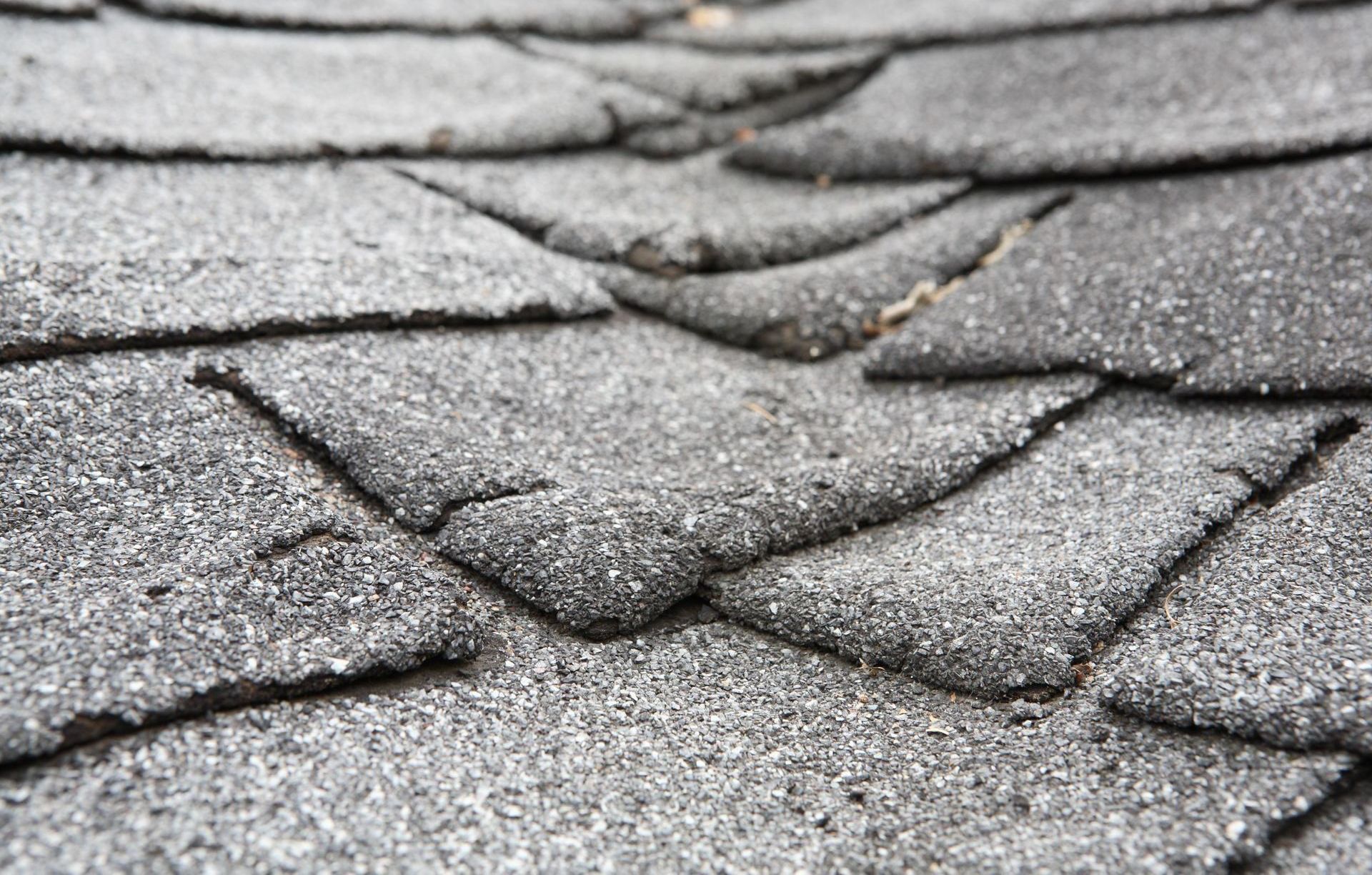
Ember cast during a wind-driven fire event lands across a roof surface according to wind direction rather than sun exposure, which means north-facing slopes on Talent homes along the Bear Creek corridor received ember contact events in September 2020 just as frequently as south-facing slopes. Standard UV granule loss on a residential roof appears first on the south slope, which receives the highest direct sun loading through the summer months. When granule loss appears on the north slope of a Talent home on a roofline that is only 15 to 18 years old, the degradation pattern does not match normal UV aging. It matches thermal shock at the granule bond level, which is what ember contact at several hundred degrees produces on a shingle surface for even a brief duration.
An inspection that identifies unusual north-slope granule loss on a Talent home that survived the Almeda Fire has found evidence of post-fire accelerated degradation rather than normal end-of-service-life wear. The distinction matters because accelerated degradation does not stop at the granule layer. The asphalt binder beneath the granule matrix that has been thermally stressed continues to lose flexibility and granule adhesion at an accelerated rate through subsequent UV seasons. A roof showing this pattern in 2025 that was installed in 2008 may be four to six years from replacement rather than the eight to ten years its age alone would suggest.
Underlayment Condition on Homes Adjacent to the Burn Zone
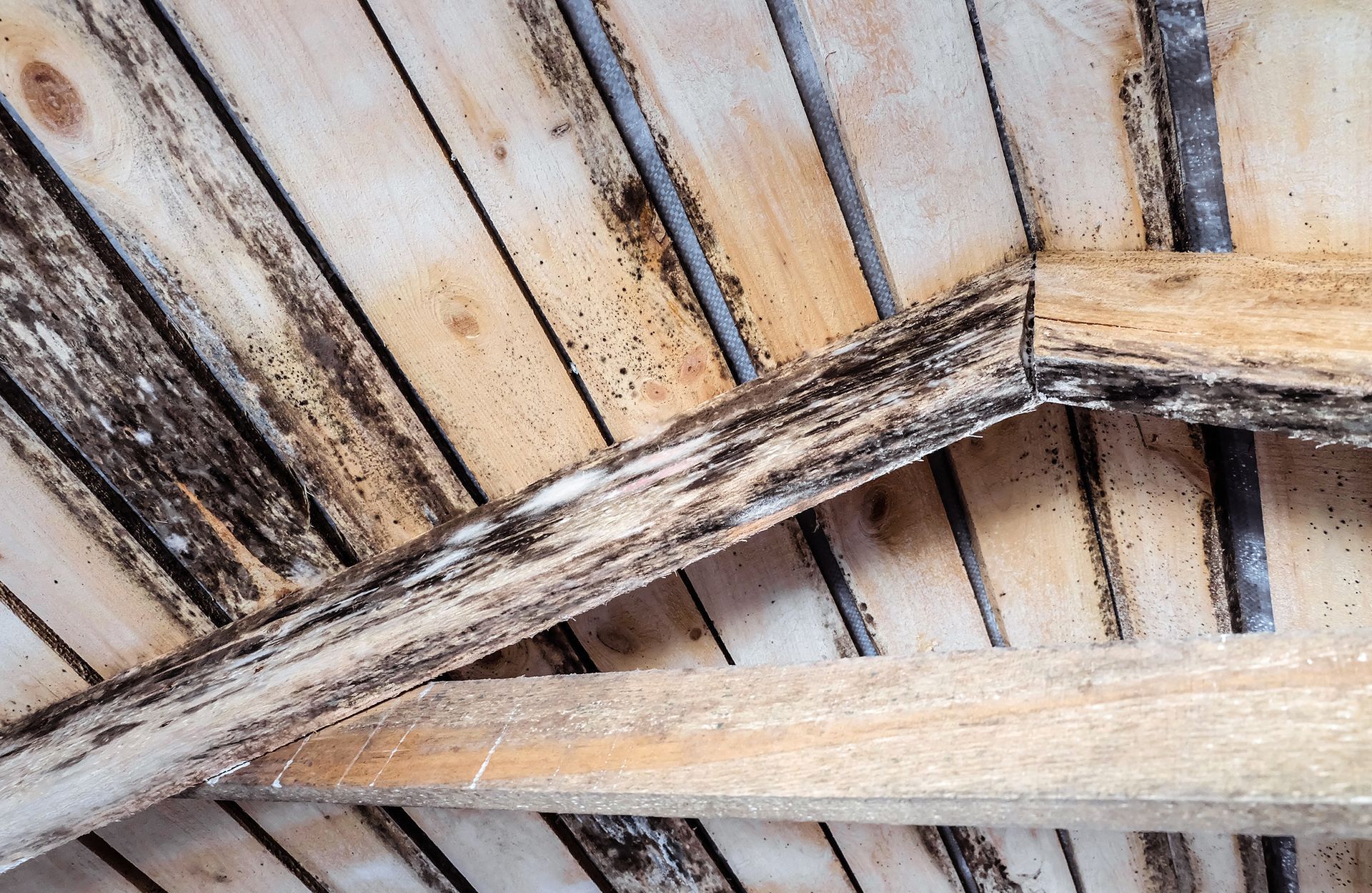
The homes along Spring Street and Talent Avenue that sat immediately adjacent to the Almeda Fire perimeter experienced radiant heat from burning structures across the street or on adjacent lots. Radiant heat at sufficient intensity penetrates the shingle surface and affects the underlayment below without producing surface ignition. Felt underlayment exposed to sustained radiant heat events loses its dimensional stability and moisture resistance at a rate that is not assessable from the roof surface or from the attic without probing the deck surface. On Talent homes that stood within one or two lots of the fire perimeter along the Bear Creek corridor and were never re-roofed after the fire, the underlayment condition is an unknown that a surface-only inspection cannot resolve.
Standard Repair Conditions Present Independently of Fire History
The older housing stock along Talent Avenue, Wagner Creek Road, and the residential streets connecting to Rapp Road that predates the Almeda Fire carries standard roofline repair needs that exist independently of the 2020 event. Valley flashing on homes built before 1990 in Talent's Bear Creek corridor is at or past its practical service life on properties that have not had a complete flashing replacement since original installation. Chimney flashing on the older Craftsman and ranch homes along Wagner Creek Road near the creek drainage shows the same mortar joint deterioration and counter flashing separation that older Jackson County housing stock produces across the region. Bear Creek itself creates the same elevated ambient humidity on creek-adjacent Talent properties that it creates along the similar corridor in Central Point, accelerating biological growth on north-facing slopes and debris loading in valley intersections through the wet season.
Warning Signs on Talent, OR Properties That Indicate Active Repair Needs
Granule Loss Patterns That Do Not Match the Roof's Age or Orientation
On a Talent home that survived the Almeda Fire, check the granule accumulation in gutters at the base of every slope, not just the south-facing slopes. If granule accumulation is heaviest in the gutters below the north or east-facing slopes rather than the south-facing slopes, the degradation pattern is inconsistent with normal UV aging and warrants a professional inspection that specifically assesses post-fire ember contact damage. This pattern is most visible after the first significant rain event of the fall wet season, when a full season of granule displacement accumulates in the downspout discharge.
Shingle Surface Brittleness on Mid-Age Roofs Along the Bear Creek Corridor
On Talent homes along the Bear Creek corridor that were installed between 2000 and 2015 and survived the fire, physical shingle brittleness is the most accessible field indicator of accelerated degradation. A shingle that flexes when handled by hand on a warm day on a 15-year-old roof is performing within its service life. A shingle that cracks at the bend point on the same roof is not. Standard asphalt shingles do not become brittle at 15 years under normal Rogue Valley UV loading. The brittleness indicator is specific to either extreme UV exposure on south slopes at advanced age or to thermal shock events that have altered the petroleum-based binder at an accelerated rate.
Active Leak Indicators on Rebuilt Properties Along Talent Avenue
The roughly 350 Talent homes that have been rebuilt since the Almeda Fire represent a different repair profile. These properties were constructed from 2021 onward under current Oregon building codes, with ice and water shield at eave edges and valleys, synthetic underlayment, and current ventilation standards. The repair conditions on recently rebuilt Talent properties are installation defects rather than age-related failures: improper shingle nailing that produced blow-offs in the fall 2022 and 2023 wind events that followed the first post-fire building period, valley flashing that was correctly specified but installed with insufficient overlap at the lap joints, and pipe boots at HVAC penetrations that were correctly specified but not fully seated at the stack base during the high-volume rebuild period when construction crews were stretched across multiple simultaneous projects in both Talent and Phoenix.
How Outlaw Roofing Inspects Talent, OR Properties

Post-Fire Assessment Protocol for Surviving Homes Along Bear Creek and Spring Street
On Talent properties that survived the Almeda Fire and have not been fully re-roofed since 2020, Outlaw's inspection covers the standard roofline conditions alongside a specific post-fire assessment. Granule condition by slope orientation is documented and compared against the age-appropriate degradation pattern for the product installed. Shingle flexibility is tested by hand at three locations on each slope. The attic is checked for any heat-related discoloration on the underside of deck boards that would indicate radiant heat penetration during the fire event. Valley flashing is cleared and examined under any debris from the Bear Creek riparian corridor. The written findings report specifically addresses whether the observed conditions are consistent with normal aging or with post-fire accelerated degradation, and the repair or replacement recommendation follows from that finding.
Insurance Documentation Support for Post-Fire Conditions
Homeowners whose Talent properties survived the Almeda Fire and whose insurance claims were closed without a roofing assessment that included post-fire granule damage evaluation may have grounds for a supplemental claim review depending on their specific policy terms and the documented degradation pattern. Outlaw does not make insurance determinations. What Outlaw provides is a written inspection report that documents the observed granule condition by slope orientation, the shingle flexibility finding by slope section, and the comparison against age-appropriate normal degradation. That documentation is the factual basis for any supplemental claim conversation the homeowner chooses to have with their insurance carrier.
Rebuilt Property Inspection Protocol for Installation Defect Identification
On Talent properties rebuilt after 2020, the inspection focuses on the installation quality indicators specific to high-volume post-disaster construction rather than on age-related failure modes. Nailing pattern at shingle courses is assessed at accessible eave sections where the pattern is verifiable without disturbing the surface. Valley overlap at lap joints is measured against Oregon code requirements. Pipe boot seating is physically checked at every stack. Flashing at wall transitions is examined for the correct counter flashing installation that the post-fire rebuild period sometimes abbreviated under production pressure.
City of Talent Permit Filing Where Required
Repair work meeting the City of Talent permit threshold files with the Community Development Department at 110 East Main Street, Talent, OR 97540, phone (541) 535-1566, extension 3. Outlaw determines the permit requirement for every Talent repair before any work is dispatched and files where required. On rebuilt properties where the original construction permit is still in the city's system, Outlaw confirms the permit status for any repair work that addresses original installation scope before the repair is treated as standalone.
Materials Outlaw Specifies on Talent, OR Repair Projects
Class A Fire-Rated Surface Material on All Talent Repair Work
Every repair scope on a Talent property that involves new shingle installation specifies Class A fire-rated material regardless of what the surrounding field shingles carry. The Almeda Fire changed how Jackson County homeowners near the Bear Creek corridor think about roofing material choices, and a repair that installs a fire-rated patch section on a roofline where the surrounding field material is not fire-rated at least addresses the specific repair location correctly. When the repair assessment identifies that the surrounding field material has reached end-of-service-life through post-fire accelerated degradation, the full replacement conversation includes Class A fire-rated architectural shingles or standing seam metal as the appropriate scope.
Ice and Water Shield at All Repair Locations Regardless of Slope Position
On Talent repair projects, ice and water shield is specified beneath any new surface material regardless of the slope position of the repair. Bear Creek's proximity to the residential streets along the corridor creates the frost pocket conditions that produce ice dam risk at eave edges more frequently than open-lot Rogue Valley properties experience at the same elevation. Any repair that exposes deck surface adjacent to the failure location receives ice and water shield at that section before new material is installed.
Stainless Steel Fasteners on Post-Fire Rebuild Properties
On Talent rebuilt properties where the inspection identifies nailing pattern defects, any re-nailing scope specifies stainless steel ring-shank nails rather than standard galvanized smooth-shank fasteners. The combination of Bear Creek moisture exposure and the fire-resilient construction standards that the post-fire rebuild period established in Talent makes the corrosion resistance and mechanical withdrawal resistance of stainless ring-shank fasteners the appropriate specification for any repair work that involves fastener replacement on those properties.
Repair or Replacement on Talent, OR Properties
When Targeted Repair Addresses the Full Scope of the Problem
A newly rebuilt Talent home with a documented installation defect at a single valley lap joint or at one unseated pipe boot, where the surrounding roofline was correctly installed under current code requirements and shows no signs of post-fire or post-installation degradation, is a repair. Isolated flashing failure on a pre-fire Talent home where the post-fire granule assessment confirms normal aging patterns and the surrounding shingle condition has remaining service life is a repair. Outlaw quotes both repair and replacement when the assessment identifies conditions that make replacement a relevant near-term consideration. See also: /residential-roofing-contractor-talent-or
When Post-Fire Degradation Makes Replacement the Right Decision
A pre-fire Talent home along the Bear Creek corridor on a roofline installed in 2007 that shows north-slope granule loss inconsistent with age, shingle brittleness at the bend test across multiple sections, and attic deck board discoloration consistent with radiant heat penetration is not a repair situation. The repair investment on a system showing post-fire accelerated degradation does not extend the overall service life. It patches failure points on a surface that is advancing toward end-of-life faster than its calendar age would predict. See also: /residential-roof-replacement-talent-or
How Talent, OR's Bear Creek Corridor Climate Affects Roofline Repair Needs
Talent's position along Bear Creek at the northern end of the Rogue Valley creates a microclimate that concentrates roofing stress from two directions that most valley floor communities do not experience simultaneously. The creek corridor raises ambient humidity through the November to April wet season on the residential properties within two to three lots of the riparian corridor along Talent Avenue and Wagner Creek Road. That elevated moisture exposure accelerates biological growth on shaded roof sections and debris loading in valley intersections at a rate beyond what comparable elevation properties away from the drainage experience.
At the same time, Talent's open Highway 99 corridor on the western edge of town and the Rogue Valley floor topography produce summer UV loading on south and west-facing slopes that is consistent with the broader Medford and Rogue Valley market, where surface temperatures exceed 150 degrees on dark shingles through July and August. The post-fire context adds a third dimension to Talent's climate impact on rooflines: properties that were in the ember cast zone during the September 2020 fire event have been aging at a modified rate since that day, and the cumulative effect of that modification is reaching the visible failure threshold on roofs that are now five years past the fire event.
Talent's Housing Profile After the Almeda Fire
Talent's residential housing stock now exists in two distinct eras with a third in formation. The pre-fire housing along the older residential streets, including Talent Avenue, Wagner Creek Road, and Spring Street, represents the original community character: modest single-story homes, some with Craftsman elements, on lots that follow the Bear Creek valley floor. These properties carry the roofline ages and repair profiles of their construction decade, modified by whatever the Almeda Fire event did to the surviving structures.
The rebuilt housing that has replaced destroyed properties since 2021 represents a second era, constructed to current Oregon building codes on lots that in some cases were previously occupied by multiple generations of housing. These properties are uniformly newer, carry current fire-resilient construction standards, and present installation-defect repair profiles rather than age-related failure profiles.
A third wave of new development along the Highway 99 corridor and on the former Gateway site represents construction that postdates the fire recovery period. These properties are standard new construction without the fire-event context that affects both the pre-fire survivors and the immediate rebuild generation. Outlaw's inspection protocol identifies which era a Talent property falls into before the repair assessment begins, because the inspection methodology is different for each.
A Recent Roof Repair on a Talent, OR Property: What Five Years of Post-Fire Aging Looked Like
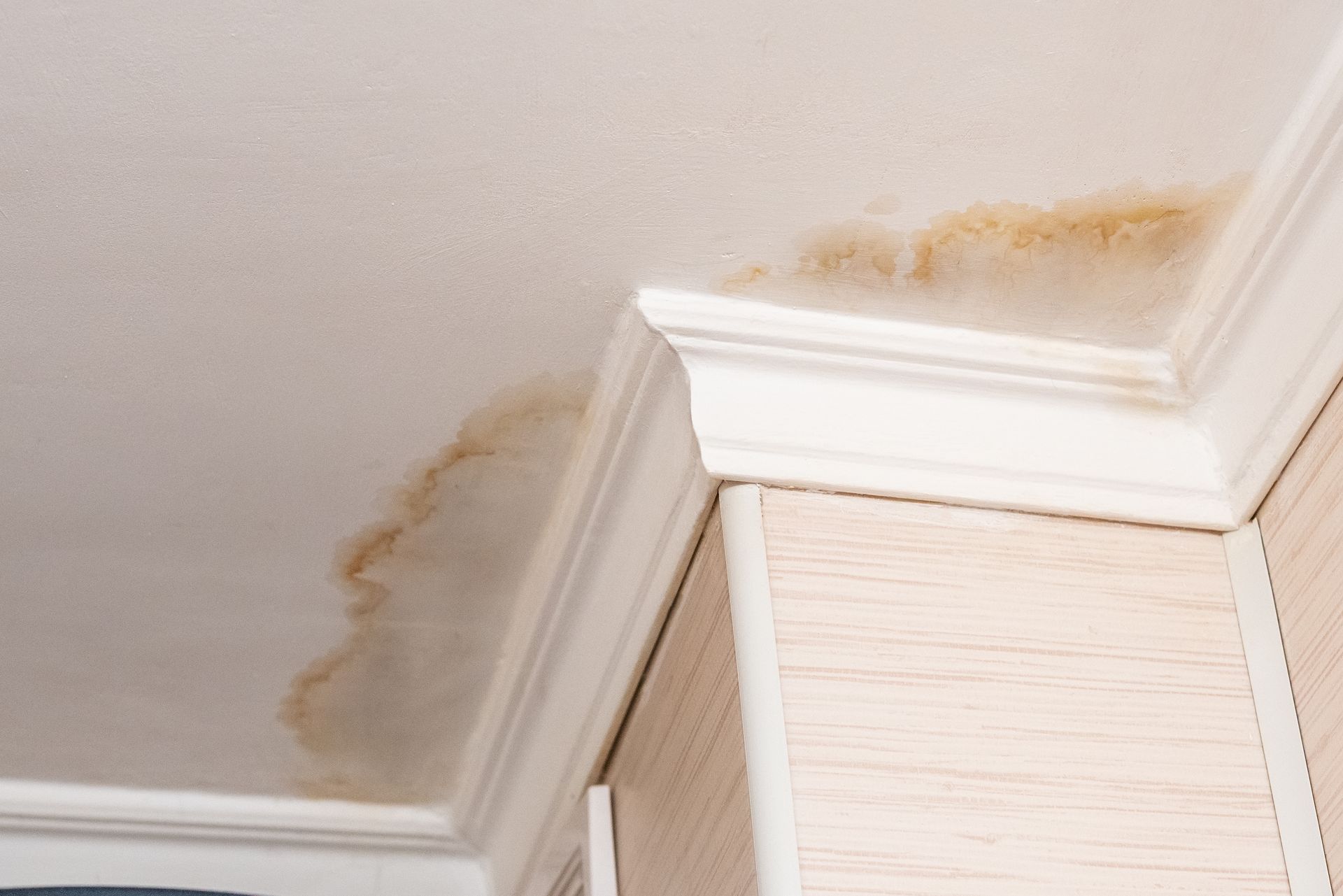
Last fall Outlaw completed a repair assessment on a 2006 single-story home on a lot off Spring Street in Talent, roughly half a block from the Almeda Fire perimeter. The homeowner had called about a recurring ceiling stain in the northwest corner of the living room that appeared each January and dried by March. The roof was 18 years old. A standard aging assessment would suggest eight to ten years of remaining service life.
The inspection told a different story. The north-facing slope showed granule accumulation in the gutters at the eave base disproportionate to the south-facing slope accumulation, with the granule concentration running approximately three times the volume consistent with normal north-slope aging at 18 years. Hand flexibility testing on north-slope shingles at three locations produced cracking at the bend point on two of three test locations, inconsistent with 18-year normal aging under Rogue Valley UV conditions. The attic showed faint heat discoloration on deck boards at the north eave edge, not staining from water entry but the pale yellowing specific to sustained radiant heat exposure at elevated temperature. The ceiling stain in the northwest corner was active valley flashing failure at the north slope valley adjacent to the chimney, where the step flashing had separated from the counter flashing at the mortar joint.
The repair scope addressed the active failure: step flashing replacement at all seven courses of the chimney valley on the north slope, counter flashing reset into the mortar joint with mortar repair at the attachment line, and ice and water shield beneath the new step flashing at the valley base. The written findings documented the post-fire granule degradation and shingle brittleness separately as conditions recommending full replacement within three to four years rather than the eight to ten years the roof's calendar age would otherwise suggest. Total repair cost: $2,600. The homeowner now has a documented condition report on the post-fire degradation pattern that supports their planning for replacement and, if applicable, a supplemental insurance review.
Why Talent, OR Homeowners Choose Outlaw Roofing for Post-Fire Repair Assessment
✓ Veteran-Owned With Post-Fire Roofline Assessment Protocol
Riley brings the same accountability to a Talent repair call that they bring to any Southern Oregon roofing project, plus the specific post-fire assessment methodology that Talent's surviving housing stock requires. The granule degradation assessment by slope orientation, the shingle flexibility test, and the attic radiant heat indicator check are not optional components of an Almeda Fire-corridor inspection. They are the baseline that separates an accurate condition report from a surface-only reading.
✓ CCB#236299 — Oregon License Verifiable at oregon.gov/ccb
Search CCB#236299 at oregon.gov/ccb before authorizing any repair work on a Talent property. The license is current and covers all roofing work in Jackson County including properties in the former Almeda Fire footprint.
✓ Written Findings That Document Post-Fire Conditions Separately From Standard Repair Scope
Every Outlaw repair proposal on a Talent pre-fire surviving property includes a written findings section that documents the post-fire condition assessment separately from the active repair scope. The homeowner receives a repair proposal and a condition report as two distinct documents. The condition report is what supports any supplemental insurance review or replacement planning conversation, independent of the immediate repair approval.
✓ City of Talent Permit Filed Correctly Where Required
Repair work meeting the City of Talent permit threshold files with the Community Development Department at 110 East Main Street, phone (541) 535-1566, extension 3. Outlaw determines the permit requirement before any work begins and files where required.
What Roof Repair Costs in Talent, OR by Property Type and Condition
Post-Fire Surviving Homes Along Bear Creek and Spring Street Corridors: $1,800 to $3,500
Active repair scope on a pre-fire Talent surviving home, typically involving valley flashing failure or chimney flashing separation as the presenting condition, runs $1,800 to $3,500. The range reflects the substrate condition at the flashing failure location and whether the post-fire assessment identifies additional scope at adjacent sections showing accelerated degradation. A repair that addresses the active failure on a system where post-fire degradation is advanced runs toward the upper end because the scope cannot stop at the one visible failure point on a surface showing systemic stress.
Rebuilt Post-2020 Properties Along Talent Avenue and Wagner Creek Road: $600 to $1,800
Installation defect repair on a post-2020 rebuilt Talent property, typically involving a single valley lap joint, unseated pipe boot, or wall flashing deficiency, runs $600 to $1,800 depending on the scope and access requirements. These properties are recent construction and the defects are isolated rather than systemic, which means the repair scope is narrower and the surrounding system condition does not introduce the compounding variables that post-fire surviving homes carry.
Bear Creek Corridor Valley and Debris Repair on Older Pre-Fire Properties: $900 to $2,200
Valley flashing repair on a pre-fire Talent property along the Bear Creek corridor, where annual debris loading from the riparian cottonwood and willow canopy has accelerated sealant degradation at valley lap joints, typically runs $900 to $2,200. The debris clearing, flashing assessment, replacement scope, and ice and water shield at the transition base are included in that range. City of Talent permit fees included as a separate line item where applicable.
What Experienced Inspectors Look for on Talent, OR Rooflines
The post-fire assessment protocol for Talent surviving homes starts at the gutters, not at the roof surface. Granule volume by gutter section, compared across slope orientations, is the first diagnostic data point before anyone gets on the roof. A gutter inspection that takes ten minutes before the ladder goes up can confirm or rule out post-fire accelerated degradation before the roof-level inspection begins. If the gutter assessment shows uniform north and south granule volume at age-appropriate levels, the inspection proceeds as a standard assessment. If north-slope granule volume exceeds south-slope volume on a mid-age roof, the inspection adds the post-fire protocol to the standard assessment.
The rebuilt property inspection starts at the ridge and works down, specifically looking at the installation quality indicators that high-volume post-disaster construction can abbreviate. Ridge cap nailing pattern, valley lap measurement, and pipe boot seating are the three indicators that most frequently show installation defects on post-2020 Talent properties. None of the three are visible from the ground. All three are assessable during a standard roof-level inspection on a clear day.
How Long Repair Work Lasts on Talent, OR Properties
Repair work on a Talent pre-fire surviving home that addresses the active failure correctly, with appropriate flashing replacement and ice and water shield at the repair location, holds for the duration of the surrounding system's remaining service life. On properties where the post-fire assessment identifies accelerated degradation, that remaining service life is shorter than the calendar age would suggest, and the written findings document that shortened estimate so the homeowner has a realistic planning horizon. Repair work that holds for three to four years on a system that needs full replacement in four years is the correct investment. Repair work that holds for fifteen years on a system that has fifteen years of remaining life is equally correct. The assessment determines which situation applies.
On rebuilt Talent properties, correctly executed installation defect repair holds for the remaining life of the new construction, which is the full design service life of the installed system. A valley lap defect corrected correctly on a 2022 rebuild does not reopen at the same location. The underlying system is new, and the repair restores it to the intended installation standard.
Quick Answers About Roof Repair in Talent, OR
My Talent home survived the Almeda Fire. Does it need a roof inspection?
If your home survived the fire and you have not had a professional roofing inspection since September 2020, yes. The inspection should include a post-fire granule assessment by slope orientation, shingle flexibility testing, and an attic check for radiant heat indicators. A standard condition check that does not include these components has not assessed the specific conditions that the Almeda Fire event may have created on your roofline.
How much does roof repair cost in Talent, OR?
Post-fire surviving home repairs run $1,800 to $3,500. Rebuilt property installation defect repairs run $600 to $1,800. Bear Creek corridor valley repairs on older pre-fire properties run $900 to $2,200. All Outlaw repairs begin with a free inspection and written proposal before any work is authorized.
Does roof repair in Talent require a permit?
Some repair work requires a permit through the City of Talent Community Development Department at 110 East Main Street, phone (541) 535-1566, extension 3. Outlaw determines the permit requirement for every Talent repair before work begins and files where required.
Can the Almeda Fire ember damage be covered under my homeowner's insurance policy?
Policy terms vary, and Outlaw does not make insurance determinations. What Outlaw provides is a written inspection report documenting the observed granule degradation pattern, shingle flexibility findings by slope section, and attic condition indicators. That documentation is what supports a supplemental claim review conversation with your insurance carrier. Whether a claim is viable depends on your specific policy terms and the insurer's interpretation of the documented conditions.
How do I know if my Talent property is a pre-fire survivor or a rebuild?
Properties that were rebuilt after the Almeda Fire received new construction permits through the City of Talent from 2021 onward. The city's permit records are accessible through the Community Development Department at 110 East Main Street. If you purchased the property after 2020 and are uncertain of its construction history, the permit record search resolves that question before the inspection protocol is determined.
Frequently Asked Questions About Roof Repair in Talent, OR
How do I verify Outlaw Roofing's Oregon contractor license?
Go to oregon.gov/ccb and search for CCB#236299. The current license status and verification display immediately. Every roofing contractor performing repair work in Talent is required to carry a current, verifiable CCB registration.
What is the difference between ember damage and fire damage on a roofline?
Fire damage produces visible charring, ignition, or structural compromise that is immediately apparent after the event. Ember damage is subtler. Embers that land briefly on a shingle surface and are blown clear before ignition can thermally stress the granule bond and asphalt binder at that contact point without producing visible surface change. The difference shows up in the seasons that follow, as the thermally stressed areas lose granule adhesion at an accelerated rate relative to the surrounding unaffected surface.
Should I get a repair assessment if my rebuilt Talent home was completed in 2022?
If your rebuilt property has experienced any wind events since installation and you have not had a professional inspection, an assessment is worthwhile given the documentation of installation quality variation in the post-disaster rebuild period. A clean inspection on a correctly installed roof takes 45 minutes and produces either confirmation that the installation is sound or documentation of any deficiency while the property is still within its construction warranty period.
Does Outlaw Roofing offer financing for Talent homeowners?
Yes. GreenSky financing up to 100 percent for qualified Talent homeowners with fixed monthly payment terms. Military discount for veterans and active service members throughout the Talent and greater Rogue Valley area.
What related services does Outlaw provide in Talent?
Talent homeowners assessing the full scope of their roofline condition can reference the residential roofing contractor Talent OR page (/residential-roofing-contractor-talent-or) for Outlaw's full service and certification structure. Homeowners whose post-fire assessment confirms that replacement rather than repair is the appropriate scope can reference the residential roof replacement Talent OR page (/residential-roof-replacement-talent-or) for full replacement guidance.
Residential Roofing Services We Provide in Jacksonville, OR
Residential Roof Repair
Targeted roof repair for Talent, OR historic residential properties. Chimney counter-flashing restoration with physical mortar condition assessment before any scope is proposed. Step flashing replacement at historic wall transitions. Valley flashing repair at complex historic roofline intersections. Talent County permit when required. CCB#236299.
Residential Roofing Contractor
Assessing whether your Talent historic property needs repair or replacement? The complete decision framework for historic Rogue Valley residential properties is on our Talent residential roofing contractor page
Residential Roof Replacemen
When the Talent repair inspection finds concurrent failures across multiple elements on a system approaching end of service, Outlaw provides written replacement proposals for California Street Victorians, Oregon Street Craftsmans, and every property in the Talent historic district. CCB#236299.
Metal Roofing
Standing seam metal for Talent historic property owners ending the chimney flashing cycle permanently. 40-plus year service life. Class A fire rating. WeatherBond and PolyGlass certified installation.
Talent Homeowners: Get Your Written Repair Estimate From Outlaw Roofing
A Talent roof repair call is not always a standard repair situation. Homes that survived the Almeda Fire along the Bear Creek corridor carry a five-year history that a surface-only inspection does not resolve. Outlaw finds what is actually there, writes what it found, separates the active repair scope from the condition documentation, and prices the work before any crew is dispatched. Riley, veteran-owned, CCB#236299. GreenSky financing available. Military discount for veterans. Call (541) 275-6189 or schedule at /contact.