Residential Roof Repair in Rogue Valley, OR
Roof Repair Across the Rogue Valley: What the Insurance Adjuster Approved, What the Contractor Quoted, and Why Those Two Numbers Often Describe Different Projects
Every significant storm event that moves through Jackson County produces the same sequence. Within two weeks of the storm, door-knock contractors from outside the region arrive in Medford, Central Point, Eagle Point, Gold Hill, and Shady Cove offering free inspections and steering homeowners toward insurance claims. The adjuster approves a scope. The contractor produces a quote that matches or comes close to the approved amount. The work gets done. The homeowner assumes the repair is complete. What they do not know is that the adjuster-approved scope and the contractor's actual installation scope are frequently different documents, and the difference lives in the line items the contractor abbreviated or eliminated to produce their margin on an out-of-state mobilization that they are unlikely to return for.
The three most commonly abbreviated items on post-storm Rogue Valley repair scopes are ice and water shield at eave edges and valleys, complete flashing replacement at all penetrations affected by the storm event, and the City of Medford or Jackson County permit that Oregon code requires for repair work meeting the applicable threshold. None of those omissions are visible after installation. All of them affect whether the repair holds through the subsequent wet seasons and whether the manufacturer warranty on the new surface material is valid. A repair that installs new shingles over old flashing without a permit is not a code-compliant repair, and it is not a warranted repair.
Our team, veteran-owned and operating under Oregon CCB license #236299, have been working the Rogue Valley from their Klamath Falls base since 2011. They are not storm chasers. They are in the region before storms arrive and they are here after the storm contractors leave. City of Medford Building Division permit at 411 W 8th Street, phone (541) 774-2340, or Jackson County Building Codes Division at 10 South Oakdale Avenue, phone (541) 774-6900 for unincorporated addresses, filed where required before any repair work begins. GAF, IKO, CertainTeed, WeatherBond, and PolyGlass certified. GreenSky financing available. Military discount for veterans and active service members throughout the Rogue Valley. Call (541) 275-6189.
How Storm Events Move Through the Rogue Valley and What They Leave Behind on Rooflines

The Siskiyou Mountain Thunderstorm Pattern and Hail in Northern Jackson County
The Rogue Valley's most damaging storm events typically develop along the Siskiyou Mountains and the Cascade foothills before tracking northeast through the valley floor. Northern Jackson County communities including Eagle Point, White City, and Gold Hill sit in the path of these northward-tracking systems more frequently than the valley floor communities near Medford and Ashland. Hail events that produce golf-ball sized stone in the Diamond Lake area often deliver ping-pong ball sized hail to the Eagle Point and White City corridors before weakening. A hail event that registers as moderate in Medford's valley floor location can register as significant in the northern county communities along the Crater Lake Highway corridor.
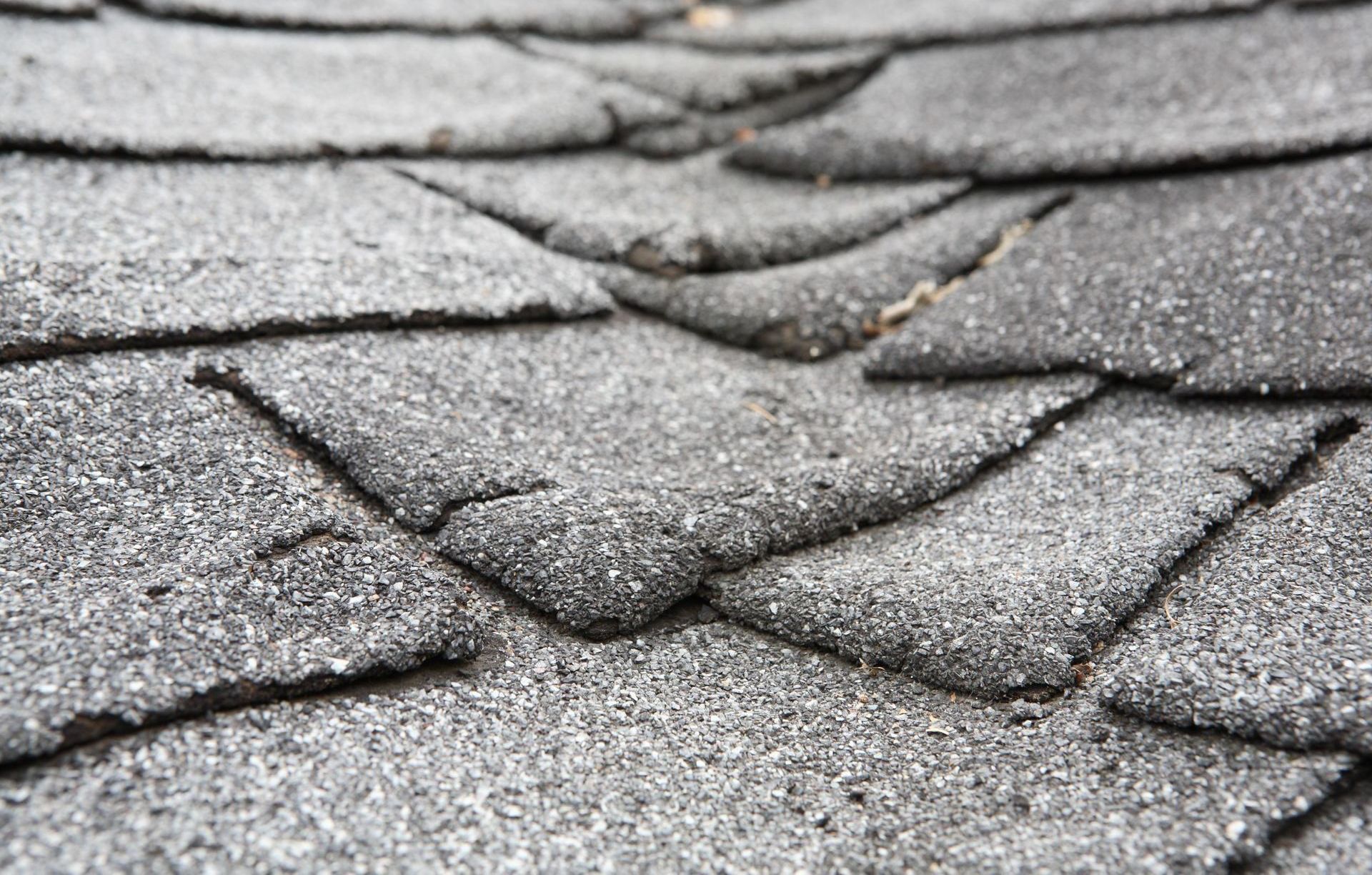
The damage profile differs by hail size and by shingle age. Hail above one inch in diameter produces impact bruising on standard asphalt shingles regardless of shingle age, fracturing the granule bond at the impact point without necessarily dislodging granules or cracking the shingle surface visibly. This is the damage that insurance adjusters specifically look for during post-storm inspections. Hail below one inch on a shingle system past 15 years produces a different pattern: granule displacement that compounds existing UV-related granule loss without producing the discrete impact pattern that identifies it as storm damage rather than age-related wear. The distinction matters because the repair strategy differs.
Rogue Valley Wind Events and the Damage Pattern on Open Valley Floor Properties
Jackson County's open valley floor between the Siskiyou and Cascade ranges channels wind from the south and southwest during storm events in ways that create directional damage patterns on rooflines. Properties on open lots along the Rogue Valley floor between Medford and Gold Hill, and along the Table Rock Road and Biddle Road corridors, experience sustained wind loading from the southwest that lifts shingle adhesive seal strips on south and west-facing slopes while leaving north and east-facing slopes largely unaffected. Post-storm inspections on valley floor properties should specifically examine the seal strip adhesion on south and west slopes even when no shingles are visibly missing, because broken seal strips allow wind-driven rain to force water under the shingle course without any surface displacement.
How to Read the Damage on Your Rogue Valley Roofline Before Calling a Contractor
What Hail Impact Actually Looks Like on an Asphalt Shingle Surface
Hail impact on an asphalt shingle leaves a specific mark that distinguishes it from mechanical damage, debris impact, and UV-related surface failure. The impact point is typically circular or oval, darker than the surrounding shingle surface because the granules at the impact center have been displaced, and slightly soft when pressed with a thumb because the asphalt mat beneath the impact point has been fractured. The fracture is what matters. A shingle surface with the granules displaced but the mat intact below has lost UV protection at that point. A shingle surface with granule displacement and mat fracture has lost weather resistance at that point entirely. Both conditions warrant documentation before any repair contractor is called.
What does not look like hail damage: scalloped granule loss along the shingle tab edges, which is foot traffic damage or granule loss from debris shedding off the roofline above. Granule loss concentrated at the shingle bond line, which is adhesion failure from UV exposure rather than impact. Random missing granule areas without circular pattern, which is manufacturing variation or the end of UV service life rather than storm impact. A contractor who documents any of these patterns as hail damage and submits them to your insurance carrier is misrepresenting the damage condition.
Wind Damage Indicators Specific to Rogue Valley Rooflines
On Rogue Valley rooflines after a significant wind event, the specific indicators that confirm genuine wind damage rather than pre-existing conditions are: shingles that are fully displaced from their position but remain on the roofline, held by the remaining seal adhesion at the undisturbed courses; seal strip adhesion failure showing as lifted shingle tabs on south and southwest-facing slopes without visible shingle displacement; ridge cap pieces that have shifted from their seated position or are partially dislodged at the cap-to-cap mortar or sealant joint; and flashing at chimney and wall transitions that has pulled away from the adjacent surface at a fastener point rather than deteriorating from the fastener inward, which is the thermal cycling failure pattern rather than the wind uplift pattern.
What a Legitimate Post-Storm Inspection Documents That a Quick Walk-Around Does Not
A legitimate post-storm inspection on a Rogue Valley property documents each slope by the number and distribution of impact points, the shingle age and condition surrounding each impact cluster, the seal strip adhesion status by slope orientation, the condition of all flashings at each penetration and transition, the valley flashing condition under any debris accumulation from the storm event, and the attic condition for any moisture entry that preceded the storm rather than resulting from it. A walk-around that produces a single dollar estimate without that documentation has not produced an inspection. It has produced a number, and the number will not tell the homeowner whether the damage is warranty-supportable, whether it qualifies as a genuine insurance claim, or what the repair scope actually needs to include.
How Outlaw Roofing Handles Repair Work Across the Rogue Valley

Pre-Claim Documentation That Supports Legitimate Insurance Recovery
When a Rogue Valley homeowner calls Outlaw after a storm event, the inspection produces written documentation with photographs before any claim conversation begins. The documentation identifies confirmed storm damage by failure mechanism, distinguishes pre-existing age-related conditions from storm-caused damage, and provides a written scope for each category separately. When storm damage is confirmed, Outlaw can be present during the insurance adjuster visit to walk the roof and ensure the adjuster's scope reflects the actual damage condition. Adjusters assess many properties after storm events and occasionally miss secondary damage at flashings or in valleys that the surface inspection alone does not reveal. Having the contractor present at the adjustment is not adversarial. It is the homeowner's best protection against an incomplete scope approval.
Written Repair Proposals That Match the Adjuster-Approved Scope Item for Item
Every Outlaw repair proposal on a post-storm Rogue Valley property lists each scope item separately with its material specification and its cost. When the adjuster has approved a scope, Outlaw's proposal is compared line item by line item to confirm they describe the same project. If the adjuster-approved scope includes ice and water shield at eave edges, the Outlaw proposal specifies the membrane product by name and lists it as a separate line item. If the adjuster-approved scope includes flashing replacement at chimney penetrations, the Outlaw proposal lists each chimney flashing component separately. The homeowner can see exactly how the repair work addresses the approved damage scope before any crew is dispatched.
Permit Filing for All Repair Scopes Meeting the Applicable Threshold
Repair work meeting the City of Medford permit threshold files with the Building Division at 411 W 8th Street, Medford, OR 97501, phone (541) 774-2340. Repair work on properties in unincorporated Jackson County files with the Jackson County Building Codes Division at 10 South Oakdale Avenue, Medford, OR 97501, phone (541) 774-6900. Outlaw determines which jurisdiction applies to every Rogue Valley repair property before any work begins and files the appropriate permit where required. A storm damage repair completed without a permit in a jurisdiction that requires one is not a compliant repair, and it can complicate a future insurance claim or a property sale where the permit history is reviewed.
Workmanship Warranty and Manufacturer Certification That Makes Extended Warranty Coverage Available
Every Outlaw repair on a Rogue Valley property delivers two warranty documents at project close: the workmanship warranty covering Outlaw's installation, and the manufacturer warranty covering the installed surface material and components. Because Outlaw holds manufacturer certifications with GAF, IKO, CertainTeed, WeatherBond, and PolyGlass, qualifying complete system installations on Rogue Valley properties can access extended manufacturer warranty coverage that standard contractor installations cannot unlock. A repair that installs a named certified product with certified installation practices and a permit provides a fundamentally different level of documentation than one that does not.
Storm Damage Red Flags: How to Evaluate Contractors After a Rogue Valley Storm Event
The Door-Knock Inspection and Why It Is Not the Same as a Professional Assessment
The door-knock contractor pattern that follows every significant Rogue Valley storm event produces a specific type of inspection: a brief walk around the property, sometimes combined with a roof walk, that results in a damage assessment without written documentation of the specific conditions found. The homeowner is encouraged to sign a contract or an assignment of benefits before the insurance claim is filed. Once the assignment of benefits is signed, the contractor rather than the homeowner controls the insurance claim process and the repair scope decisions. A homeowner who has signed an assignment of benefits has limited recourse if the repair scope is abbreviated or the materials specified are not what the adjuster approved.
Contractor Licensing Verification Before Signing Any Agreement
Every roofing contractor performing repair or replacement work in Oregon is required to hold a current, verifiable CCB registration. After storm events, out-of-state contractors working in Oregon without a current CCB registration are a documented pattern across the state. Verifying CCB registration before signing any agreement with any contractor takes under a minute at oregon.gov/ccb. Outlaw Roofing's license is CCB#236299. Any contractor who cannot provide a current CCB registration number for Oregon verification should not be authorized to work on a Rogue Valley property regardless of how the inspection went or what the estimate said.
The Scope Verification Test for Any Rogue Valley Storm Repair Quote
Before authorizing any storm repair on a Rogue Valley property, ask any contractor for written answers to these five questions: Is ice and water shield included at all affected eave edges and valleys, and if so what product by name and manufacturer? Is flashing replacement included at every penetration in the storm-affected area, and if so which specific flashings by location? Is a permit being filed, and with which jurisdiction? What is the specific shingle product being installed by manufacturer and product line? And what workmanship warranty is provided, and for how long? A contractor who cannot or will not answer all five questions in writing before the work starts is not providing a complete repair scope. The absence of written answers to any of those five questions is the answer
What Distinguishes Legitimate Storm Damage from Pre-Existing Conditions on Rogue Valley Rooflines
The most important analytical distinction in a Rogue Valley post-storm inspection is between conditions the storm caused and conditions that already existed before the storm. This distinction matters for three reasons: it determines whether a claim is legitimate, it determines the repair scope that the insurance carrier has an obligation to cover, and it protects the homeowner from a contractor who documents pre-existing age-related conditions as storm damage to inflate a claim scope.
A roofline that has been losing granules from UV exposure on south slopes for three years before a hail event did not have its UV protection removed by the hail. The hail event may have accelerated granule loss at impact points, but the surrounding granule depletion is an independent pre-existing condition. A legitimate post-storm inspection documents the impact points as storm damage and the surrounding granule loss as a pre-existing condition, and the repair scope addresses the storm damage while the pre-existing condition supports the replacement conversation rather than inflating the repair claim.
Similarly, a valley flashing that was already at or past its sealant service life before a wind event produced a leak did not have its integrity destroyed by the wind event. The wind event exposed a pre-existing failure. The insurance claim may or may not cover the valley repair depending on policy terms, but the repair scope is the same regardless of the claim outcome. Outlaw's inspection documentation addresses both categories separately and accurately so the homeowner understands what the storm caused and what existed independently of it.
The Rogue Valley Communities Outlaw Serves and What Each Produces in Terms of Repair Calls
Medford, Central Point, and White City Valley Floor Properties
The valley floor communities between Medford and White City represent the highest density of storm repair calls after significant hail and wind events because they contain the largest housing inventory in Jackson County. The 1990s and 2000s production homes in East Medford and the postwar ranch inventory in West Medford and Central Point present the specific repair profiles that their housing eras produce: pipe boot clusters on production two-stories, garage wall transition failures on ranch properties, and valley flashing at addition section intersections. Storm events compound those pre-existing aging conditions by adding impact bruising to already-thinning granule surfaces and exposing flashing failures that rain intensity alone was not sufficient to reveal.
Eagle Point, Gold Hill, and the Northern Jackson County Corridor
The northern Jackson County communities along the Crater Lake Highway and the Rogue River corridor experience the heaviest hail exposure in the valley based on storm track patterns from the Cascade foothills. Eagle Point's two-era housing profile, ranch homes near Main Street and tile-roofed golf community homes, each produces different storm damage patterns. The ranch home pipe boot cluster failures are typically compounded by storm events that accelerate existing collar degradation. The golf community tile ridge mortar failures are typically exposed by wind events that lift already-cracked mortar joints to the point of active water entry. Gold Hill's older housing stock along the Rogue River corridor carries the long service histories and accumulated maintenance deficits that make storm exposure the event that finally reveals pre-existing failures.
Ashland, Talent, and the Southern Valley Communities
The southern valley communities carry the Almeda Fire context for properties that survived 2020, the historic district roofline complexity for older Ashland properties in the Siskiyou-Hargadine district, and the rebuilt post-fire housing inventory for Talent and Phoenix. Storm events in the southern valley tend to arrive from the south through the Siskiyou Pass before tracking northeast, which means they hit the southern communities first and can be more intense at Ashland and Talent than they are by the time they reach Medford. After any significant southern valley storm event, Ashland's Craftsman and Victorian dormers warrant a specific inspection of the dormer valley flashing that standard storm walk-arounds do not include.
Upper Rogue Communities Along Highway 62
Shady Cove, Trail, and the Upper Rogue communities along Highway 62 carry older rural housing stock with longer service intervals between professional inspections than the valley floor communities. Storm events in the Upper Rogue corridor tend to involve higher precipitation volumes and occasionally snow at higher elevations, which compounds the existing flashing and valley conditions on rural properties that have not had maintenance attention in several years. Upper Rogue properties are served under Jackson County Building Codes Division jurisdiction for permit purposes rather than city building departments.
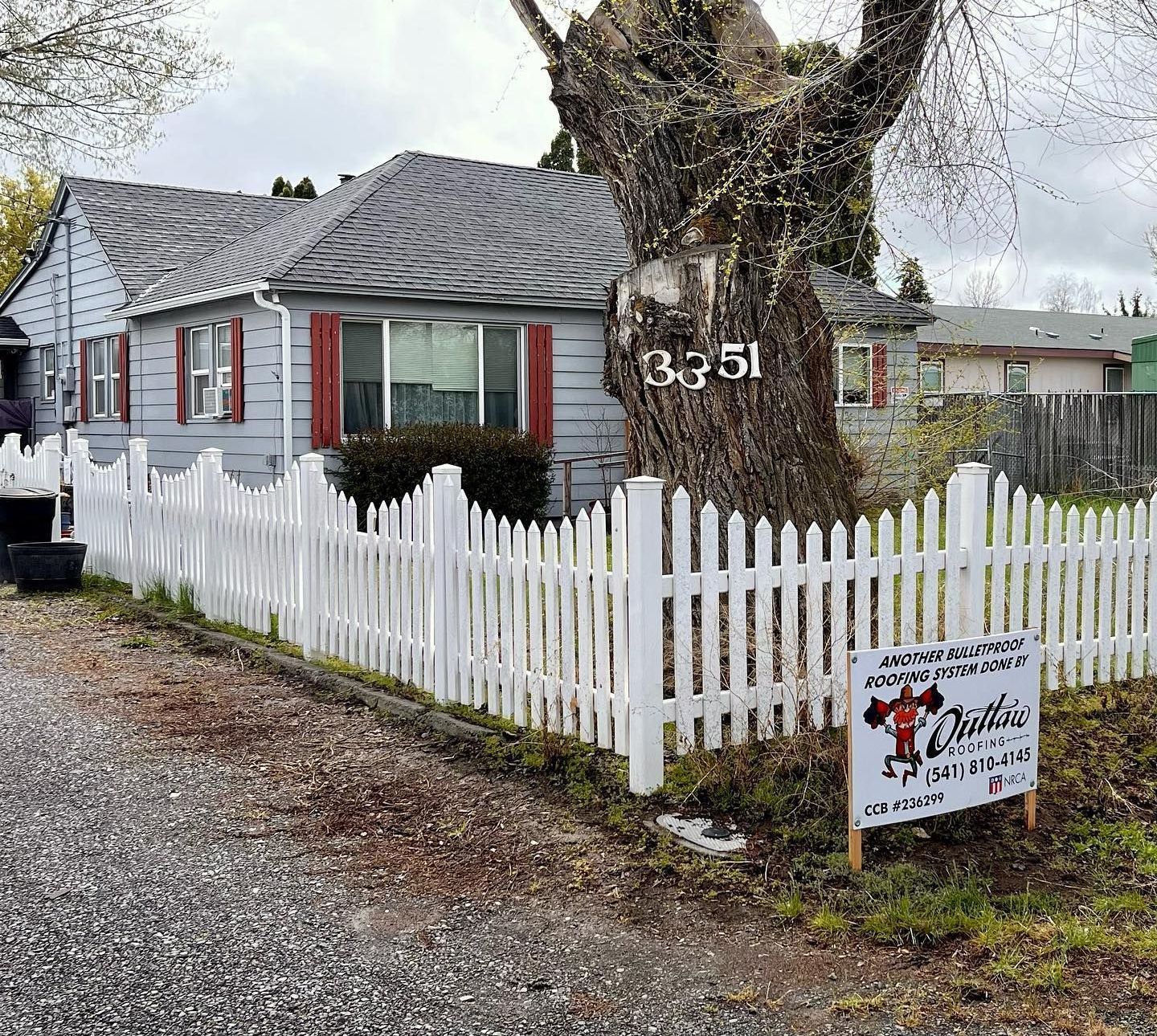
A Recent Rogue Valley Storm Repair: What the Door-Knock Contractor Left Behind
Two summers ago Outlaw received a call from a homeowner on a rural property east of Gold Hill along the Rogue River corridor. The property had been hit by a hail event the previous spring. A door-knock contractor had arrived within ten days of the storm, assessed the damage, filed a claim on the homeowner's behalf, and completed the repair before the homeowner had an opportunity to review the adjuster-approved scope against what was actually installed.
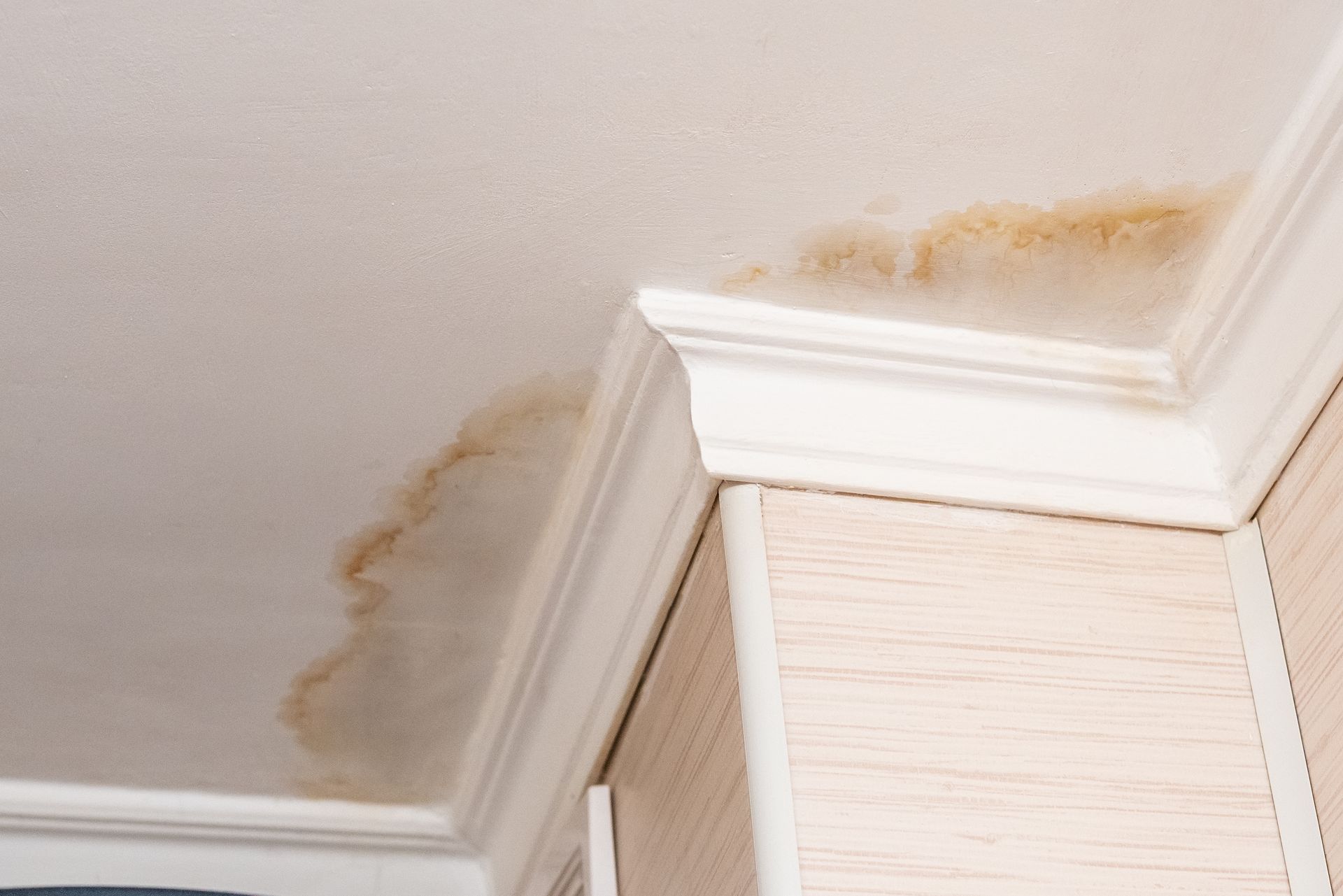
The homeowner called Outlaw after noticing that two areas of ceiling staining had appeared the following winter, neither of which had been present before the storm repair. The inspection found that new shingles had been installed over the original valley metal at the main valley intersection without removing and replacing the original flashing. The adjuster-approved scope had included valley flashing replacement. The contractor had installed new shingles over the old flashing and collected the flashing replacement line item. The second stain traced to a pipe boot that had been in the storm damage zone. The boot had not been replaced. The original neoprene collar, cracked from UV exposure predating the storm, was still in place under the new shingle course that surrounded it.
Outlaw's scope to correctly complete what the original contractor had been paid to do: valley metal removal and replacement at the main valley with ice and water shield beneath the new metal, and EPDM pipe boot replacement at the stack in the storm damage zone. Jackson County Building Codes Division permit filed for the repair scope. Total for the corrective work: $2,100. The original contractor had been paid by the insurance carrier for both items and had not installed either one.
Why Rogue Valley Homeowners Choose Outlaw Roofing for Storm and Standard Repair Work
✓ Veteran-Owned and Region-Based Rather Than Storm-Chasing
Riley builts Outlaw Roofing in Southern Oregon and have been working Rogue Valley properties since 2011. They are available before the storm season, after the storm event, and for the follow-up inspection two years later. The storm-chasing contractor model that arrives after significant events and departs when the insurance money runs out is not Outlaw's business model.
✓ CCB#236299 — Oregon Licensed and Verifiable Before Any Agreement Is Signed
Search CCB#236299 at oregon.gov/ccb before signing any agreement with any roofing contractor after a Rogue Valley storm event. The license is current and covers all roofing work in Jackson County including unincorporated areas and all incorporated cities. Verifying contractor licensing before signing is the single most effective homeowner protection against the door-knock contractor pattern.
✓ Written Scope That Matches the Insurance Approval Line for Line
Outlaw's post-storm repair proposals list every approved scope item by name, material specification, and cost before any work is authorized. When the adjuster-approved scope and the Outlaw proposal are placed side by side, they describe the same project. When a line item in the adjuster scope is not in the contractor proposal, that discrepancy is identified before the work starts rather than discovered after the repair fails.
✓ Permit Filed in the Correct Jurisdiction Before Work Begins
Outlaw files with the City of Medford Building Division at 411 W 8th Street, phone (541) 774-2340, for city-limits properties, and with the Jackson County Building Codes Division at 10 South Oakdale Avenue, phone (541) 774-6900, for unincorporated county properties. Every Rogue Valley repair scope receives the correct permit determination before any crew is dispatched.
What Roof Repair Costs Across the Rogue Valley by Damage Type
Hail Impact Repair on Valley Floor Properties: $1,200 to $4,500
Post-hail repair scope on a Rogue Valley valley floor property, covering impact-damaged shingle replacement, valley flashing replacement at affected valley sections, and ice and water shield at affected eave edges, typically runs $1,200 to $4,500. The range reflects the storm intensity, the number of affected slopes, the age of the surrounding shingle system, and the number of flashing locations within the impact zone. Properties where the hail damage is concentrated on one slope of a simple ranch roofline run toward the lower end. Properties where the impact zone covers multiple slopes of a complex production home roofline with multiple valleys and penetrations run toward the upper end.
Wind Damage Repair Including Flashing and Seal Strip Restoration: $800 to $3,200
Post-wind damage repair on a Rogue Valley property, covering shingle resetting and bonding at broken seal strip locations, ridge cap replacement where storm displacement has occurred, and flashing replacement at any chimney or wall transition where wind uplift has separated the flashing from the adjacent surface, typically runs $800 to $3,200 depending on the extent of seal strip failure and flashing displacement. Wind damage repair scopes are typically narrower than hail damage repair scopes because wind produces directional damage on the windward slopes rather than impact damage across all slopes.
Storm Repair Corrective Work Where Prior Contractor Left Incomplete Scope: $900 to $2,500
Corrective repair work on a Rogue Valley property where a prior storm contractor completed an incomplete scope, typically involving valley flashing that was approved but not replaced, pipe boots that were approved but not replaced, or ice and water shield that was approved but not installed, typically runs $900 to $2,500 depending on the number of incomplete items and their access complexity. Jackson County and City of Medford permit fees included as a separate line item where the corrective scope meets the permit threshold.
What Experienced Inspectors Assess on Every Rogue Valley Post-Storm Roofline
The post-storm inspection protocol on a Rogue Valley property starts at the attic before going on the roof. Any moisture staining that predates the storm event is documented as a pre-existing condition before the storm damage assessment begins. This sequence matters because it prevents pre-existing moisture damage from being attributed to the storm event in either direction. The homeowner receives an accurate picture of what existed before the storm and what the storm caused.
The roof-level assessment covers every slope by quadrant, documenting impact count and distribution, seal strip adhesion status by hand testing at representative locations on each slope, and flashing condition at every penetration and transition within the storm exposure zone. On properties along the northern Jackson County corridor where hail events are most intense, all four slope orientations are assessed regardless of which slope faces the storm's primary approach direction, because hail scatter and wind direction shifts during storm passage can produce impact damage on the downwind slope as well as the windward slope.
Valley clearing is part of every post-storm inspection on properties along the Rogue River corridor and the Upper Rogue communities, where storm events deposit debris from the surrounding riparian and forested canopy into valley intersections. A valley carrying compressed storm debris has been delivering concentrated moisture to the flashing beneath it at every event in the series, and the flashing condition under that debris is not assessable from the surface without clearing it first.
How Long Storm Repair Work Lasts on Rogue Valley Properties
A correctly scoped and correctly installed storm repair on a Rogue Valley property delivers the remaining service life of the new surface material, which is the full design service life of the product installed. GAF Timberline HDZ architectural shingles correctly installed at a hail-damaged slope section on a valley floor Medford property deliver 22 to 27 years of reliable service on south-facing slopes and 25 to 28 years on north-facing slopes under Rogue Valley UV conditions. That service life assumes the flashing beneath the new shingles was replaced at the same time, the ice and water shield was installed at eave edges and valleys, the permit was filed and inspected, and the manufacturer certification conditions were met. A repair that abbreviated any of those conditions delivers a shorter and less predictable service life than the product's design specification.
The corrective repairs that Outlaw performs on previously incomplete storm scopes hold for the remaining life of the surrounding system rather than for a defined term, because the failure mechanism was not a material failure but a missing scope item. Once the valley metal is correctly installed and the pipe boot is correctly seated, those components perform at their design specification for the years the surrounding shingle system has remaining.
Quick Answers About Roof Repair in the Rogue Valley, OR
How do I know if my Rogue Valley home has legitimate storm damage?
Legitimate storm damage shows a specific pattern: circular or oval impact marks with granule displacement on shingle surfaces, broken seal strip adhesion on windward slopes, displaced or shifted ridge cap pieces, or flashing that has been mechanically separated from an adjacent surface rather than thermally deteriorated. An inspection that documents these specific conditions with photographs before a claim is filed is the foundation of a legitimate claim. An inspection that documents general roofline wear and calls it storm damage is not.
How much does storm repair cost in the Rogue Valley?
Post-hail repair scopes run $1,200 to $4,500 depending on damage extent and roofline complexity. Wind damage repair runs $800 to $3,200. Corrective work on incomplete prior storm scopes runs $900 to $2,500. All Outlaw repairs begin with a free inspection and written proposal before any work is authorized.
Should I let a door-knock contractor file my insurance claim?
Understanding what you are signing before authorizing any contractor to act on your behalf in an insurance claim is essential. An assignment of benefits transfers claim control from the homeowner to the contractor. Before signing any agreement with a post-storm contractor, verify their CCB license at oregon.gov/ccb, ask for a written scope that lists every item separately, and confirm whether a permit will be filed before work begins.
Does storm repair in the Rogue Valley require a permit?
Some repair scopes require a permit through the City of Medford Building Division at 411 W 8th Street, phone (541) 774-2340, for Medford city-limits properties, or the Jackson County Building Codes Division at 10 South Oakdale Avenue, phone (541) 774-6900, for unincorporated county properties. Outlaw determines the applicable jurisdiction and permit requirement for every Rogue Valley repair before work begins.
How long after a Rogue Valley storm event should I call for an inspection?
Ideally within two to four weeks of the event, before storm contractors have saturated the market and before the next weather system adds new moisture to any damage the storm created. Oregon homeowner insurance policies typically have a filing deadline for storm damage claims, and most require that damage be documented before subsequent weather events complicate the attribution. The inspection does not commit the homeowner to a claim or a repair. It provides accurate documentation so the homeowner can make an informed decision about both.
Frequently Asked Questions About Roof Repair in the Rogue Valley, OR
How do I verify Outlaw Roofing's Oregon contractor license?
Go to oregon.gov/ccb and search for CCB#236299. The current license status and verification display immediately. Every contractor performing roofing work in the Rogue Valley is required to hold a current, verifiable CCB registration.
What communities does Outlaw Roofing serve across the Rogue Valley?
Outlaw serves residential properties throughout Jackson County including Medford, Central Point, Eagle Point, Ashland, Talent, Phoenix, Jacksonville, Gold Hill, White City, Shady Cove, and the unincorporated communities of the Upper Rogue corridor along Highway 62. Permit filing is coordinated with the appropriate city building department or with the Jackson County Building Codes Division depending on the property's jurisdiction.
My storm damage repair was completed by a contractor six months ago and I now have new ceiling stains. What should I do?
Call for a professional inspection before the next significant rain event if possible. The inspection will determine whether the new stains are from the same location as the original damage or from a new location, whether the prior repair scope was correctly installed, and whether any approved scope items were omitted during the original repair. Outlaw documents these findings in writing so the homeowner has an accurate record for any follow-up conversation with their insurance carrier or with the original contractor.
Does Outlaw Roofing offer financing for Rogue Valley homeowners?
Yes. GreenSky financing up to 100 percent for qualified Rogue Valley homeowners with fixed monthly payment terms. Military discount for veterans and active service members throughout Jackson County and the surrounding Southern Oregon region.
What related services does Outlaw provide across the Rogue Valley?
Rogue Valley homeowners whose storm damage assessment confirms that replacement rather than repair is the appropriate scope can reference Outlaw's residential roof replacement pages for each specific community. The residential roofing contractor pages for each Rogue Valley community cover Outlaw's full certification structure, service area, and inspection methodology for that specific location.
Residential Roofing Services We Provide in Jacksonville, OR

Rogue Valley Homeowners: Get Your Written Repair Estimate From Outlaw Roofing
A Rogue Valley storm damage repair that does not include ice and water shield, flashing replacement, and a permit is not a complete repair. It is a partial repair that will produce the next call within two to three wet seasons. Outlaw inspects what is actually there, writes what it found, matches the scope to the adjuster approval, and prices the work before any crew is dispatched. Riley, veteran-owned, CCB#236299. GreenSky financing available. Military discount for veterans. Call (541) 275-6189 or schedule at /contact.