Residential Roof Repair in Midland, OR
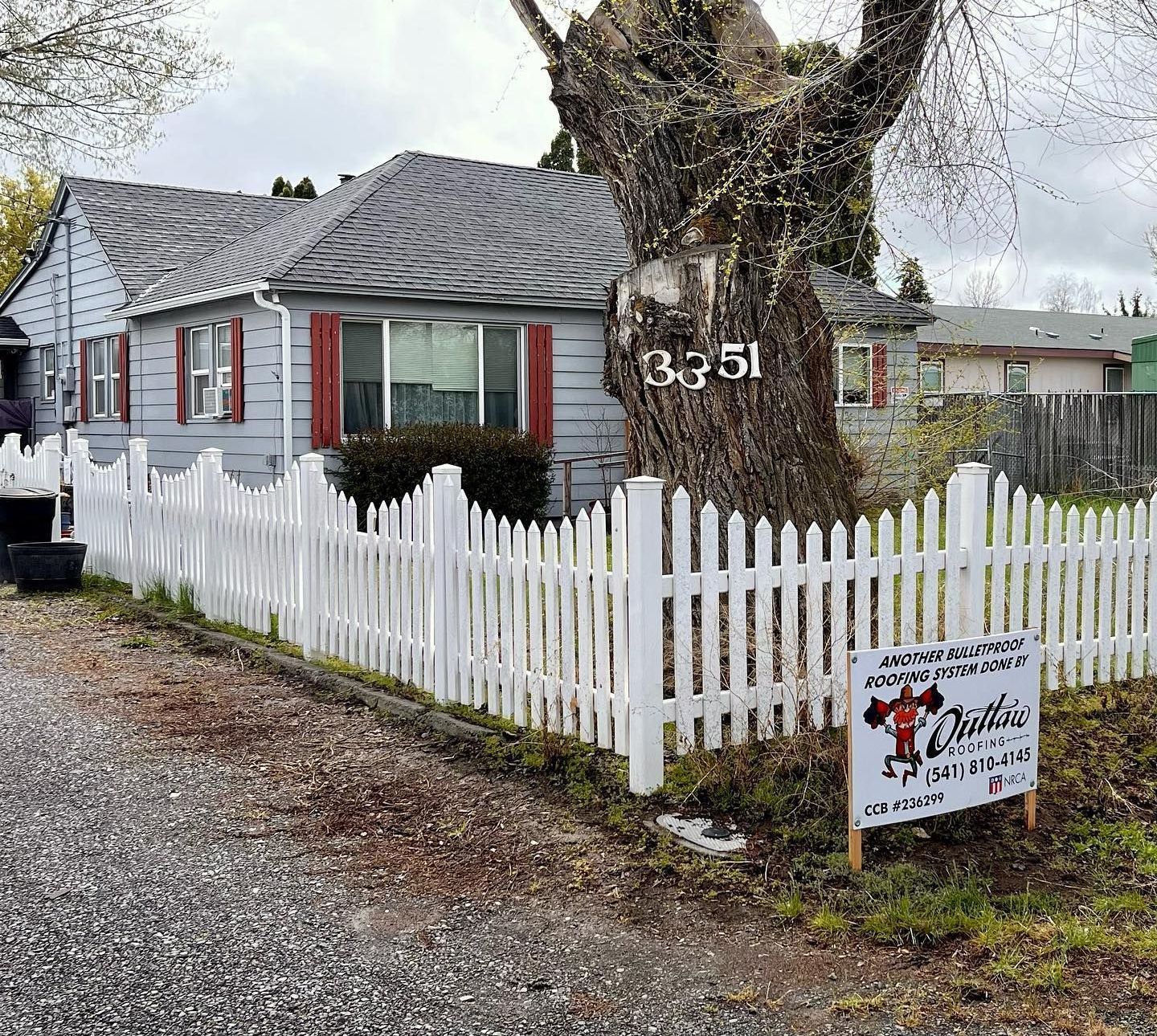
Roof Repair in Midland, OR: What Happens When Multiple Roofline Conditions Have Been Building Simultaneously for Years, and Why the Repair Scope Has to Address Them in the Right Sequence
Most roofing repair calls come from a single triggering event: a ceiling stain after a rain event, a missing ridge cap after a wind event, a call-back after a prior repair failed. The homeowner has a specific complaint, the inspector has a specific location to examine, and the repair scope addresses that specific condition. Midland properties along US Route 97 and the rural residential corridors off Crystal Springs Road and Hill Road frequently produce a different kind of call: the homeowner has not had anyone on the roof in eight to twelve years, something has finally broken through enough to produce a visible interior stain, and the inspection that follows finds not one condition requiring repair but four or five that have been accumulating simultaneously across the same service period.
Midland is an unincorporated community about eight miles south of Klamath Falls with a median resident age of over 53 years and nearly thirty percent of its population aged 65 or older. Many Midland homes have been owner-occupied for twenty or thirty years by the same household, which is the tenure pattern that produces long roofline inspection intervals. The roof is not a daily priority. It performs its function invisibly until it cannot, and by the time the first visible symptom appears, the inspection that follows frequently reveals that the pipe boot collar degraded four years ago, the chimney step flashing separated two years ago, the valley lap sealant failed at some point in between, and the south slope shingles have been past granule protection threshold for the last three winters. The symptom that called for the inspection is the fifth condition, not the only one.
Our team, veteran-owned and operating under Oregon CCB license #236299, write repair proposals for Midland properties that document every condition found during the inspection and present the repair scope in the sequence that matters: the active water entry conditions first, the accelerating deterioration conditions second, and the deferred maintenance conditions third. Klamath County Building Codes Division permit at 305 Main Street, Klamath Falls, OR 97601, phone (541) 883-5121, filed where required. GAF, IKO, CertainTeed, WeatherBond, and PolyGlass certified. GreenSky financing available. Military discount for veterans and active service members. Call (541) 275-6189.
The Compound Repair Conditions That Long-Interval Midland Properties Produce

Pipe Boot Collar Failure After a Decade Without Inspection
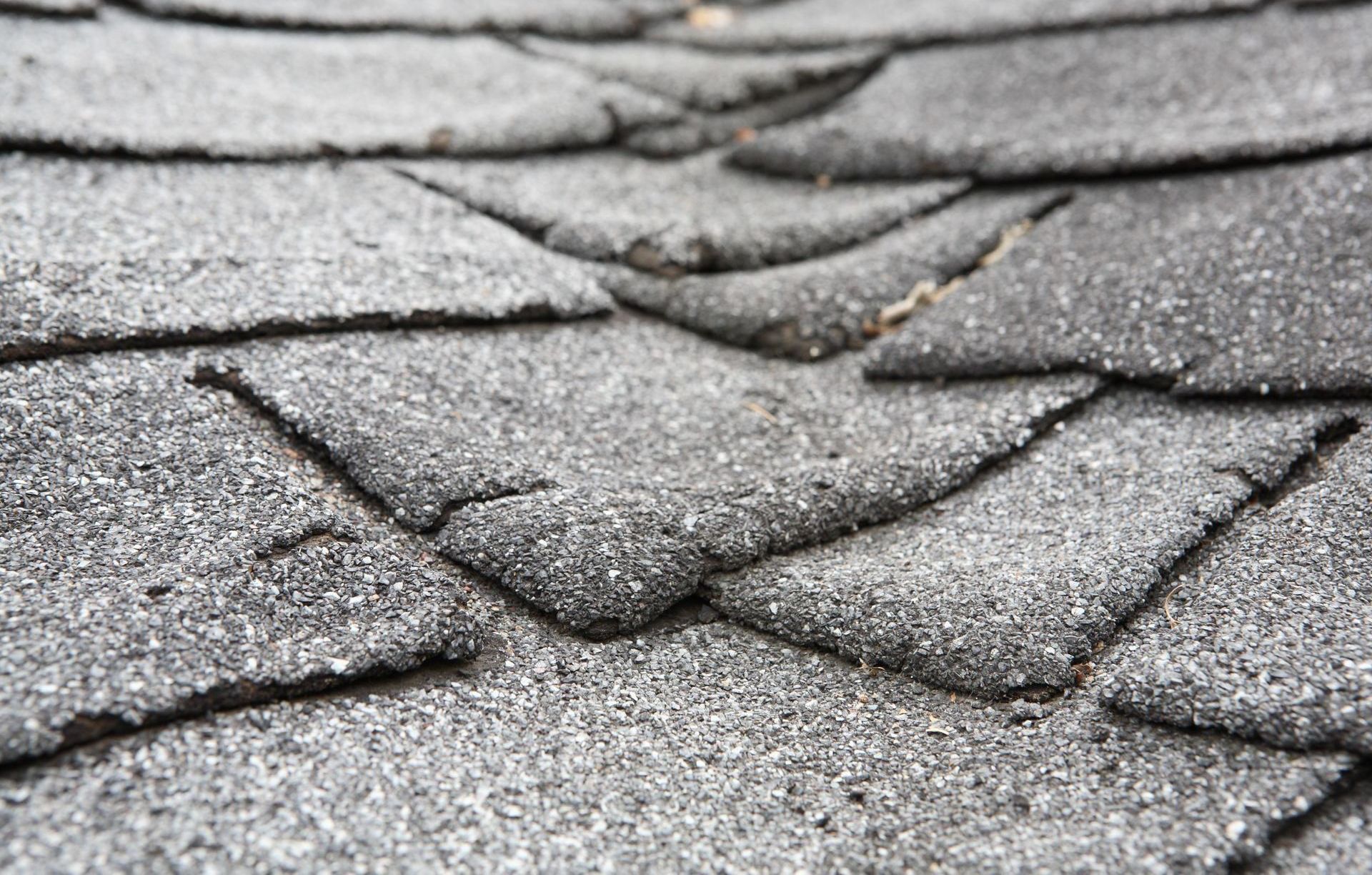
Standard EPDM pipe boot collars on Klamath County residential properties have a service life of 10 to 15 years under the UV intensity and freeze-thaw cycling that the Klamath Basin delivers. A Midland home that last had a roofing contractor on the roof twelve years ago has pipe boot collars that have been aging through their service life without any monitoring. EPDM at 12 years under Klamath Basin UV conditions has lost the flexibility that makes it an effective weather seal at the pipe-to-boot junction. The collar may still look acceptable from the ground but has been allowing small volumes of water entry at the base of the pipe penetration with each significant rain event for the past two to four years. The entry volume is small enough that the ceiling below does not stain visibly until moisture has accumulated in the attic insulation and deck for an extended period.
Valley Lap Joint Sealant Failure on the Original or Early Replacement Valley Flashing
Valley metal flashing on Midland residential properties installed at the original construction or at the first replacement cycle frequently carries lap joint sealant that was applied 15 to 20 years ago under the current roofing system. That sealant has been through 15 to 20 Klamath Basin UV summers and freeze-thaw winters. At the high end of that range, the sealant has cracked through at some point in the lap joint center and water has been entering the lap junction during significant rain events, running below the valley metal and draining toward the nearest penetration in the deck below. This failure produces moisture entry that does not appear at a specific shingle location and cannot be identified from the yard, which is one reason Midland homeowners on long inspection intervals do not catch it until another condition has already triggered the call.
Chimney Flashing Mortar Joint Separation on Older Midland Ranch Homes
The single-story ranch homes that constitute much of the residential housing stock in the Midland community along US Route 97 and the surrounding rural roads carry brick chimneys from their original construction period, with counter flashing set into mortar joints that have been through however many Klamath Basin freeze-thaw cycles have elapsed since original installation or last replacement. Counter flashing separation from deteriorated mortar joints on these chimneys is a condition that develops slowly across many seasons before it produces a stain that the homeowner notices. On a Midland property where the last roofing professional on the site was twelve years ago, the chimney flashing condition represents twelve years of unmonitored mortar joint degradation under Klamath Basin cycling.
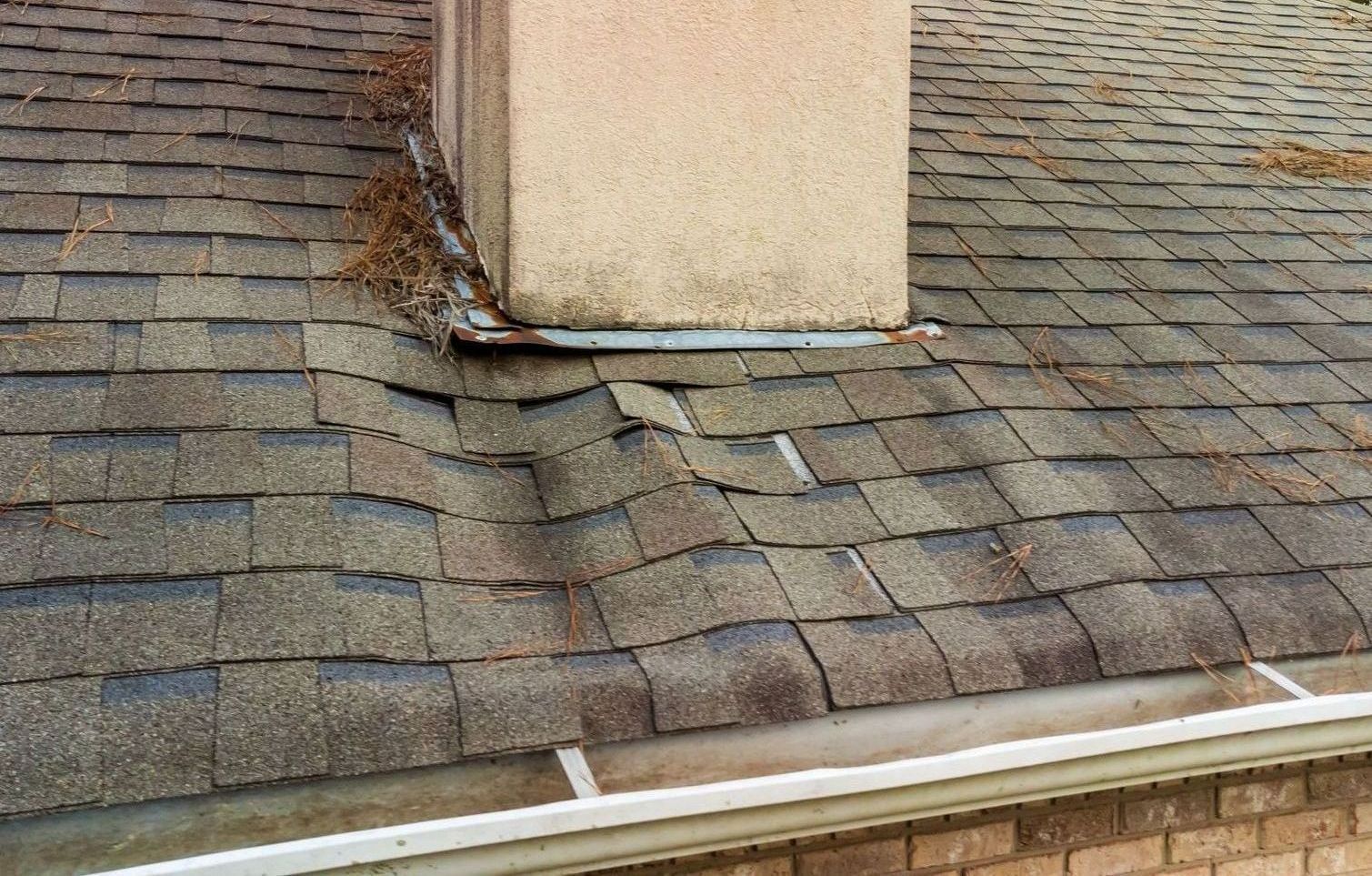
South Slope Granule Depletion Past UV Protection Threshold
The high desert UV loading that Klamath County properties receive compresses the shingle service life on south-facing slopes relative to what the same product delivers in lower-elevation or higher-latitude markets. A 20-year Klamath Basin south slope shingle has been through more cumulative UV exposure than a 20-year Oregon coast shingle or a 20-year Portland metro shingle on the same product. On Midland properties where the roof system is 18 to 22 years old and no professional has assessed the granule coverage on the south slope in the prior decade, that slope may be past the UV protection threshold and absorbing direct UV loading on the asphalt binder. The south slope does not produce a ceiling stain that signals this condition. It produces accelerated aging that shortens the remaining service life without any visible interior indicator until the binder begins to crack.
Gutter System Deterioration and Fascia Damage on Long-Interval Properties
Gutter systems on Midland rural properties that have not been professionally inspected or cleaned in eight to twelve years carry accumulated debris loads, fastener fatigue from freeze-thaw cycling, and in many cases fascia board moisture damage at the gutter attachment line where debris-clogged gutters have been retaining water against the fascia surface for multiple wet seasons. The fascia damage on these properties is not always visible from the yard because the gutter body conceals the fascia face behind it. The full fascia condition at the attachment line is only revealed when the gutter is removed or lifted, which a routine cleaning does not accomplish and a professional inspection does.
Reading the Compound Condition Profile on a Midland, OR Long-Interval Property
Interior Stain Location as the Starting Point for a Multi-Condition Inspection
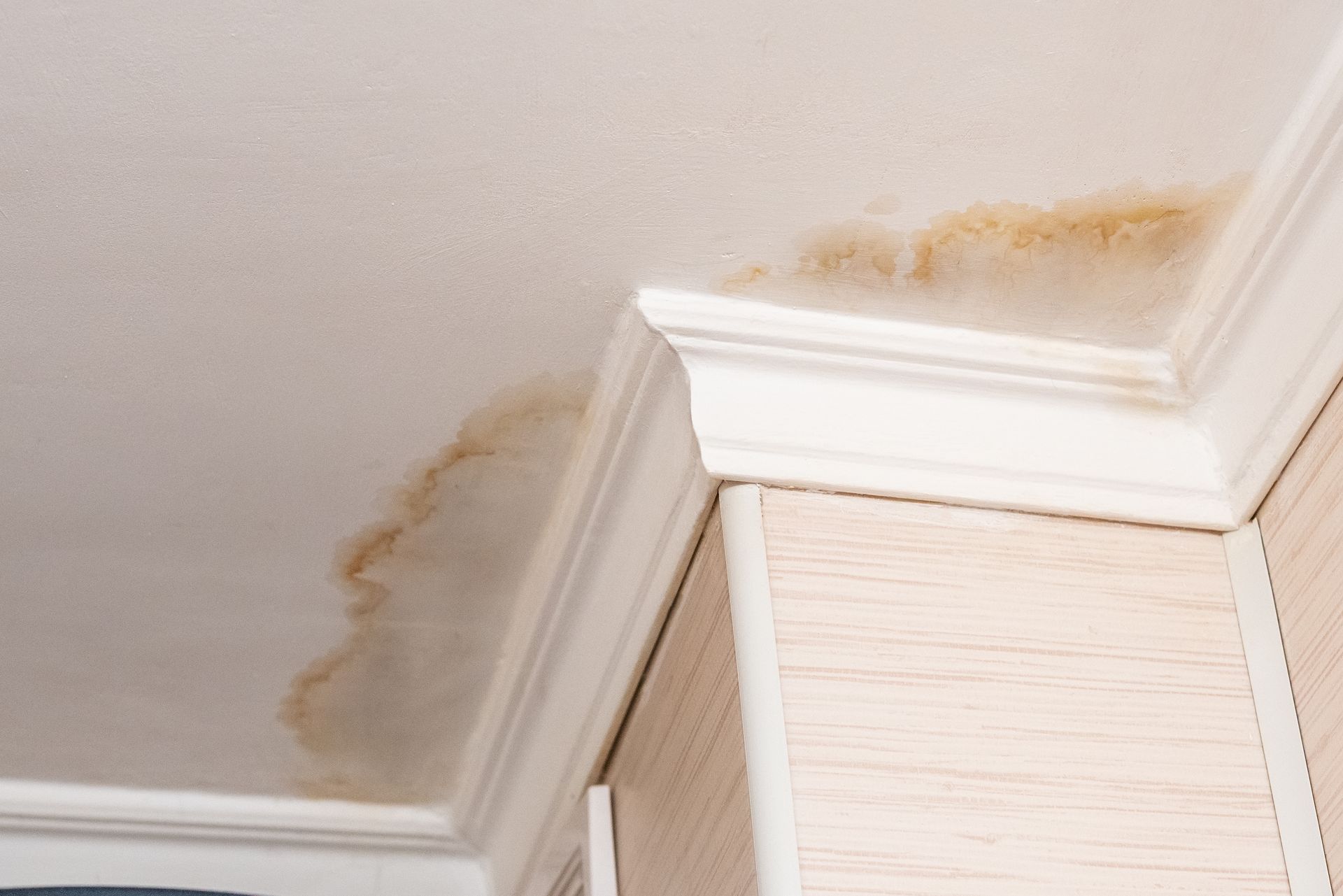
When a Midland homeowner calls about a ceiling stain after a long inspection interval, the stain location is the starting point for the inspection, not the endpoint. The stain tells the inspector which condition finally broke through to visibility. The inspection then works backward from the stain to the entry point above it, and simultaneously works across the rest of the roofline to identify what other conditions are present that have not yet produced visible interior symptoms. On a Midland long-interval property, the stain that triggered the call is frequently not the most serious condition the inspection finds. It is often the most recently developed condition, while older and more advanced conditions at other roofline locations have been entering water in smaller volumes for longer periods without breaching the ceiling below.
The Sequence of Condition Development on Aging Klamath Basin Rooflines
On a Midland property with a 20-year shingle system and a 12-year inspection interval, the conditions Outlaw typically finds have developed in a predictable sequence. South slope granule depletion advanced past the UV protection threshold between years 15 and 18. Pipe boot collar EPDM flexibility was lost between years 10 and 14. Valley lap joint sealant cracked at some point between years 12 and 16 depending on which face of the valley received the most direct UV loading. Chimney mortar joint separation began as a minor crack between years 10 and 15 and has been working open gradually through subsequent freeze-thaw cycling. Each condition has been present for a different portion of the inspection interval, and the repair scope reflects their different development stages and urgency levels.
The Inspection That Finds Five Conditions and How Outlaw Prioritizes Them
A Midland inspection that finds active pipe boot entry, valley lap joint water infiltration, chimney flashing gap at the mortar joint, south slope granule depletion past protection threshold, and gutter-related fascia moisture damage presents the homeowner with a prioritization decision that the written proposal must support. Outlaw presents these five conditions in three groups: active water entry conditions that are currently introducing moisture into the structure and require immediate repair, accelerating deterioration conditions that are not currently producing visible interior staining but will reach the active entry threshold within one to two additional wet seasons without repair, and deferred maintenance conditions that warrant attention within the current inspection cycle but are not yet at the accelerating threshold.
How Outlaw Roofing Inspects Midland, OR Long-Interval Properties

Comprehensive Roofline Documentation Before Any Scope Is Written
Every Outlaw inspection on a Midland property where the homeowner reports a long interval since the last professional assessment conducts a full roofline documentation before any scope is written. Every penetration is identified and the collar or flashing condition at each is assessed. Every valley is cleared of any debris and the lap joint condition beneath it is examined. The chimney is assessed at all four faces for counter flashing condition. The south slope granule coverage is assessed by section against the surrounding north slope as a relative age reference. The gutter system is examined at the attachment line, the end caps, and the downspout connections. All findings are documented in writing with their assessed urgency level before any repair scope is presented.
Sequencing the Repair Scope for Maximum Value and Minimum Return Visits
After documenting all conditions, Outlaw sequences the repair scope to minimize the number of return visits required over the following two to three years. A Midland long-interval property where five conditions are found does not need five separate repair visits if the conditions are addressed in a coordinated sequence during a single comprehensive mobilization. Outlaw identifies which conditions can be addressed concurrently during the same crew visit, which conditions must be addressed before others can be assessed accurately, and which conditions can be monitored through one additional wet season without material risk of additional damage. That sequencing shapes the proposal into a prioritized repair plan rather than a list of line items without context.
Attic Assessment to Document Damage History Before Exterior Repair Begins
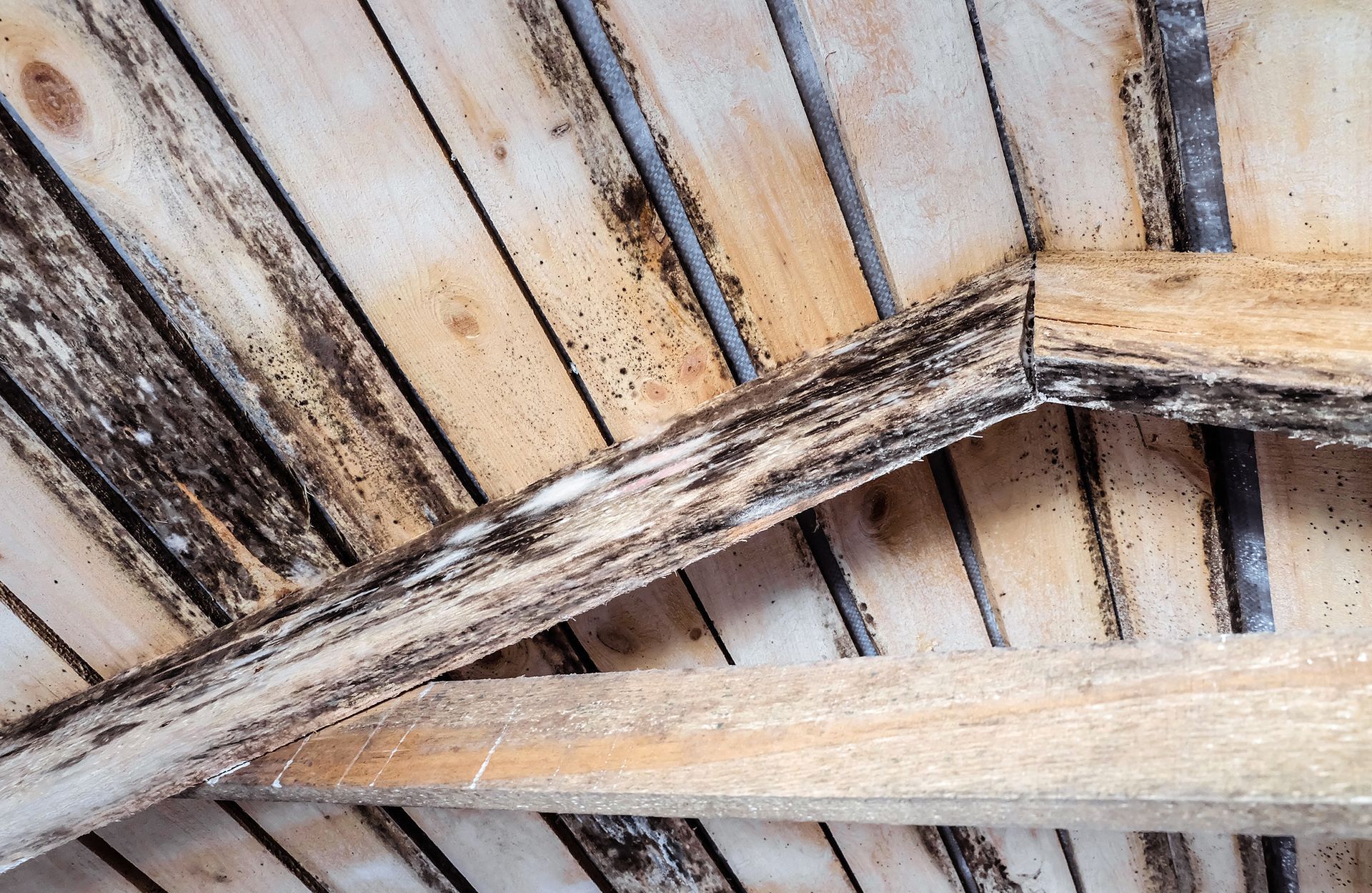
On Midland long-interval properties where multiple active water entry conditions are suspected, the attic is inspected before any exterior repair work begins. The attic documents the history of the conditions that have been present: deck board moisture staining at the pipe boot locations, debris track marks below valley lap joint failures, moisture patterns at the eave above any ice dam history, and insulation compression at locations where water has been pooling before draining. That history tells the inspector how long each condition has been active and whether the deck below any penetration or flashing failure has accumulated moisture damage that needs to be addressed as part of the repair scope.
Klamath County Building Codes Division Permit Where Required
Repair work meeting the Klamath County permit threshold for Midland properties, which are in unincorporated Klamath County, files with the Building Codes Division at 305 Main Street, Klamath Falls, OR 97601, phone (541) 883-5121. Outlaw determines the permit requirement for every Midland repair before any work begins and files where required.
Materials Outlaw Specifies for Compound Repair Scopes on Midland, OR Properties
TPO Pipe Boot Collars at All Penetration Replacements on Long-Interval Properties
Pipe boot collar replacement on Midland long-interval properties specifies TPO (thermoplastic polyolefin) collars rather than standard EPDM where multiple penetrations require replacement in the same repair mobilization. TPO delivers a longer service life under Klamath Basin UV exposure than EPDM at the same gauge, with published service life estimates of 20 to 25 years versus 10 to 15 for standard EPDM. On a Midland property where the homeowner wants the repair to last through the next ownership decade without returning to the same penetration locations, the material upgrade at the time of the coordinated repair mobilization is less expensive than a second penetration repair mobilization five years later when the EPDM replacement would have also reached its service threshold.
Full Valley Metal Replacement Rather Than Lap Sealant Reapplication on Older Valleys
When Outlaw finds valley lap joint sealant failure at a Midland long-interval property, the standard repair is full valley metal replacement with ice and water shield beneath the new metal rather than sealant reapplication on the existing valley metal. Sealant reapplication on a valley where the existing metal has been through 15 to 20 Klamath Basin seasons addresses the visible sealant failure without addressing the underlying metal condition, which reflects the same aging history as the sealant. A new valley metal with current-standard ice and water shield beneath it delivers 20 to 25 years of reliable service, resetting the valley condition clock to zero rather than extending the existing system's service life by the interval until the next sealant failure.
Type S Mortar at Chimney Counter Flashing Repointing on Older Ranch Home Chimneys
Counter flashing reinstallation at Midland ranch home chimneys with mortar joint deterioration specifies Type S mortar for all repointing at the attachment course, consistent with Outlaw's specification for all Klamath County chimney flashing work. Type S delivers the durability appropriate to outdoor masonry in freeze-thaw cycling conditions that the Klamath Basin produces annually. Standard pre-mixed mortar compounds applied at chimney repairs on Midland properties that experience regular freeze-thaw cycling begin showing crack initiation within three to five years. Type S repointing on a well-executed repair holds through 20 or more Klamath Basin winter cycles.
Repair or Replacement for Midland, OR Properties
When Coordinated Multi-Condition Repair Is the Right Scope
A Midland property where the comprehensive inspection finds pipe boot failure at two penetrations, valley lap joint sealant failure at one valley, chimney counter flashing separation at one face, and south slope granule depletion approaching but not yet past the UV protection threshold, and where the roofing system is at 18 years with the north slope in sound condition, is a repair situation addressed in a coordinated single-mobilization scope. The repair addresses the four active and accelerating conditions with the materials and specifications that extend the repaired locations to the north slope's remaining service life. The south slope is documented in the written findings as the monitoring condition for the following inspection cycle. See also: /residential-roofing-contractor-midland-or
When the Midland Property Condition Points Toward Replacement
A Midland property where the comprehensive inspection finds active water entry at six or more locations simultaneously, south slope granule depletion past the UV protection threshold with cracking asphalt binder visible under close examination, deck board softening below multiple penetration locations indicating multi-season moisture accumulation, and a roofing system at 22-plus years, is not a repair situation. The scope and frequency of compound failures across a system at that age indicates end-of-service-life rather than addressable isolated conditions. Replacement with a full-system mobilization is the investment that makes sense at this condition stage. See also: /residential-roof-replacement-midland-or
Why Midland's Rural Character and Demographics Drive the Long-Interval Inspection Pattern
Midland is an unincorporated community along US Route 97 approximately eight miles south of Klamath Falls, platted in 1908 with a post office established in 1909. The community has developed over more than a century into a quiet rural residential area where farmland and residential lots share the landscape between the highway and the surrounding Klamath Basin terrain. The median resident age of over 53 years reflects the community's appeal to long-term rural households and retirees who value the space and quiet of the US 97 corridor south of the city without the density of Klamath Falls itself.
Long-term owner-occupancy in rural Klamath County communities like Midland produces the specific inspection pattern that Outlaw encounters on these properties: owners who have maintained the same home for fifteen or twenty years, who know their home well and manage it responsibly, but who do not routinely schedule professional roofing assessments because the roof has not given them a reason to call. The absence of a reason to call is not the same as the absence of conditions developing. The Klamath Basin climate produces its aging effects on every roofline every year, whether or not anyone is watching. The conditions that compound over a 12-year interval on a Midland property have been accumulating at a predictable rate from the day the inspection interval began.
The rural setting also affects contractor access patterns. Midland properties are not within the dense service zone that suburban Klamath Falls roofing contractors walk past daily or that generates the neighborhood-referral repair calls that keep roofline conditions visible in the minds of adjacent owners. The Midland homeowner who does not schedule an inspection has no neighboring conversation about roofing repairs to trigger the thought that an inspection might be warranted. The call comes when it comes, which is when the first interior symptom finally appears.
Midland's Housing Stock on US Route 97 and Crystal Springs Road
Midland's housing along US Route 97 and the residential corridors off Crystal Springs Road and Hill Road reflects its century-plus development history and its rural agricultural character. The housing stock includes original homestead-era structures from the community's first decades, mid-20th century ranch homes built during the agricultural and highway corridor expansion period, and more recent residential construction on acreage lots. The older properties carry the attic configurations, the chimney masonry ages, and the roofing system histories that produce the compound repair profiles described above. The newer properties on acreage lots carry more recent construction standards but may also have been owner-occupied for fifteen or twenty years without a professional roofline inspection.
The manufactured homes that appear alongside stick-built structures on Midland rural properties carry their own long-interval inspection conditions: EPDM roof membrane seam fatigue, lap joint sealant failure at ventilation penetrations, and gutter system deterioration at attachment points that are different from stick-built construction but equally progressive in the absence of professional monitoring. Outlaw assesses manufactured home rooflines with the same comprehensive documentation approach as stick-built structures, and the compound repair scope principle applies equally across both construction types on Midland long-interval properties.
A Recent Roof Repair in Midland, OR: What Eleven Years Without an Inspection Looked Like
Last fall Outlaw completed a comprehensive repair assessment on a 1971 ranch home off Crystal Springs Road in Midland. The homeowner had purchased the property in 2008 and had not had a roofing professional on the roof since then. In October they noticed a ceiling stain in the hallway below what they believed was the nearest pipe boot location.
The Outlaw inspection documented five conditions. The pipe boot at the HVAC flue penetration nearest the hallway stain had collar failure consistent with 11 years of UV exposure without monitoring. A second pipe boot at the plumbing vent penetration on the south slope showed the same EPDM collar fatigue but had not yet produced a visible interior stain because the entry volume at that location was smaller and the deck below it had more insulation coverage buffering moisture accumulation. The chimney counter flashing showed mortar joint separation at the north face, with the gap at the attachment line wide enough to allow driven rain entry. The valley on the north-facing slope had lap joint sealant failure at the lower end of the valley run, with deck board moisture staining below that location consistent with one to two seasons of entry. The south slope shingles at 21 years showed granule coverage at the margin of the UV protection threshold, with some sections already showing exposed asphalt binder in the thinnest areas.
Outlaw's written proposal grouped these as: active water entry at two pipe boots and the chimney north face requiring immediate repair, valley lap joint entry at accelerating stage requiring repair within this season, and south slope granule condition at the monitoring threshold requiring assessment at the next inspection cycle in 18 months. The proposal sequenced the repair scope: pipe boot replacement at both penetrations with TPO collars, full valley metal replacement with ice and water shield, and chimney counter flashing reset at all four faces with Type S mortar repointing. Klamath County permit not required for this repair scope. Total: $3,400 across all five findings in one mobilization. An individually priced repair approach at each condition separately would have cost significantly more across the three visits those conditions would otherwise have required.
Why Midland, OR Homeowners Choose Outlaw Roofing for Long-Interval Property Repairs
✓ Veteran-Owned With Comprehensive Documentation as the Standard for Every Midland Inspection
Riley approaches every Midland inspection as if the property has not had a professional assessment in the homeowner's ownership tenure, regardless of what the homeowner reports, because the findings on long-interval Klamath County rural properties consistently reveal conditions that predate the most recent repair call. The comprehensive documentation is not an upsell. It is the inspection that tells the homeowner what they actually have rather than what the stain location suggested they might have.
✓ CCB#236299 — Oregon License Verifiable at oregon.gov/ccb
Search CCB#236299 at oregon.gov/ccb before authorizing any repair work on a Midland property. The license is current and covers all roofing work in Klamath County including all unincorporated rural properties along the US Route 97 corridor.
✓ Written Proposal That Groups Conditions by Urgency and Sequences the Repair
An Outlaw repair proposal on a Midland long-interval property groups all findings by urgency level: active water entry requiring immediate repair, accelerating conditions requiring repair within the current wet season, and monitoring conditions appropriate for the next inspection cycle. The homeowner understands which conditions cannot wait, which conditions are approaching the threshold, and which conditions are documented for the next review without immediate action required.
✓ Klamath County Building Codes Division Permit Filed Where Required
Repair work meeting the Klamath County permit threshold files with the Building Codes Division at 305 Main Street, Klamath Falls, OR 97601, phone (541) 883-5121. Outlaw determines the permit requirement for every Midland repair before any work begins.
What Roof Repair Costs in Midland, OR for Compound Condition Properties
Pipe Boot Replacement With TPO Collars at Multiple Penetrations in One Mobilization: $400 to $800 per penetration
TPO pipe boot collar replacement at a single penetration on a Midland property typically runs $400 to $800 depending on pipe diameter and collar size. Replacing multiple penetrations in a single mobilization reduces the per-penetration cost relative to separate return visits for each, because the mobilization cost is shared across all penetrations addressed in the same visit. A Midland property with two or three penetrations requiring collar replacement in the same repair cycle benefits from addressing them all in one mobilization rather than sequentially.
Full Valley Metal Replacement With Ice and Water Shield: $900 to $2,000
Complete valley metal replacement at a single valley intersection on a Midland property, including ice and water shield beneath the new metal and shingle course replacement at disturbed adjacent courses, typically runs $900 to $2,000 depending on valley run length and the extent of adjacent shingle course disturbance. Valleys that serve as the primary drainage path for large catchment areas run toward the upper end.
Chimney Counter Flashing Reset With Type S Repointing at All Four Faces: $1,200 to $2,200
Complete counter flashing reinstallation at all four faces of a single chimney on a Midland ranch home, including Type S mortar repointing at the full attachment course on all faces, typically runs $1,200 to $2,200. Chimneys with more extensive mortar deterioration requiring repointing beyond the attachment course run toward the upper end. Klamath County permit fees included as a separate line item where applicable. GreenSky financing available. Military discount for veterans.
What Experienced Inspectors Look for on Midland, OR Long-Interval Properties
The full roofline documentation is the first priority on every Midland long-interval property. The inspector does not follow the stain directly to the nearest penetration and write a scope for that penetration alone. Every penetration on the property is identified and assessed. Every valley is cleared and the lap joint beneath it is examined. The chimney is assessed at all four faces. The south slope granule coverage is assessed and the attic below the south slope is checked for deck board UV heat transfer evidence. The gutters are examined at the attachment line and the fascia behind them is checked at the end cap locations.
The attic is the second priority, specifically at the locations below any active water entry conditions identified from the exterior. Deck board moisture staining patterns below penetration failures tell the inspector how long each condition has been active and whether the deck requires remediation before new collars or flashing is installed above it. Moisture in the insulation below the deck boarding indicates the condition has been active long enough for water to work through the deck surface and into the insulation layer, which affects both the repair scope at the deck surface and the attic drying assessment after the exterior repair.
How Long Repair Work Lasts on Midland, OR Properties
TPO pipe boot collar replacement on a Midland ranch home, correctly installed with proper flashing at the boot flange and sealed at the pipe-to-collar junction, delivers 20 to 25 years of reliable service under Klamath Basin UV and freeze-thaw conditions. That service life extends the pipe boot condition to the point where it aligns with the remaining service life of the surrounding shingle system on a property where the compound repair addressed all active conditions in a coordinated mobilization. The homeowner does not expect to return to those penetration locations before the next full system replacement cycle.
Full valley metal replacement with ice and water shield delivers 20 to 25 years of reliable service at the replaced valley regardless of the precipitation volume the valley handles during Klamath Basin wet seasons. The membrane beneath the metal protects the deck if the metal lap sealant eventually deteriorates, and the membrane service life significantly exceeds the metal surface sealant interval. Chimney counter flashing with Type S mortar repointing at all four faces delivers 20-plus years under Klamath Basin freeze-thaw cycling, resetting the chimney flashing condition to a known starting point rather than extending a system of unknown remaining life.
Quick Answers About Roof Repair in Midland, OR
I have not had anyone on my roof in over ten years. What should I expect from an inspection?
A comprehensive inspection on a Midland property with a 10-plus year inspection interval typically finds multiple simultaneous conditions at different stages of development. The condition that triggered the call is usually not the most advanced one. Expect a written findings report that groups all conditions by urgency level and presents a coordinated repair scope rather than a single condition repair. The scope will distinguish what needs immediate attention from what needs attention within this wet season from what can be monitored at the next inspection interval.
How much does compound repair cost on a Midland long-interval property?
Pipe boot collar replacement runs $400 to $800 per penetration. Full valley metal replacement runs $900 to $2,000. Chimney counter flashing reset at all four faces runs $1,200 to $2,200. A Midland property with three to five simultaneous conditions addressed in a single coordinated mobilization typically runs $2,500 to $5,000 total for the full compound scope, which is significantly less than the same conditions would cost across three to five separate repair visits over two to three years.
Does roof repair in Midland require a permit?
Midland is in unincorporated Klamath County. Repair work meeting the county permit threshold files with the Klamath County Building Codes Division at 305 Main Street, Klamath Falls, OR 97601, phone (541) 883-5121. Outlaw determines the permit requirement before any work begins.
Why does Outlaw inspect the whole roofline instead of just the stain location?
On a Midland property with a long inspection interval, the stain location tells the inspector which condition has finally produced a visible interior symptom. It does not tell the inspector which other conditions have been active for longer periods without yet producing visible symptoms. A repair that addresses only the stain location leaves the other conditions to each produce their own symptom call over the following two to four years, resulting in multiple return visits at higher total cost than a single comprehensive repair mobilization that addresses all conditions found during the initial inspection.
My south slope shingles look okay from the yard. Should I still get them assessed?
South slope granule depletion on a Klamath Basin property past 18 years requires close examination from on the roof rather than a visual assessment from the yard. The granule loss that indicates UV protection threshold breach is not visible from ground level until it reaches advanced stages where the shingle surface shows visible darkening. Assessing the south slope from the roof surface with direct examination of granule density at representative sections across the slope tells the inspector whether the granule coverage is at adequate threshold, approaching the threshold, or past it. That assessment shapes the monitoring interval recommendation for the south slope in the written findings.
Frequently Asked Questions About Roof Repair in Midland, OR
How do I verify Outlaw Roofing's Oregon contractor license?
Go to oregon.gov/ccb and search for CCB#236299. The current license status displays immediately. Every contractor performing roofing work in Midland and Klamath County is required to hold a current, verifiable CCB registration.
What is the difference between TPO and EPDM pipe boot collars?
Both EPDM and TPO are synthetic rubber collar materials used at pipe penetrations. EPDM (ethylene propylene diene monomer) is the standard specification, with a service life of 10 to 15 years under high-UV conditions. TPO (thermoplastic polyolefin) is a blended material with greater UV resistance, delivering 20 to 25 years under Klamath Basin conditions. The TPO collar costs modestly more at installation. On a Midland property addressing multiple penetrations in a single mobilization after a long inspection interval, specifying TPO extends the penetration service life to approximately align with the remaining service life of the surrounding shingle system.
Can Outlaw address manufactured home rooflines in Midland?
Yes. Manufactured homes on Midland rural properties carry their own long-interval roofline conditions including EPDM membrane seam fatigue, lap joint sealant failure at ventilation penetrations, and gutter deterioration at the attachment points specific to manufactured home construction. Outlaw inspects and addresses manufactured home roofline conditions with the same comprehensive documentation approach as stick-built structures.
Does Outlaw Roofing offer financing for Midland homeowners?
Yes. GreenSky financing up to 100 percent for qualified Midland homeowners with fixed monthly payment terms. Military discount for veterans and active service members throughout the Midland community and surrounding Klamath County rural corridors.
What related services does Outlaw provide in Midland?
Midland homeowners whose comprehensive inspection confirms that replacement is the appropriate scope can reference the residential roof replacement Midland OR page (/residential-roof-replacement-midland-or). The residential roofing contractor Midland OR page (/residential-roofing-contractor-midland-or) covers Outlaw's full service and certification structure for the Midland and US Route 97 corridor market.

Midland Homeowners: Get Your Written Repair Estimate From Outlaw Roofing
A roof that has not been professionally assessed in ten years on a Midland property off Crystal Springs Road or along US Route 97 has been accumulating conditions at the rate the Klamath Basin climate produces them, regardless of whether any of those conditions has produced a stain yet. Outlaw inspects the full roofline, documents every finding with its urgency level, and presents a repair scope that addresses all active and accelerating conditions in a single coordinated mobilization. Riley, veteran-owned, CCB#236299. GreenSky financing available. Military discount for veterans. Call (541) 275-6189 or schedule at /contact.