Residential Roof Repair in Merrill, OR
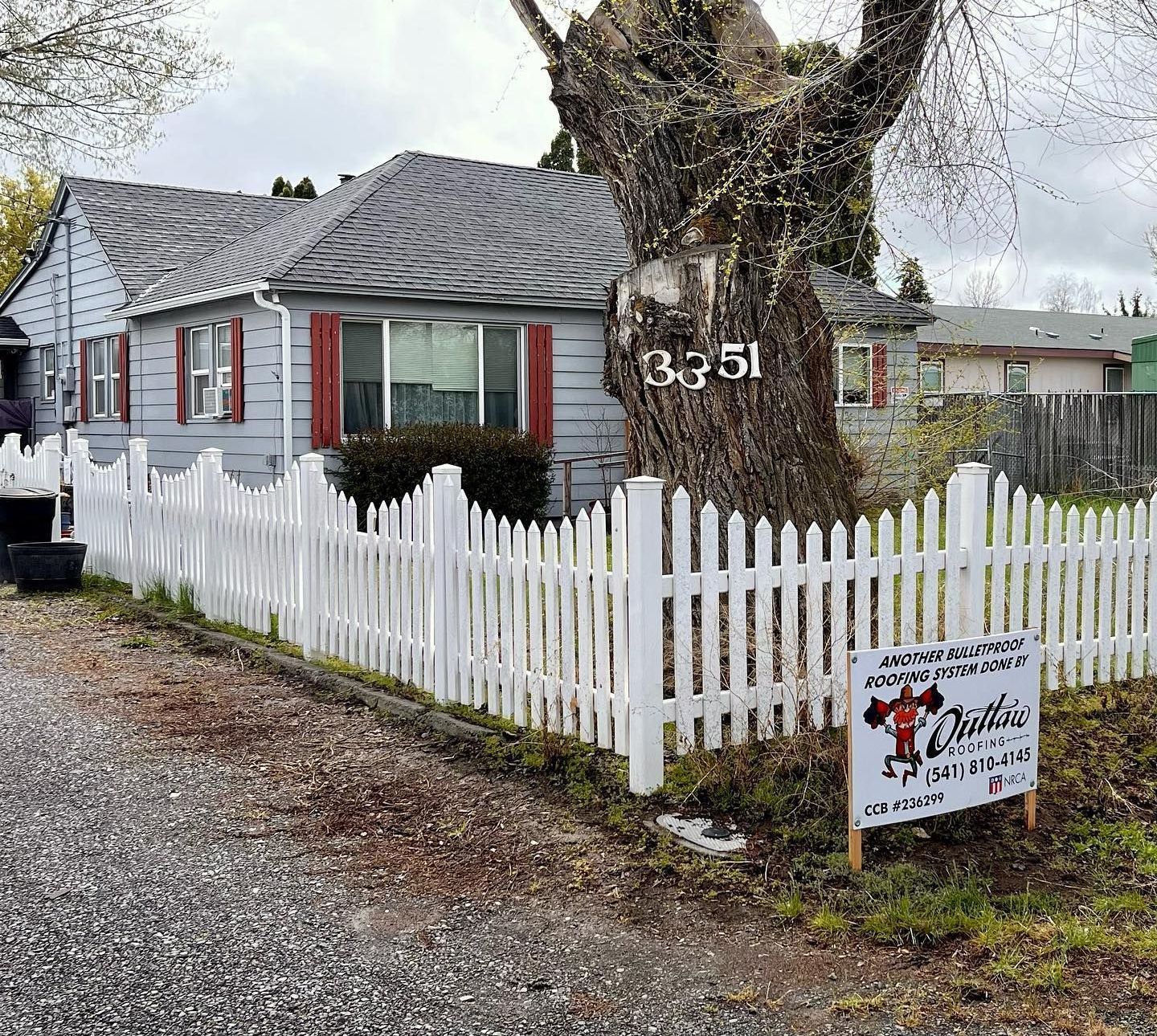
Roof Repair in Merrill, OR: Why the Ceiling Stains in Merrill's Oldest Homes Are Not Always Coming Through the Roof, and Why Replacing Shingles to Fix a Condensation Problem Costs Money Without Solving It
Merrill is the oldest city in the Tule Lake Basin. Its oldest residential streets, the tree-lined blocks around the original town center along Oregon Route 39 and the Lost River corridor, carry homes from the first decades of the twentieth century. A home built on those streets in 1910 or 1920 was constructed before modern attic ventilation standards existed, before vapor barriers were a code requirement, and before the shingle and underlayment systems that current roofing practice considers standard had been developed. The roof system on that home has been replaced two or three times since original construction. The attic it sits over has not changed.
When a Merrill homeowner in one of these older homes calls about a ceiling stain that appears in January and February, looks like it tracks from the general direction of the ridge, and dries between rain events but returns during cold weather, the standard contractor response is to go on the roof, find the closest shingle or flashing that shows wear, and write a repair quote. That approach works on a roof leak. It does not work on a condensation problem. Attic condensation on an old Merrill home produces ceiling stains that appear during the same cold weather that drives ice dam formation in Altamont, because the mechanism is related: warm interior air rising into an inadequately ventilated attic contacts the cold underside of the roof deck and deposits moisture as condensation on the deck boards. When that condensation accumulates beyond what the deck can hold, it drips. It appears on the ceiling below as a stain that looks like a leak and behaves like a leak but cannot be fixed by replacing the shingles above it.
Outlaw Roofing, veteran-owned and operating under Oregon CCB license #236299, inspect the attic on every Merrill repair call before going on the roof, because the attic tells the inspector whether the ceiling stain is coming through the shingles or forming on the underside of the deck. Those are two different problems with two different repair scopes. Klamath County Building Codes Division permit at 305 Main Street, Klamath Falls, OR 97601, phone (541) 883-5121, filed where required. GAF, IKO, CertainTeed, WeatherBond, and PolyGlass certified. GreenSky financing available. Military discount for veterans and active service members. Call (541) 275-6189.
The Repair Conditions Merrill's Historic Housing Stock Produces Along Route 39 and the Lost River Corridor

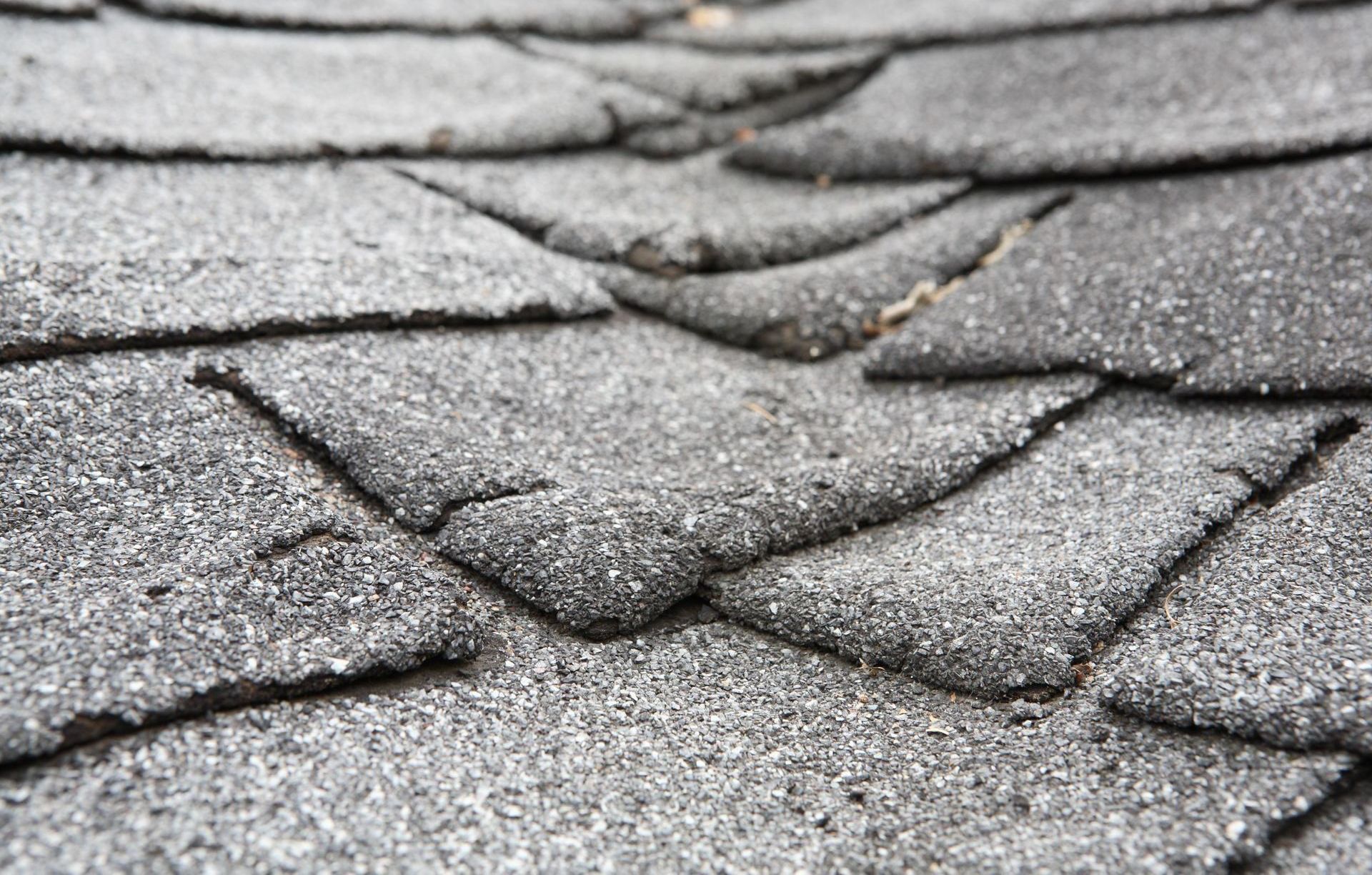
Attic Condensation on Early Twentieth Century Homes Without Balanced Ventilation
The homes built along Merrill's original residential streets in the early decades of the twentieth century were designed with attics that reflected the construction standards of their era. Attic ventilation in that period meant gable vents for exhaust, with no designed intake path at the eave soffit. The houses were less airtight than modern construction, which meant infiltration through gaps in the building envelope provided some air movement through the attic even without designed intake. As those homes have been tightened over the decades through window replacements, added insulation, and weatherstripping improvements, the infiltration path has narrowed while the attic ventilation system has remained unchanged. The result on the coldest Klamath Basin winter nights is a warm, moist interior air mass that finds its way into the attic through ceiling penetrations and bypass paths around light fixtures, plumbing chases, and insulation gaps, contacts the cold deck boards, and deposits condensation.
The Klamath Basin at Merrill's elevation, approximately 4,100 feet, produces the cold overnight temperatures that make this cycle acute. A January night in Merrill can drop the deck board temperature to 20 degrees or below on the exterior surface while the interior ceiling below is at 65 to 68 degrees. That differential drives vapor migration toward the cold surface aggressively. Without adequate balanced ventilation to continuously replace the moist attic air with drier exterior air, moisture accumulates on the deck boards over successive cold nights until the deck surface reaches saturation and liquid water forms.
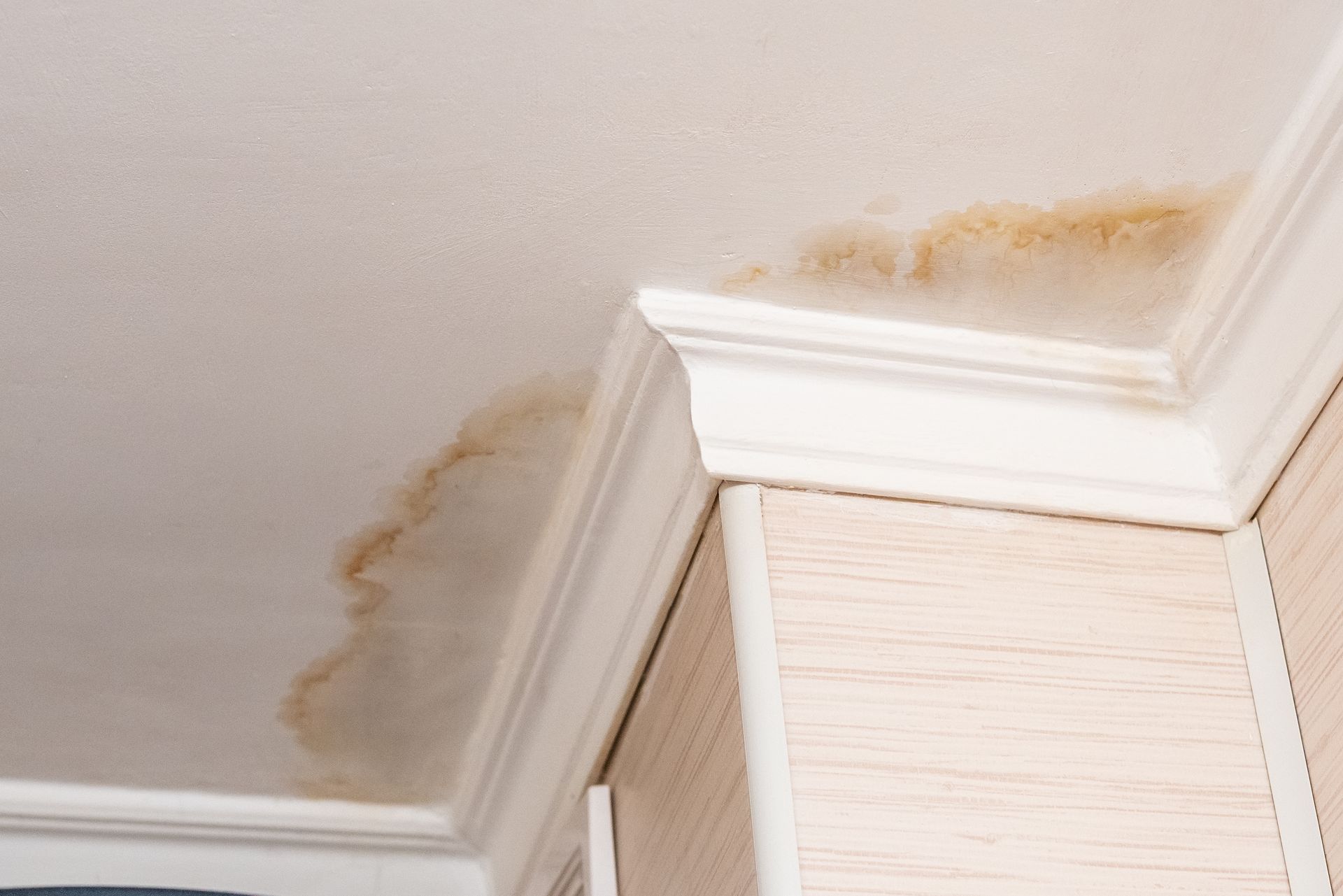
Shingle and Flashing Age-Related Failure on Multi-Generation Roof Replacements
The oldest Merrill residential properties have carried three or more shingle systems over their lifetimes. Each replacement brought the surface to current standards, but the original roof deck structure beneath every replacement is the same board-sheathed deck that was laid when the home was built. Those original board decks, typically one-by-six or one-by-eight rough-sawn lumber installed with gaps between boards for expansion, have been through a century of Klamath Basin freeze-thaw cycling and moisture exposure. The boards are sound on most Merrill older homes because the dry Tule Lake Basin climate has protected them from the prolonged wet-season exposure that Willamette Valley board decks experience. But the gaps between boards, which allowed the current roof system to be installed without full re-decking, also allow air movement at the deck level that affects the condensation dynamics in the attic space above them.
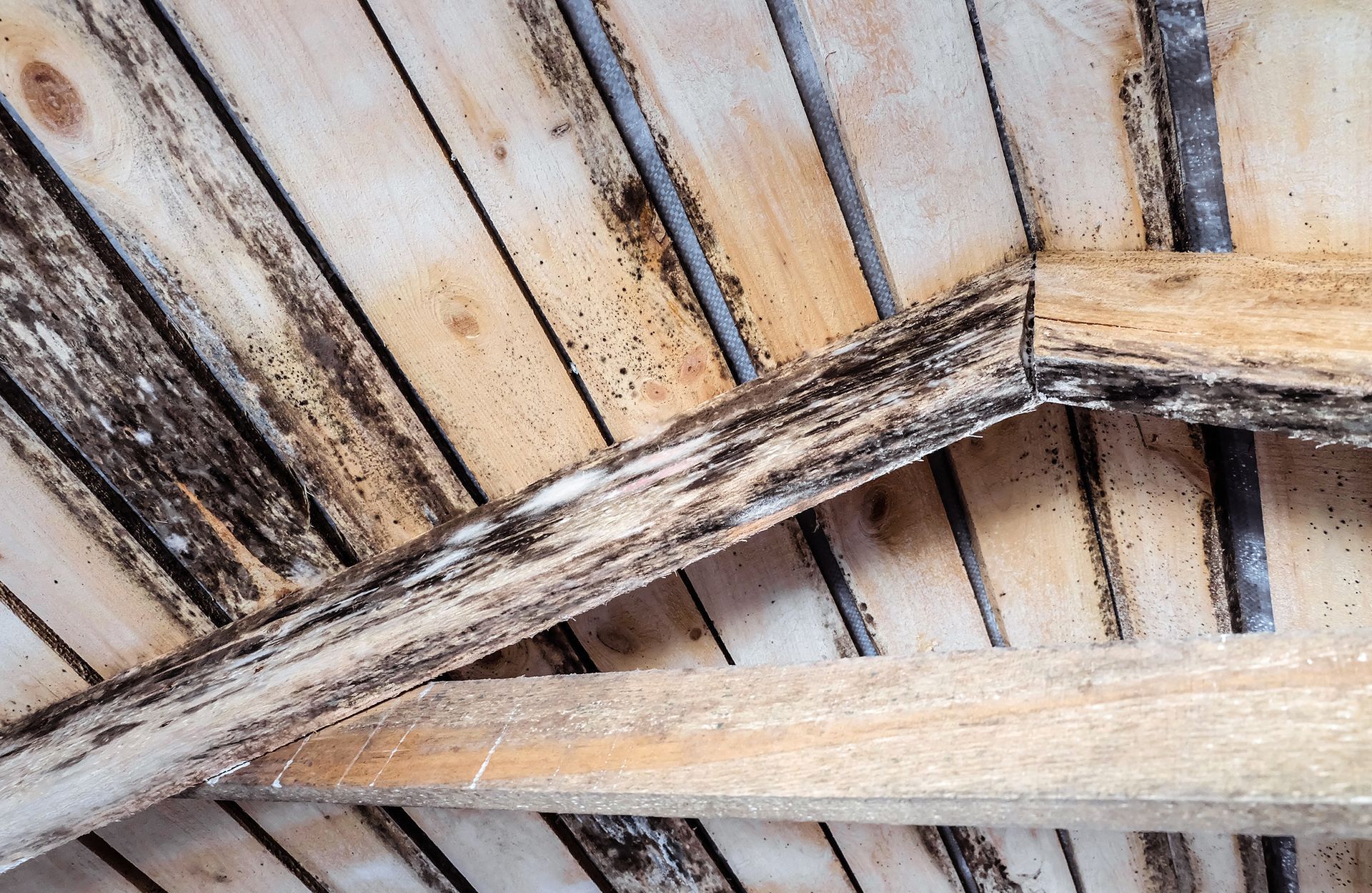
Lost River Corridor Moisture on Adjacent Residential Properties
The residential properties along the Lost River where it passes through the Merrill community carry an elevated ambient humidity condition during the irrigation season and through the late fall before the Basin dries fully. The river itself maintains an above-ground water table that creates measurable humidity differentials between river-adjacent lots and the open field lots further from the water. This elevated ambient humidity during the transition from irrigation season to winter freeze-up can load the attic of adjacent older homes with moisture at a time when the ventilation inadequacies of early 20th century construction are least able to purge it before the first cold snap of the season drives condensation formation on the deck boards.
Standard Age-Related Repairs on Merrill Properties Independent of Condensation
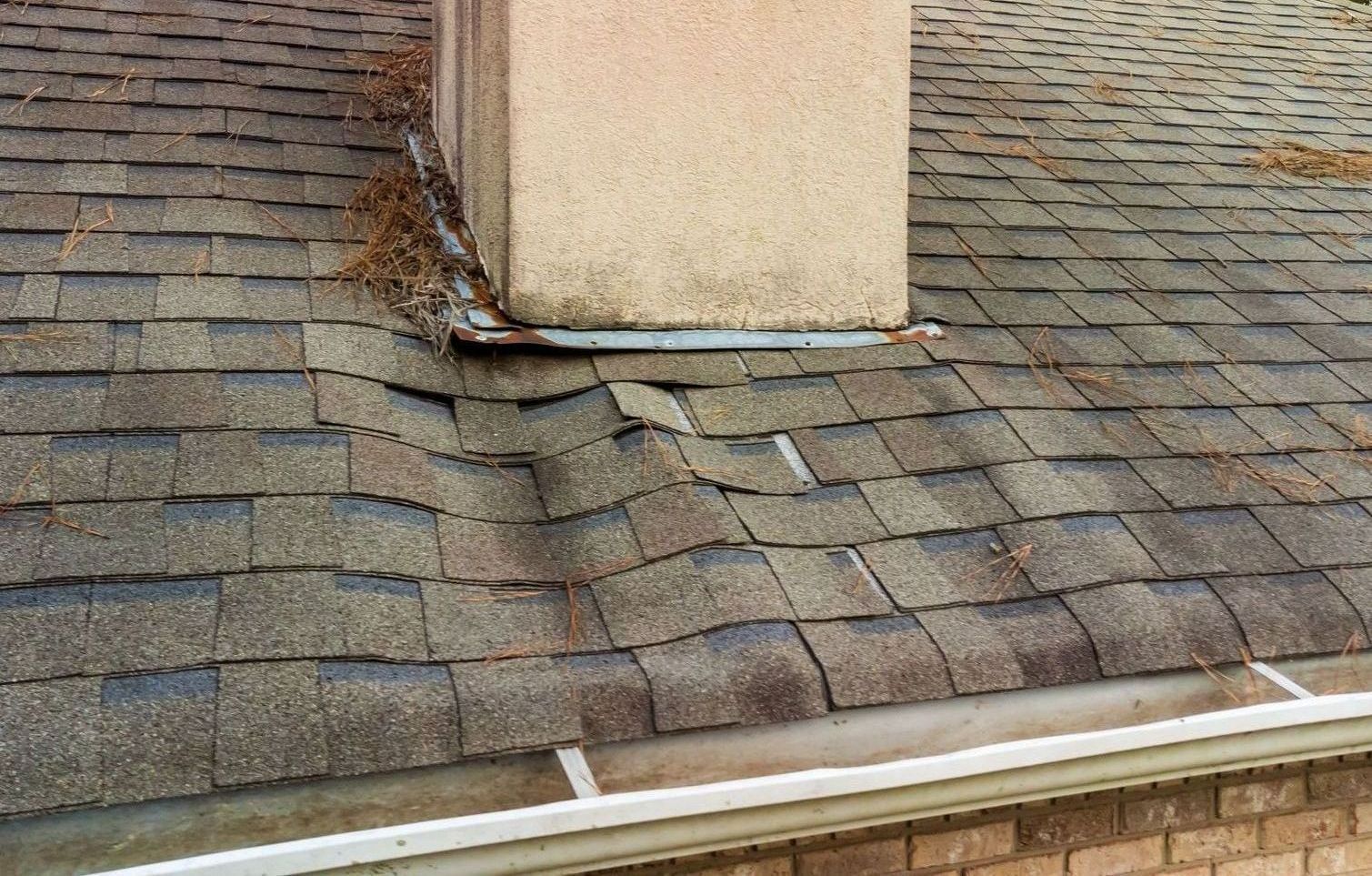
Not every Merrill repair call involves the condensation diagnostic. Shingle surface failures, pipe boot collar degradation, chimney flashing deterioration, and valley flashing wear are all present on Merrill properties at the same ages and under the same Klamath Basin high desert UV and freeze-thaw conditions that drive those failures across the broader county market. The condensation assessment is an additional diagnostic step for the specific ceiling stain pattern that appears during cold weather in the oldest housing stock, not a replacement for the standard roofline inspection that every Merrill repair property receives.
Reading the Difference Between a Leak and Condensation on Merrill, OR Older Homes
The Seasonal Pattern That Distinguishes Condensation From Rain-Driven Leak Entry
The most reliable distinguishing characteristic between attic condensation and a rain-driven leak on a Merrill older home is the weather relationship of the stain appearance. A rain-driven leak appears during or immediately after rain events, regardless of temperature. A condensation problem appears during sustained cold periods, particularly after a series of nights where outdoor temperatures drop below 20 degrees, and may appear without any rain event preceding it. A Merrill homeowner who notices a ceiling stain in January after a clear cold week with no precipitation has almost certainly identified condensation rather than a leak. A homeowner who notices a stain in November following two days of rain has more likely identified a penetration or flashing failure.
The Attic Distribution Pattern That Confirms Condensation
When a Merrill inspector goes into the attic on a condensation-suspected property, the moisture distribution pattern on the deck boards tells the story. Condensation deposits moisture broadly across the cold deck surface, typically heaviest at the sections nearest the ridge where the warmest interior air accumulates before contacting the coldest deck zone. A leak deposits moisture at a specific entry point and tracks from that point in a drainage path down the slope, wetting the deck boards in a narrow path that can be traced back to a penetration, flashing gap, or shingle failure location. Attic deck boards that are uniformly damp across a large area, without a traceable drainage path from a specific high point, are showing condensation rather than leak entry.
Icicle Formation as an Additional Condensation Indicator
On Merrill older homes where attic condensation is occurring at the ridge zone, the moisture that cannot be held by the deck boards drips down the inside of the roof deck toward the eave, where it exits through the eave overhang soffit ventilation gaps or through the gutter attachment points and freezes in the outside air. A pattern of icicles forming at the eave edge of a Merrill older home on a clear cold night with no rain event preceding it, particularly icicles that appear at regular intervals along the eave length rather than at specific drainage concentration points, indicates condensation drainage from above rather than gutter overflow from a blocked downspout.
How Outlaw Roofing Inspects Merrill, OR Properties

Attic First: Moisture Pattern Assessment Before Roofline Inspection
On every Merrill repair call where the ceiling stain pattern is consistent with condensation, Outlaw inspects the attic before going on the roof. The attic inspection documents the deck board moisture condition by location, the existing ventilation configuration in terms of exhaust vent type, location, and estimated net free area, the presence or absence of any designed intake ventilation at the eave soffit, and the insulation coverage condition at the attic floor. If the attic shows broad moisture distribution on deck boards without a traceable drainage path from a specific high point, the written findings document this as a probable condensation condition before any roofline inspection is conducted. The roofline inspection proceeds separately as a confirmation assessment to rule out any concurrent penetration or flashing failure that might be contributing moisture from the exterior.
Ventilation Assessment and Correction Scope Development
Where the attic assessment confirms inadequate ventilation as the condensation driver, Outlaw develops a ventilation correction scope that identifies the specific deficiency. On Merrill older homes, the typical finding is adequate gable vent exhaust without any designed soffit intake, creating a negative pressure condition where interior air is drawn in through ceiling bypass paths rather than through the designed intake path. The correction scope specifies soffit vent installation at the eave to establish balanced intake airflow, which allows the ventilation system to continuously exchange the moist attic air with drier exterior air rather than drawing warm moist interior air up through ceiling gaps. The ventilation correction scope is presented as a separate item from any roofline repair scope, following the same practice as the Altamont ice dam repair sequence.
Roofline Inspection as Concurrent Leak Exclusion
After the attic assessment, Outlaw conducts a full roofline inspection to identify any concurrent shingle or flashing conditions that might be contributing moisture from the exterior simultaneously with the condensation condition. On Merrill older homes, it is possible to have both conditions active at the same time: condensation forming on the deck from inadequate ventilation and a separate flashing failure allowing rain entry at a chimney or pipe boot. The written findings document each condition separately so the homeowner understands which repair addresses the condensation driver and which addresses any concurrent exterior entry.
Klamath County Building Codes Division Permit Where Required
Repair work meeting the Klamath County permit threshold for Merrill properties files with the Building Codes Division at 305 Main Street, Klamath Falls, OR 97601, phone (541) 883-5121. Merrill is an incorporated city within Klamath County, and permit jurisdiction for building work within Merrill city limits is under the county rather than a separate city building department. Outlaw confirms the applicable permit requirements for every Merrill repair before work begins and files where required.
Materials and Corrections Outlaw Specifies for Merrill, OR Condensation Repair
Soffit Vent Installation to Establish Balanced Attic Intake
The primary correction for attic condensation on Merrill older homes with gable-only exhaust ventilation is soffit vent installation at the eave to establish a designed intake path that allows outdoor air to enter at the lowest point of the attic and exit at the highest point through the existing gable vents. The installation cuts vent openings through the eave soffit material at calculated spacing based on the total attic square footage and the net free area requirement for balanced ventilation under Oregon building code. On Merrill older homes with original wood soffits, the installation requires cutting vent openings into the wood soffit face at each rafter bay. On homes with existing perforated metal or vinyl soffits that are blocked by debris or paint, clearing and opening the blocked sections may achieve adequate intake without cutting new openings.
Air Sealing at Ceiling Bypass Paths in Older Merrill Attics
On Merrill older homes where the ventilation correction alone may not fully resolve the condensation condition because interior air is bypassing the ceiling through extensive penetrations, Outlaw includes air sealing at the identified bypass paths as part of the condensation correction scope. The bypass paths on early 20th century Merrill construction typically include open plumbing chases, gaps around knob-and-tube wiring penetrations in older homes that have retained original electrical infrastructure, and unsealed insulation batt edges at partition wall top plates. Sealing these paths reduces the volume of warm interior air reaching the attic during cold Klamath Basin nights, addressing the moisture source simultaneously with the ventilation correction that purges moisture that does enter.
Deck Board Assessment and Partial Re-Decking Where Saturation Has Caused Deterioration
On Merrill older homes where attic condensation has been occurring for multiple seasons before the homeowner called, the deck boards at the heaviest moisture accumulation zones, typically the ridge section and the north-facing slope within two to four feet of the ridge, are assessed for deterioration by physical examination. Board sections that have softened, delaminated at the edge, or show black mold growth on the underside require removal and replacement before the condensation correction is effective, because deteriorated deck board sections continue to hold and release moisture to the space below even after the condensation source is addressed. Partial re-decking at affected sections is a separate scope item from the ventilation correction and is priced independently.
Repair or Replacement for Merrill, OR Historic Homes
When Condensation Correction and Targeted Surface Repair Is the Right Scope
A Merrill older home where the attic assessment confirms condensation as the primary ceiling stain driver, the deck boards show moisture staining but no structural deterioration, the ventilation deficiency is correctable by soffit vent installation within the existing attic configuration, and the roofline inspection confirms no concurrent shingle or flashing failure requiring immediate exterior repair, is a condensation correction situation. The ventilation correction eliminates the moisture accumulation mechanism. The ceiling stain dries during the following spring. The homeowner has addressed the actual cause rather than replacing shingles above a deck that will continue producing moisture until the attic is corrected. See also: /residential-roofing-contractor-merrill-or
When Merrill Property Conditions Point Toward Replacement
A Merrill older home where condensation assessment reveals board deck deterioration across more than 30 percent of the total deck area, multiple seasons of saturation have compromised the deck structure at the ridge section to the point that the current roofing system has inadequate nailing substrate, and the shingle surface is past granule protection threshold at 22-plus years on a system that was installed over a deck that was already showing moisture history from prior condensation cycles, is a replacement situation where re-decking over the deteriorated sections is incorporated into the replacement scope. See also: /residential-roof-replacement-merrill-or
Why Merrill's Age and the Lost River Corridor Create the Specific Repair Conditions They Do
Merrill is the oldest city in the Tule Lake Basin. Nathan and Nancy Merrill dedicated the streets of the original town site in 1894, and by 1909 when the Czech Colonization Club settlers were establishing Malin eight miles to the east, Merrill already had a school, a flour mill, and a developed business district along Oregon Route 39. The residential construction that followed those early decades of the twentieth century produced the oldest surviving housing stock in the Basin, and that stock carries the attic configurations, the board-sheathed roof decks, and the pre-vapor-barrier construction practice of its era.
The Lost River, which runs through the Merrill community, creates the specific ambient humidity condition during the transition from irrigation season to winter freeze-up that makes condensation onset on adjacent older homes particularly acute. The river maintains surface water through the fall when the surrounding agricultural fields are drying, and the evaporation from the river surface elevates the moisture content of the air on adjacent residential lots during October and early November. That pre-winter moisture loading in the attic spaces of river-adjacent older homes, combined with the first hard freezes of the Klamath Basin winter, produces the most severe condensation onset of the season at the homes with the least adequate ventilation.
The high desert UV and freeze-thaw conditions that the Klamath Basin delivers to all Merrill properties apply equally to the oldest housing stock as to newer construction, with the additional factor that board-sheathed decks on older homes are more susceptible to the freeze-thaw moisture cycling that occurs when condensation deposits liquid water on deck boards that are at or below freezing during cold Klamath nights. The expansion of water as it freezes in the gap between adjacent board sheathing courses accelerates edge splitting at those boards over multiple freeze-thaw cycles, which is the mechanism by which multi-season condensation eventually produces deck deterioration on older Merrill homes.
Merrill's Housing and Community Profile Along Oregon Route 39
Merrill's residential character reflects its history as the Tule Lake Basin's founding settlement. The tree-lined residential streets around the original town center carry the oldest housing stock, including homes from the 1900s through the 1940s that define the neighborhood's character. These properties typically carry original or lightly modified attic configurations from their construction era. The tree canopy on these streets, which the community's founders planted along the dedicated avenues, provides some seasonal shielding of the adjacent rooflines from direct UV loading in summer and wind exposure in fall, but it also shades the north-facing attic sections through more of the day than open-lot properties experience, which can extend the period of cold deck surface temperatures during winter mornings.
The newer residential construction along the outer residential streets and on the acreage properties east and west of the town center carries more current attic ventilation standards, including balanced soffit and ridge vent systems that manage moisture appropriately for the Klamath Basin climate. These properties experience condensation far less frequently because the ventilation system was designed to meet current code rather than reflecting 1910 construction practice. The repair profile on newer Merrill properties tends toward the standard Klamath Basin age-related conditions rather than the condensation diagnostic that the oldest housing stock produces.
A Recent Roof Repair in Merrill, OR: What the Attic Confirmed Before the Roof Was Examined
Last winter Outlaw completed a repair assessment on a 1924 single-story gable-roof home on a residential street two blocks from the Lost River in Merrill. The homeowner had a ceiling stain in the northeast bedroom that had appeared in the previous two Januaries and dried by March both times. A contractor the prior year had replaced the pipe boot at the nearest roof penetration and sealed the surrounding shingles. The stain returned in January despite no rain event preceding it that week.
The Outlaw inspection began in the attic. The deck boards at the ridge section and extending down the north-facing slope for approximately six feet showed uniform moisture staining without any traceable drainage path from a specific high point. The staining was darkest at the underside of the ridge board itself, consistent with warm moist air accumulating at the peak and depositing condensation on the coldest deck surface. The attic had two gable vents, one on each end of the structure, with no soffit intake ventilation at either eave. Insulation covered the attic floor with no apparent ceiling bypass sealing at the two plumbing vent penetrations visible from the attic floor.
The roofline inspection found the pipe boot the prior contractor had replaced to be correctly installed and sound. No additional exterior penetration or flashing failure was identified. The written findings documented the condensation condition as the probable ceiling stain driver, noted the prior pipe boot repair as correct and not the repair that was needed, and presented a ventilation correction scope including soffit vent installation at both eave lengths and air sealing at the two ceiling penetrations. Klamath County Building Codes permit not required for this scope. Ventilation correction total: $720. The prior pipe boot repair had cost $340 and had addressed the wrong mechanism.
Why Merrill, OR Homeowners Choose Outlaw Roofing for Historic Property Repairs
✓ Veteran-Owned With Attic-First Inspection Protocol on All Older Basin Properties
Riley inspects the attic before the roof on every Merrill call where the stain pattern is consistent with condensation, because the attic tells the inspector what the ceiling stain is actually from before any surface work is quoted. A repair proposal written after an attic assessment is based on the actual failure mechanism. A proposal written before the attic is examined may address the wrong problem at the homeowner's expense.
✓ CCB#236299 — Oregon License Verifiable at oregon.gov/ccb
Search CCB#236299 at oregon.gov/ccb before authorizing any repair work on a Merrill property. The license is current and covers all roofing and ventilation repair work in Klamath County including all Merrill city limits properties.
✓ Written Proposal That Distinguishes Condensation Correction From Surface Repair
An Outlaw repair proposal on a Merrill older home with a condensation finding delivers two separate scope items where both are present: the ventilation correction scope addressing the moisture accumulation mechanism, and any roofline surface repair scope addressing concurrent exterior entry conditions. Where condensation is the only finding, the proposal documents why no exterior shingle repair is specified and explains what the ventilation correction will accomplish over the following wet season.
✓ Klamath County Building Codes Division Permit Filed Where Required
Repair and ventilation correction work meeting the Klamath County permit threshold files with the Building Codes Division at 305 Main Street, Klamath Falls, OR 97601, phone (541) 883-5121. Outlaw determines the permit requirement for every Merrill repair and ventilation scope before any work begins.
What Repair and Correction Costs in Merrill, OR by Problem Type
Soffit Vent Installation for Balanced Attic Ventilation on Older Merrill Homes: $500 to $900
Soffit vent installation at both eave lengths of a Merrill older home with gable-only exhaust ventilation, including cutting vent openings at each rafter bay at calculated spacing, typically runs $500 to $900 depending on soffit material condition, eave length, and access conditions under the existing eave overhang. Homes with original wood soffits in sound condition run toward the lower end. Homes with damaged or inaccessible soffit sections requiring additional prep work run toward the upper end.
Air Sealing at Ceiling Bypass Paths in Older Merrill Attics: $300 to $700
Air sealing at the identified ceiling bypass paths in a Merrill older home attic, including plumbing vent chases, electrical penetrations, and unsealed partition wall top plates, typically runs $300 to $700 depending on the number and accessibility of bypass locations. This scope is presented as a separate item from the soffit vent installation and can be executed in the same mobilization where both are warranted.
Standard Roofline Surface Repair Concurrent With Condensation Correction: $600 to $1,800
Where a Merrill property assessment finds concurrent exterior entry conditions alongside the condensation diagnosis, standard shingle or flashing repair at the identified surface failure runs $600 to $1,800 depending on the specific failure type and scope. Chimney counter flashing repair on an older Merrill brick chimney runs toward the upper end. Isolated pipe boot replacement or small shingle section repair runs toward the lower end. Klamath County permit fees included as a separate line item where applicable.
What Experienced Inspectors Look for on Merrill, OR Older Home Repair Calls
The attic is the first inspection destination on every Merrill repair call where the stain pattern or seasonality suggests condensation. The inspector enters the attic and moves directly to the ridge section, where condensation on older unventilated homes deposits the heaviest moisture. The deck board condition at the ridge is assessed for uniform moisture staining versus a traceable leak drainage path. If the boards are uniformly damp at the ridge without a path leading to a specific penetration or flashing location, the condensation finding is documented before the attic inspection continues.
The existing ventilation configuration is mapped: gable vent locations and estimated net free area, ridge vent presence or absence, soffit vent presence or absence, and whether any prior modification has added ventilation elements that conflict with the original gable-vent-only design. On Merrill older homes where a ridge vent has been added to an existing gable-vent system without adding soffit intake, the configuration may actually perform worse than the original gable-only system because the ridge vent creates a short-circuit path for warm attic air to exit without pulling in the balanced intake flow from below that makes ridge ventilation effective.
The ceiling bypass path assessment follows the ventilation mapping. The inspector identifies every penetration in the ceiling plane below the attic and checks for sealing around each. On Merrill older homes, the bypass paths are often the same penetrations that have existed in the ceiling since original construction: stovepipe collars from before natural gas conversion, knob-and-tube wiring runs that were not sealed when insulation was added, and plumbing vent chases that were cut through the ceiling after original construction.
How Long Repair and Ventilation Correction Work Lasts on Merrill, OR Properties
A soffit vent installation that establishes balanced intake airflow on a Merrill older home, combined with air sealing at identified ceiling bypass paths, resolves attic condensation for the remaining service life of the attic structure as long as the intake and exhaust ventilation remain clear and unobstructed. Soffit vents require periodic clearing of debris accumulation, particularly on the tree-lined older streets of Merrill where leaf and needle debris deposits into vent openings through fall. Annual clearing before the wet season is the maintenance practice that extends the ventilation correction service life indefinitely on these properties.
Standard roofline surface repairs on Merrill properties, whether chimney flashing, pipe boot replacement, or isolated shingle section replacement, deliver the same service life that comparable repairs deliver across the Klamath Basin market: 15 to 20 years for correctly installed flashing on sound masonry, the remaining shingle service life for shingle course replacement adjacent to a repaired penetration, and 10 to 15 years for a correctly installed EPDM pipe boot collar on a standard rooftop plumbing penetration in Klamath Basin UV and freeze-thaw conditions.
Quick Answers About Roof Repair in Merrill, OR
My Merrill ceiling stain appears in January with no rain. Is it still a roof problem?
A ceiling stain that appears during cold weather without a rain event preceding it is more likely condensation than a roof leak. Attic condensation on older Merrill homes produces ceiling staining during sustained cold periods when warm interior air contacts the cold deck boards and deposits moisture that drips to the ceiling below. An attic inspection confirms this mechanism by showing broad moisture distribution on the deck boards without a traceable leak drainage path from a specific penetration.
How much does attic condensation repair cost in Merrill, OR?
Soffit vent installation for balanced ventilation runs $500 to $900. Air sealing at ceiling bypass paths runs $300 to $700. Concurrent roofline surface repairs run $600 to $1,800 where additional exterior entry conditions are found. All Outlaw repairs begin with a free inspection and written proposal before any work is authorized.
Does roof repair in Merrill require a permit?
Merrill is an incorporated city within Klamath County. Permit jurisdiction for building work within Merrill city limits is through the Klamath County Building Codes Division at 305 Main Street, Klamath Falls, OR 97601, phone (541) 883-5121. Outlaw confirms the applicable permit requirements for every Merrill repair before any work begins.
Can adding a ridge vent to my Merrill older home fix the condensation?
Adding a ridge vent to a Merrill older home with gable-only exhaust and no soffit intake does not reliably fix condensation and may worsen it. Ridge ventilation is most effective when balanced with continuous soffit intake that draws outdoor air in at the eave and exhausts it at the ridge. Without soffit intake, a ridge vent on a gable-vented home creates a competing exhaust path that can short-circuit the gable vent airflow without establishing the balanced system that moves moist attic air out efficiently. The correct sequence is soffit intake installation first, then ridge vent addition if the total net free area calculation warrants it.
How do I know if my Merrill home has adequate attic ventilation?
Oregon building code requires one square foot of net free ventilation area for every 150 square feet of attic floor area, split approximately equally between intake and exhaust. On a 1,200 square foot attic that means eight square feet of net free area, four intake and four exhaust. A Merrill older home with two standard gable vents and no soffit intake has perhaps two to three square feet of total net free area with no balanced intake path. Measuring the existing vent area against the 1-to-150 standard tells the homeowner whether the system is deficient before any contractor is called.
Frequently Asked Questions About Roof Repair in Merrill, OR
How do I verify Outlaw Roofing's Oregon contractor license?
Go to oregon.gov/ccb and search for CCB#236299. The current license status displays immediately. Every contractor performing roofing or ventilation work in Merrill and Klamath County is required to hold a current, verifiable CCB registration.
What is the difference between a roof leak and attic condensation?
A roof leak enters from outside the building through a penetration, flashing failure, or shingle surface failure during rain events. The moisture path traces from a specific exterior entry point down through the roof assembly to the ceiling below. Attic condensation forms inside the attic when warm moist interior air contacts a cold surface, typically the underside of the roof deck. The moisture appears on the ceiling from above without any exterior entry point. The two conditions require different repairs: exterior entry requires finding and closing the entry point; condensation requires improving the ventilation and air sealing that prevent warm moist interior air from reaching the cold deck surface.
My older Merrill home has original board sheathing. Does that affect the repair?
Original board sheathing on a Merrill older home is structurally sound in most cases given the dry Klamath Basin climate, but the gaps between boards affect both the condensation dynamics and the inspection approach. Gaps allow some air movement at the deck level that a solid OSB or plywood deck does not permit, which can provide marginal additional drying capacity. They also allow condensation moisture to drip from the underside of the boards directly into the attic insulation below rather than pooling on the deck surface before dripping. Assessing whether the board sheathing is structurally sound requires physical examination during the attic inspection rather than visual assessment from the exterior.
Does Outlaw Roofing offer financing for Merrill homeowners?
Yes. GreenSky financing up to 100 percent for qualified Merrill homeowners with fixed monthly payment terms. Military discount for veterans and active service members throughout the Merrill and Tule Lake Basin community.
What related services does Outlaw provide in Merrill?
Merrill homeowners whose inspection confirms that replacement rather than repair is the appropriate scope can reference the residential roof replacement Merrill OR page (/residential-roof-replacement-merrill-or). The residential roofing contractor Merrill OR page (/residential-roofing-contractor-merrill-or) covers Outlaw's full service and certification structure for the Merrill market.

Merrill Homeowners: Get Your Written Repair Estimate From Outlaw Roofing
A January ceiling stain in a 1920s Merrill home on a tree-lined street near the Lost River is not necessarily a shingle problem. It may be an attic that has been too cold and too moist every winter for decades, and the fix is ventilation not shingles. Outlaw inspects the attic first, maps what the deck is telling the inspector, and writes a proposal based on what is actually causing the stain. Riley, veteran-owned, CCB#236299. GreenSky financing available. Military discount for veterans. Call (541) 275-6189 or schedule at /contact.