Residential Roof Repair in Malin, OR
Roof Repair in Malin, OR: Why the Chimney Flashing and Ridge Step Flashing on Tule Lake Lakebed Properties Fail on a Cycle That Has Nothing to Do With the Roof, and Everything to Do With What Is Under the Foundation
When a roofing contractor arrives at a Malin property and finds chimney counter flashing separating from the mortar joint, step flashing pulling away from a wall transition, or ridge cap fastener points showing unexplained movement, the standard diagnosis is age-related flashing failure or wind damage. Both explanations are plausible. In most of Klamath County they are also correct. In Malin, on properties sitting on the former bed of Tule Lake, they are frequently incomplete.
The land beneath every structure in Malin was once the floor of Tule Lake. When the Klamath Reclamation Project drained the lake in the early twentieth century and the Czech Colonization Club settlers arrived in 1909 to build their farming community, they built on expansive clay soil that the lakebed had deposited over centuries. That clay responds to moisture. Each spring when the Klamath Reclamation Project delivers irrigation water to the surrounding agricultural fields, the soil absorbs moisture and expands. Each fall when the irrigation district cuts water delivery and the fields dry through the Tule Lake Basin's arid high desert autumn, the clay contracts. The movement is not dramatic in any single cycle. Across 30, 40, or 50 cycles on the same foundation, the cumulative effect on chimney masonry, step flashing at wall transitions, and ridge cap attachment points is a slow structural racking that no amount of flashing replacement arrests if the soil movement continues beneath the structure season after season.
Outlaw Roofing, veteran-owned and operating under Oregon CCB license #236299, assess every Malin repair property for the soil movement signature before writing any flashing scope. A flashing repair that ignores the soil movement history on a Tule Lake lakebed property produces a repair that the next irrigation season will begin working against from below. Klamath County Building Codes Division permit at 305 Main Street, Klamath Falls, OR 97601, phone (541) 883-5121, filed where required. GAF, IKO, CertainTeed, WeatherBond, and PolyGlass certified. GreenSky financing available. Military discount for veterans and active service members. Call (541) 275-6189.
The Repair Conditions Malin Properties on the Tule Lake Lakebed Produce


Chimney Flashing Separation Driven by Foundation Movement Rather Than Mortar Deterioration Alone
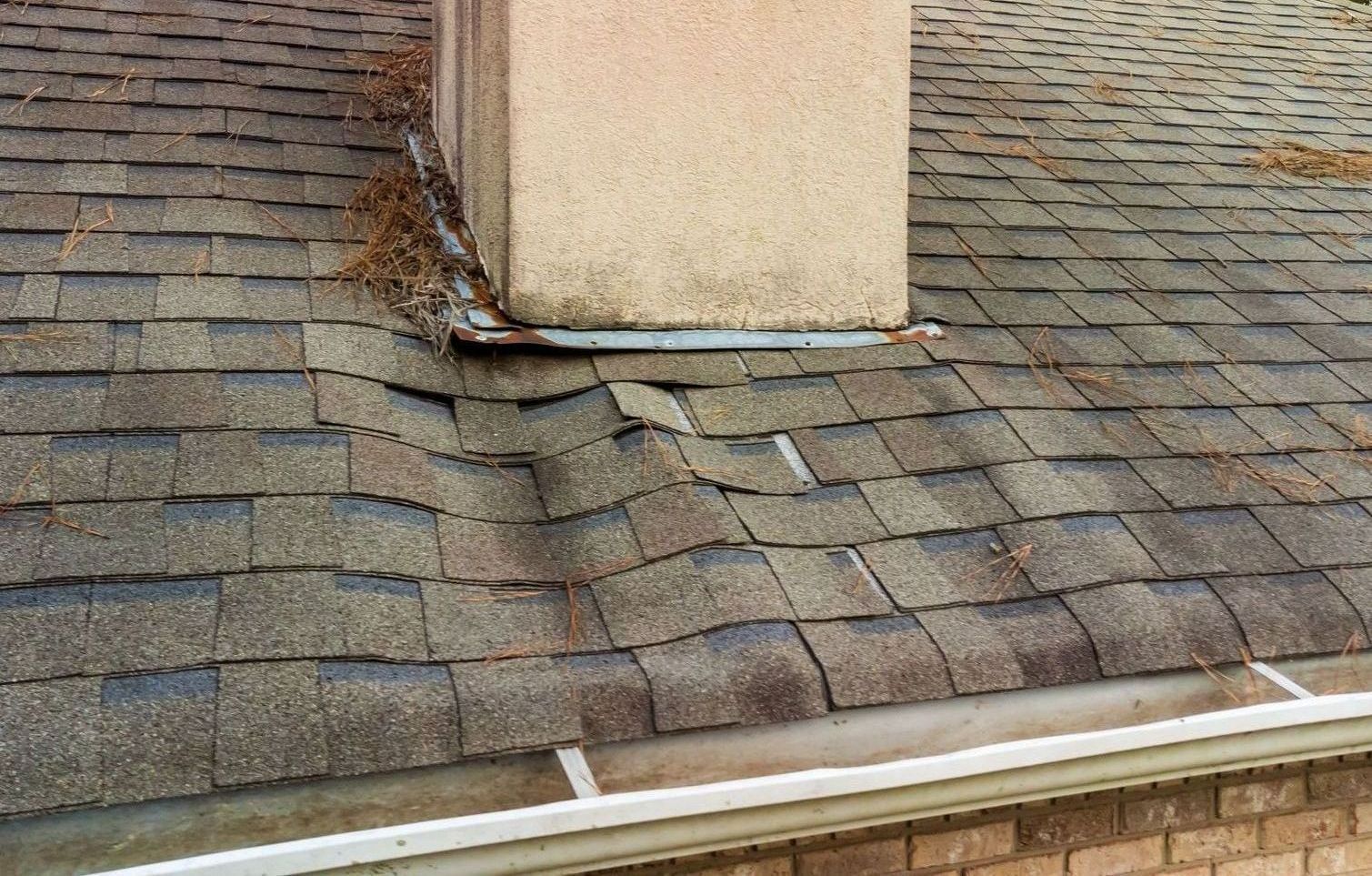
On a standard Klamath County ranch home where chimney counter flashing has separated from the mortar joint, the failure mechanism is mortar deterioration under freeze-thaw cycling that allows the flashing to pull free over time. The repair is mortar joint repointing at the counter flashing attachment course and reinstallation of the counter flashing in sound mortar. On a Malin lakebed property where the foundation has been cycling with the irrigation season for 40 years, the chimney masonry has been racking slightly with each expansion-contraction cycle. The mortar at the counter flashing attachment course shows the same deterioration as a comparable-age Klamath County home, but the chimney itself has been moving in small increments relative to the roof deck around it. Counter flashing that is set into stationary mortar and attached to a moving chimney face accumulates fatigue at the attachment point faster than the mortar alone would account for, and the repair that repoints the mortar without acknowledging the movement history puts new flashing into a chimney that will continue racking.
Step Flashing Separation at Wall Transitions on Lakebed Structures
The step flashing at wall transitions on Malin residential structures, where a dormer wall meets the surrounding roof surface or where a roof slope meets a gable end wall, experiences the same racking movement at a smaller scale than the chimney. The wall frame is attached to a foundation that moves with the soil, and the roof deck is attached to the same frame. In theory both move together. In practice the movement differential between the wall face, where thermal expansion and contraction of the wall cladding adds its own cycling to the foundation movement, and the adjacent shingle courses, where the thermal cycling of asphalt shingles operates on a different schedule from the wall frame, produces micro-movement at the step flashing laps across every seasonal cycle. On a 40-year Malin structure that has been through 40 irrigation seasons plus 40 Tule Lake Basin freeze-thaw winters, the accumulated micro-movement at step flashing attachment points has worked each lap joint to a degree that comparably aged structures in upland communities without the lakebed soil factor have not experienced.
Ridge Cap Fastener Point Movement on Long Malin Rooflines
The simple rooflines common on Malin's original agricultural community housing stock, straightforward gable roofs on rectangular structures, have ridge lengths that extend the full length of the building on a single ridge line without the interruptions that valley intersections and hip sections provide. A long Malin gable ridge on a structure with a foundation that has been cycling on lakebed expansive clay experiences a racking force at each end of the ridge as the foundation at each end moves slightly independently with the moisture and shrinkage of the soil beneath it. That differential movement over time works the ridge cap fastener points at the ends of the ridge differently from the fastener points in the middle, where the racking force is distributed across a longer ridge length rather than concentrated at the terminal ends. Ridge end cap failures on Malin gable structures that are not attributable to wind events warrant an assessment of whether foundation movement cycling is the contributing driver before standard fastener replacement is specified.
Standard Age-Related Repair Conditions on Malin Properties Independent of Soil Movement
Not every repair condition on a Malin property involves the lakebed soil movement factor. Pipe boot collar degradation on structures with aging HVAC systems, valley flashing deterioration at roofline intersections, and granule depletion on south-facing slopes under the Tule Lake Basin high desert UV loading are age-related conditions that develop on Malin properties as they do on comparable-age Klamath County inventory independent of what is happening beneath the foundation. The soil movement assessment is the additional step that Malin repair inspection requires beyond standard practice. It does not replace the standard assessment; it precedes and informs it.
Reading Foundation Movement Signatures on Malin, OR Properties
Interior Crack Patterns That Signal Soil Movement History
The most accessible evidence of cumulative foundation movement on a Malin lakebed property is visible on the interior walls before the inspection goes anywhere near the roof. Diagonal cracks running from the corners of door frames and window frames toward the ceiling, stair-step cracks in drywall that follow the stud spacing, or hairline separation at the ceiling-to-wall junction on exterior walls all indicate that the structure has been racking with foundation movement. A property with none of these interior indicators is either on land that does not carry the expansive clay profile or has not experienced significant differential movement across its foundation. A property with multiple visible interior movement indicators has a structure that has been moving, and every flashing attachment and fastener point on the roofline has been moving with it.
The Chimney Face Indicator: Perpendicularity Assessment Before Flashing Is Touched
On Malin properties with brick chimneys, checking whether the chimney face is plumb before any flashing is removed tells the inspector whether the chimney has racked relative to the surrounding structure. A chimney face that is more than one inch out of plumb over its height above the roofline has moved since original construction. The direction of the tilt identifies which direction the soil movement has been driving it, and the extent of the tilt relative to the age of the structure gives an approximate cycling rate. Reinstalling counter flashing on a chimney that is out of plumb without documenting the racking history produces flashing that is correctly installed against the current chimney face position but will continue to move with the chimney in subsequent seasons.
Irrigation Season Timing as a Diagnostic Tool
On Malin properties where a repair call comes in shortly after irrigation water delivery begins in spring, or shortly after the fall water shutoff, the timing itself is diagnostic. Flashing separation that appears in May or early June, coinciding with the expansion phase of the soil cycle, indicates that the expansion movement has opened a gap that was not present or was smaller during the dry contraction phase. Flashing separation that appears in October or November, coinciding with the contraction phase, indicates the opposite movement direction. Documenting the seasonal timing of the stain or visible separation relative to the irrigation calendar narrows the inspection to the movement-driven failure mechanism rather than searching for a standard age or wind cause.
How Outlaw Roofing Inspects Malin, OR Properties

Foundation Movement Assessment Before Any Flashing Scope Is Written
Every Outlaw inspection on a Malin repair property begins with an interior assessment for movement crack patterns before the roofline is examined. The interior assessment is documented in the written findings as a foundation movement indicator, not as a structural engineering conclusion. Outlaw does not provide structural engineering assessments. What Outlaw provides is the roofing repair context: whether the flashing conditions found on the roofline are consistent with standard age and weather causes alone, or whether the interior movement indicators suggest that soil cycling has been contributing to the flashing fatigue pattern. That distinction shapes the repair specification, the material selection, and the maintenance interval recommendation that follows the repair.
Chimney Plumb Assessment and Flashing Gap Mapping at All Chimney Faces
On Malin properties with brick chimneys, Outlaw assesses chimney plumb before any counter flashing is disturbed, and maps the counter flashing gap condition at all four faces of the chimney before the repair scope is developed. On a standard flashing failure the gap appears primarily at the face with the most direct weather exposure. On a soil-movement-contributed failure the gap pattern is asymmetric relative to weather exposure, appearing more prominently on the face toward which the chimney has been racking. That asymmetric gap pattern tells the inspector that mortar repointing at the visible separation face alone will not address the full perimeter movement, and that the repair scope needs to account for the face that is currently in compression and will be in tension during the next movement phase.
Ridge End Fastener Assessment on Long Gable Structures
On Malin gable-roofed structures with long ridge lines, Outlaw specifically assesses the fastener condition at the last 24 inches of ridge cap at each end of the ridge, where the racking force from differential foundation movement concentrates. These end cap locations are hand-tested for fastener pullout resistance, and the hole condition at each fastener point is checked for the elongation that movement cycling produces at the fastener location rather than the smooth-hole profile of a standard wind uplift event. Ridge end caps with movement-elongated fastener holes require the same oversized ring-shank specification that Henley wind-exposed fasteners require, but for a different underlying cause.
Klamath County Building Codes Division Permit Where Required
Repair work meeting the Klamath County permit threshold for Malin properties, which are in unincorporated Klamath County, files with the Building Codes Division at 305 Main Street, Klamath Falls, OR 97601, phone (541) 883-5121. There is no City of Malin permit authority separate from the county. Outlaw determines the permit requirement for every Malin repair before work begins and files where required.
Materials Outlaw Specifies on Malin, OR Lakebed Property Repairs
Flexible Counter Flashing Bedded in Non-Hardening Butyl Rather Than Mortar-Locked Rigid Stock
Counter flashing reinstallation on Malin chimney repairs specifies a product configuration that accommodates ongoing small movement at the chimney face rather than one that assumes the chimney is stationary. Where standard counter flashing is set rigidly into a mortar joint and relies on that rigid attachment to hold through weather exposure, Malin chimney flashing is bedded at the mortar joint attachment with butyl tape that maintains a flexible seal through the small movement differentials the chimney will continue experiencing with the soil cycle. The butyl tape does not prevent the mortar joint from accepting the counter flashing leg. It provides the flexible layer between the flashing metal and the mortar face that allows the small seasonal movement to occur without cracking the mortar bond at the attachment point in the way that rigid setting does.
Three-Course Step Flashing at Every Lap Joint on Movement-Affected Wall Transitions
Step flashing replacement at wall transitions on Malin movement-affected properties specifies three-course aluminum step flashing rather than the standard two-course configuration. The additional course provides more overlap at each lap joint, which means the lap joint maintains its water seal through a larger range of movement differential between the wall face and the adjacent shingle course before the lap opens to the point of water entry. On a stationary wall transition a two-course lap is adequate for standard weather exposure. On a Malin wall transition that has been accumulating micro-movement at each lap for 40 irrigation seasons, the additional lap course extends the seal through the movement range that the remaining service life of the structure will produce.
Type S Mortar With Full Repointing at Counter Flashing Attachment Courses
Where the mortar joint condition at a Malin chimney counter flashing attachment course shows the softening and void development that 40-plus Tule Lake Basin freeze-thaw cycles plus irrigation season movement have produced, the repair specifies full repointing with Type S mortar across the full attachment course rather than spot patching at visible separation points. A chimney face that has been racking with the soil cycle has distributed the mortar deterioration around the full perimeter of the attachment course even if the visible gap appears primarily on one face. Spot patching the visible face leaves the three remaining faces in the deteriorated condition that the next movement phase will work against.
Repair or Replacement for Malin, OR Lakebed Properties
When Repair With Movement-Accommodating Specification Is the Right Scope
A Malin property where the interior movement indicators are mild, the chimney is within one inch of plumb over its height, the step flashing at wall transitions has separated at two or three courses rather than across the majority of the transition run, and the surrounding shingle system has eight or more years of remaining service life, is a repair situation. The repair scope uses movement-accommodating materials and specifications. The written findings document the soil movement context so the homeowner understands the ongoing maintenance interval that the lakebed location will require regardless of the repair quality. See also: /residential-roofing-contractor-malin-or
When the Malin Property Condition Suggests Broader Assessment Is Needed
A Malin property where interior movement crack patterns are extensive across multiple rooms and exterior walls, the chimney is more than two inches out of plumb, the ridge end cap fastener holes show severe elongation at both ends of a long gable ridge simultaneously, and step flashing has separated across the majority of multiple wall transitions, is showing a soil movement history that has progressed beyond what roofline repair alone should address without a structural assessment. Outlaw will document the roofline findings honestly in those situations and recommend the homeowner consult a structural engineer before authorizing roofing repair investment on a structure with significant active movement indicators. See also: /residential-roof-replacement-malin-or
Why the Tule Lake Lakebed Soil Creates a Repair Condition Found Nowhere Else in Klamath County
Malin sits at 4,062 feet on land that was once the bottom of Tule Lake. The U.S. Bureau of Reclamation drained the lake as part of the Klamath Reclamation Project, and the Czech Colonization Club settlers who arrived in 1909 built their community on the rich dark loam that the former lakebed provided. That soil is productive for the potato farming that made Malin famous. It is also expansive clay, which means it absorbs water and swells, and releases water and shrinks.
The Klamath Reclamation Project delivers irrigation water to the Tule Lake Basin fields each spring, and the surrounding soil responds by expanding. The fields around Malin absorb irrigation water through the growing season and the clay content of the soil swells with that moisture. When the irrigation district cuts water delivery in fall, the fields dry through the Tule Lake Basin's arid high desert autumn and the clay contracts back toward its dry volume. Every structure in Malin sits within the influence zone of this annual cycle. Properties with foundations directly on the lakebed clay experience the expansion and contraction at the foundation level. Properties on the elevated streets in the original town core are partially buffered by the fill material under the road and foundation footings, but most Malin residential structures from the original homestead era are on foundations that sit closer to the native lakebed soil than later construction in upland communities.
No other community in the repair pages this series covers sits on former lakebed soil under irrigation-driven expansion cycles. Altamont sits on high desert volcanic soil. Keno sits on Cascade foothills alluvial material. Henley sits on open Basin dryland. Malin sits on a drained lake floor that is still responding to water delivery every spring and withdrawing every fall. The repair conditions that produces are specific to this community, and the repair specifications that account for them are specific to the inspector who identifies the soil context before writing the scope.
Malin's Housing Stock and the Repair Implications of Its Agricultural Origins
Malin's residential housing stock reflects the town's founding and development history. The original Czech Colonization Club settlers built modest homestead structures on their farming lots, and those structures, or their replacements on the same foundation footprints, define the character of Main Street and the surrounding residential blocks. The houses along Oregon Route 39 through the community core and on the residential streets east of the town center carry the agricultural community character that has defined Malin since 1909: straightforward gable-roofed ranch homes and simple rectangular structures on flat lakebed lots without the topographic variation that hillside communities experience.
The simplicity of the Malin roofline inventory means the failure conditions that appear are straightforward to identify once the soil movement context is understood. There are no complex valley configurations concentrating debris loading, no hillside drainage paths directing combined runoff at lower eave edges, and no multi-plane custom home assemblies requiring complex flashing geometry. The Malin repair challenge is not roofline complexity. It is understanding that the straightforward rooflines on these straightforward structures are attached to foundations on soil that moves, and that the repair specifications need to account for the ongoing movement rather than assuming the substrate is stationary.
A Recent Roof Repair in Malin, OR: What the Irrigation Calendar Revealed
Last spring Outlaw completed a repair assessment on a 1952 single-story gable-roof residence on a residential street east of the Malin town core. The homeowner had called in late May about a ceiling stain in the back bedroom that appeared to be tracking from the direction of the brick chimney on the north wall. A contractor the previous fall had repointed the visible mortar separation on the south chimney face and reinstalled the counter flashing at that face. The stain had dried through the dry fall and winter and returned when the late spring rains combined with the first weeks of the irrigation season.
The Outlaw inspection began inside. Three diagonal cracks ran from the upper corners of windows on the north exterior wall toward the ceiling, each roughly 18 inches long and consistent with seasonal racking movement. The chimney, assessed from the roofline, was approximately one and a half inches out of plumb toward the northeast, consistent with the foundation expanding southwestward under the spring irrigation moisture and the structure racking with that movement over multiple decades.
The counter flashing gap assessment found the south face, where the previous contractor had worked, at adequate condition following the prior repair. The north face, which had been in compression during the previous spring expansion cycle, showed a gap that had opened at the counter flashing leg during the contraction that followed. The east and west faces each showed minor separation at the upper corner of the counter flashing leg where the racking movement concentrated stress.
Outlaw's scope: full perimeter counter flashing removal, Type S mortar repointing at the full counter flashing attachment course on all four chimney faces, new counter flashing installed with butyl tape bedding at the attachment leg on all four faces to allow the small seasonal movement to occur without cracking the new mortar bond, and step flashing assessment at the dormer wall transition on the same north slope confirming adequate condition. Klamath County Building Codes permit not required for this repair scope. Total: $2,100. The previous fall repair had cost $480 and had addressed one face of a four-face perimeter failure.
Why Malin, OR Homeowners Choose Outlaw Roofing for Lakebed Property Repairs
✓ Veteran-Owned and Klamath County-Based With Tule Lake Basin Property Experience
Riley built Outlaw Roofing in Klamath County and have worked properties across the Tule Lake Basin communities since 2011. The soil movement context on Malin lakebed properties is a documented factor in Outlaw's approach to every inspection in this community, not an afterthought added when a standard repair fails.
✓ CCB#236299 — Oregon License Verifiable at oregon.gov/ccb
Search CCB#236299 at oregon.gov/ccb before authorizing any repair work on a Malin property. The license is current and covers all roofing work in Klamath County including all unincorporated Tule Lake Basin communities.
✓ Written Proposal That Documents Soil Movement Context Before Repair Scope
An Outlaw repair proposal on a Malin lakebed property begins with the movement indicator findings from the interior assessment, documents what those findings imply for the roofline flashing conditions observed, and then presents the repair scope that accounts for the ongoing soil movement rather than treating the structure as stationary. The homeowner understands why the repair is specified the way it is, not just what it costs.
✓ Klamath County Building Codes Division Permit Filed Where Required
Repair work meeting the Klamath County permit threshold files with the Building Codes Division at 305 Main Street, Klamath Falls, OR 97601, phone (541) 883-5121. Outlaw determines the permit requirement for every Malin repair before any work begins and files where required.
What Roof Repair Costs in Malin, OR by Problem Type
Full Perimeter Chimney Counter Flashing Reset With Movement-Accommodating Specification: $1,800 to $3,000
Complete counter flashing reinstallation at all four chimney faces on a Malin lakebed property, including full perimeter mortar repointing at the attachment course with Type S mortar and butyl tape bedding at the counter flashing attachment leg, typically runs $1,800 to $3,000. The range reflects chimney size, the extent of mortar deterioration requiring repointing beyond the attachment course, and whether any step flashing at adjacent wall transitions requires concurrent replacement. Single-face repairs at Malin properties with the lakebed movement context run lower in cost but carry the documented risk of returning when the next seasonal cycle opens a gap on an adjacent face.
Three-Course Step Flashing Replacement at Movement-Affected Wall Transitions: $900 to $1,800
Step flashing replacement at a single wall transition on a Malin lakebed property with three-course aluminum specification, including counter flashing replacement above the step courses, typically runs $900 to $1,800. The range reflects transition run length and the extent of shingle course replacement required adjacent to the transition where the step flashing has been working against the surrounding shingle laps.
Standard Age-Related Repair on Malin Properties Independent of Movement Factor: $700 to $1,800
Standard residential roofline repair on a Malin property, including pipe boot replacement, valley flashing repair, or isolated shingle section replacement independent of the chimney and wall transition movement conditions, typically runs $700 to $1,800. Klamath County Building Codes permit fees included as a separate line item where applicable. GreenSky financing available. Military discount for veterans.
What Experienced Inspectors Examine on Malin, OR Repair Properties
The interior crack pattern assessment is the first step on every Malin repair inspection before any exterior roofline condition is examined. The inspector enters the structure and walks the exterior wall perimeter, noting diagonal crack patterns at window and door frame corners, stair-step drywall separations, and ceiling-to-wall junction hairline openings at exterior wall intersections. The pattern, extent, and distribution of these indicators tell the inspector whether the structure has been experiencing significant soil movement cycling before the roofline is ever examined.
The chimney plumb assessment follows the interior walk. On Malin properties with brick chimneys, the chimney is checked for plumb before any flashing is disturbed. The direction and extent of any out-of-plumb condition identifies the racking direction and provides the context for interpreting the counter flashing gap pattern that is subsequently mapped at all four chimney faces.
The ridge end fastener assessment on long gable structures is the third priority. The last 24 inches of ridge cap at each end of long Malin gable ridges are checked by hand for fastener pullout resistance and hole condition, identifying movement-elongated holes that require oversized ring-shank specification rather than standard replacement hardware.
How Long Repair Work Lasts on Malin, OR Lakebed Properties
A correctly specified Malin chimney counter flashing repair, with full perimeter mortar repointing and butyl tape bedding at all four faces, delivers 15 to 20 years of reliable service at the repaired chimney. The butyl tape bedding accommodates the ongoing small seasonal movement without cracking the mortar bond at the attachment leg, which is what single-face repairs without movement-accommodating specification cannot do. The repair does not stop the soil movement. It specifies the flashing assembly in a way that tolerates the movement rather than fighting it.
Three-course step flashing at movement-affected Malin wall transitions delivers 15 to 20 years of reliable service at the repaired transition for the same reason: the additional lap course provides enough overlap that the seasonal micro-movement at the lap joint does not open the joint to the point of water entry before the flashing metal has reached its service life. Standard two-course step flashing on the same transition delivers shorter service because the movement differential exhausts the lap seal faster than the standard overlap tolerates.
Quick Answers About Roof Repair in Malin, OR
Why does my Malin chimney flashing keep leaking even after repair?
If the repair addressed only the visible gap on one chimney face, the three remaining faces continued moving with the seasonal soil cycle and opened their own gaps in subsequent seasons. Chimney counter flashing on Malin lakebed properties requires full perimeter repair with movement-accommodating specification rather than single-face patching, because the soil movement that drives the failure works all four faces of the chimney perimeter across successive irrigation seasons.
How much does roof repair cost in Malin, OR?
Full perimeter chimney counter flashing reset with movement-accommodating specification runs $1,800 to $3,000. Three-course step flashing at movement-affected wall transitions runs $900 to $1,800. Standard age-related repairs independent of the movement factor run $700 to $1,800. All Outlaw repairs begin with a free inspection and written proposal before any work is authorized.
Does roof repair in Malin require a permit?
Malin is in unincorporated Klamath County. Repair work meeting the county permit threshold files with the Klamath County Building Codes Division at 305 Main Street, Klamath Falls, OR 97601, phone (541) 883-5121. Outlaw determines the permit requirement before any work begins.
How do I know if my Malin home has the soil movement problem?
Walk the interior perimeter of your exterior walls and look at the upper corners of every window and door frame. Diagonal cracks running from those corners toward the ceiling, or stair-step separations in drywall following the stud spacing, indicate the structure has been experiencing foundation movement. Properties with no visible interior crack patterns are less likely to have significant soil movement influence on their roofline flashing conditions, though the absence of interior indicators does not guarantee the soil below the foundation is fully stable.
Does the soil movement under my Malin property require a structural engineer?
A roofing inspector can document the roofline flashing conditions and identify interior movement indicators consistent with soil cycling. A structural engineer assesses the foundation condition and the structural implications of the movement pattern. Outlaw will recommend a structural engineering assessment when the interior movement indicators are extensive enough that roofing repair investment on the structure should wait for a foundation condition assessment before proceeding. In most Malin properties the movement indicators are mild enough that movement-accommodating roofing repair is appropriate without a structural assessment.
Frequently Asked Questions About Roof Repair in Malin, OR
How do I verify Outlaw Roofing's Oregon contractor license?
Go to oregon.gov/ccb and search for CCB#236299. The current license status displays immediately. Every contractor performing roofing work in Malin and Klamath County is required to hold a current, verifiable CCB registration.
What is the Czech Colonization Club connection to my Malin home's repair conditions?
The Czech Colonization Club settlers who arrived in Malin in 1909 built the community on drained Tule Lake lakebed. The homes they built and the structures that replaced them on the same lots sit on the same expansive clay lakebed soil that the original settlers worked. The irrigation project that made their farming possible is the same irrigation project whose annual water delivery cycle expands and contracts the soil under their descendants' foundations every year. The repair conditions on Malin's oldest residential properties trace directly to the same agricultural water management system that founded the community.
Does Outlaw work on the ranch and farm structures on Malin acreage properties?
Yes. Malin acreage properties with agricultural outbuildings and barns on lakebed soil experience the same foundation movement cycling as residential structures on the same soil type. Outlaw assesses both the residential structure and any adjacent agricultural structures during the same inspection visit where the scope warrants it.
Does Outlaw Roofing offer financing for Malin homeowners?
Yes. GreenSky financing up to 100 percent for qualified Malin homeowners with fixed monthly payment terms. Military discount for veterans and active service members throughout the Malin and Tule Lake Basin area.
What related services does Outlaw provide in Malin?
Malin homeowners whose inspection confirms that replacement rather than repair is the appropriate scope can reference the residential roof replacement Malin OR page (/residential-roof-replacement-malin-or). The residential roofing contractor Malin OR page (/residential-roofing-contractor-malin-or) covers Outlaw's full service and certification structure for the Tule Lake Basin market.

Malin Homeowners: Get Your Written Repair Estimate From Outlaw Roofing
A chimney flashing separation on a Malin lakebed property is not the same failure as a chimney flashing separation on a Klamath Falls hillside property. The soil beneath the foundation has been moving with the irrigation season for decades, and the repair that ignores that movement specifies hardware into a situation the next spring will start working against. Outlaw walks the interior first, maps the movement indicators, assesses all four chimney faces, and writes a repair scope that accounts for what is actually happening under the structure. Riley, veteran-owned, CCB#236299. GreenSky financing available. Military discount for veterans. Call (541) 275-6189 or schedule at /contact.