Residential Roof Repair in East Medford, OR
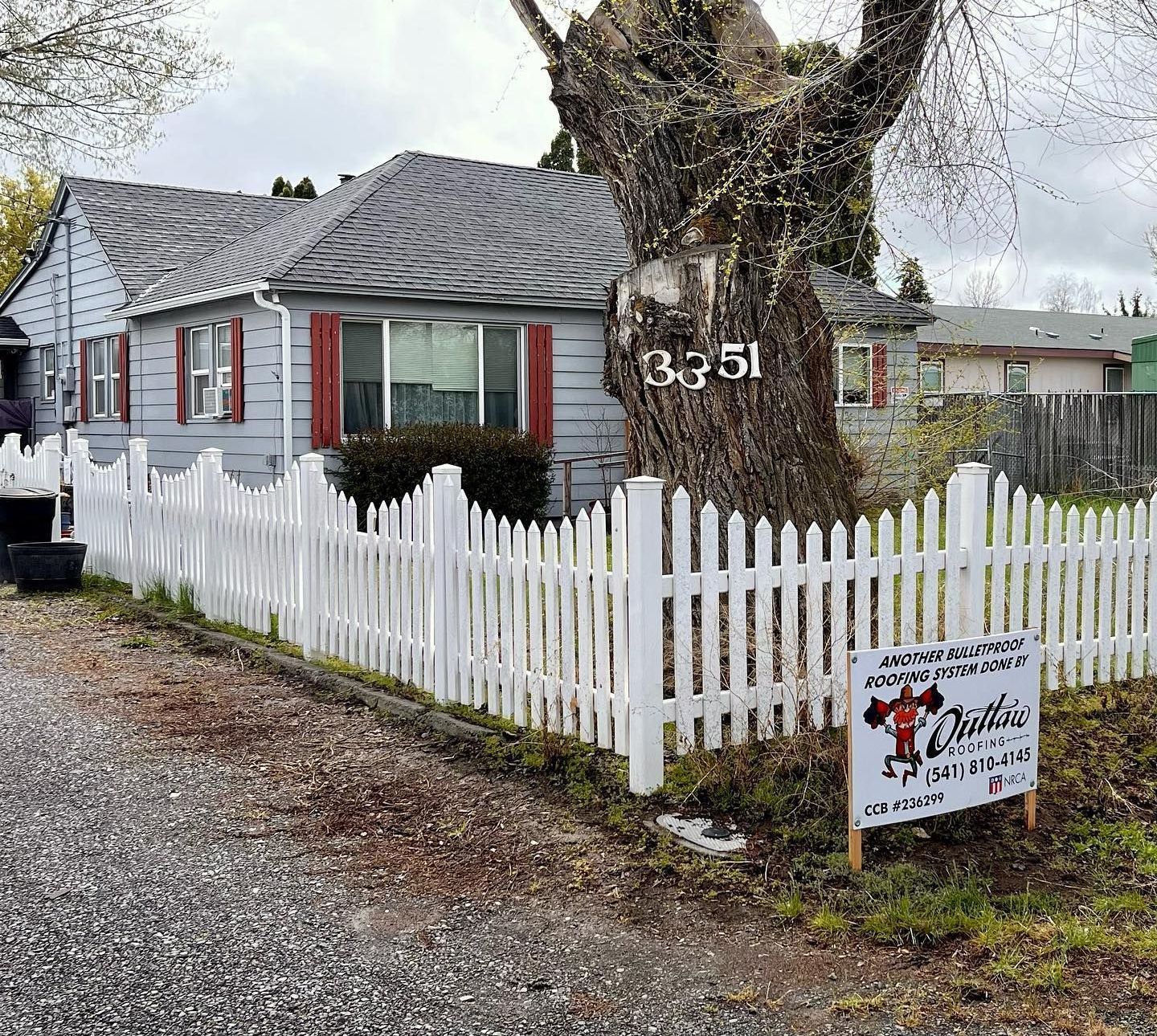
Roof Repair in East Medford, OR: The Pipe Boot Cluster Problem on Summerfield, Stonegate, and Eagle Trace Two-Story Homes, and Why Fixing One Boot at a Time Costs More Than Addressing the Cluster
The production homes built in East Medford's Summerfield, Stonegate, Eagle Trace, and Springbrook Road corridor subdivisions from the mid-1990s through the mid-2000s share a roofline characteristic that creates a repair pattern most homeowners encounter two or three times before understanding what is actually happening. These homes were designed with HVAC systems that route multiple exhaust and supply penetrations through the roof surface within a compressed zone on the rear slope, typically within three to five feet of each other. A furnace flue, a water heater exhaust, a bath exhaust, and in some configurations an HVAC fresh air intake all exit through the same slope section within a few feet of each other. Every one of those penetrations requires a pipe boot. Every boot on that slope entered service in the same year, under the same UV loading, with the same neoprene collar that has a 15 to 20-year service life under Rogue Valley conditions.
Most East Medford repair calls on these properties address the one boot that has produced a visible ceiling stain. The contractor replaces that boot and leaves. Fourteen months later the homeowner calls again for a different stain in a different room on the same slope. The boot two feet from the first one has now failed. This pattern repeats until every boot in the cluster has been replaced individually over four to six years, at four to six separate mobilization costs. A repair proposal that identifies the cluster, assesses every boot in it, and replaces those at or past collar service life in a single mobilization costs less in total than the sequential single-boot approach and eliminates the pattern entirely.
Our team, veteran-owned and operating under Oregon CCB license #236299, write repair proposals for East Medford properties that assess the full boot cluster before pricing any single boot replacement. City of Medford Building Division permit at 411 W 8th Street, phone (541) 774-2340, filed where required before repair work begins. GAF, IKO, CertainTeed, WeatherBond, and PolyGlass certified. GreenSky financing available. Military discount for veterans and active service members. Call (541) 275-6189.
The Repair Conditions East Medford's Production Subdivision Homes Produce


The Boot Cluster on Summerfield, Stonegate, and Eagle Trace Rear Slopes
The two-story production homes in Summerfield near Hamrick Road, Stonegate Estates adjacent to the Rogue Valley Country Club, and Eagle Trace along the Springbrook Road corridor were built to similar floor plans by regional production builders across a decade-long development period. The mechanical routing decisions that placed multiple roof penetrations within feet of each other on the same slope section were made at the plan level rather than the installation level, which means the pattern repeats across hundreds of homes in the same neighborhoods. When one boot collar cracks on a Stonegate home, the adjacent boots on the same slope are at the same service age and the same UV exposure history. The repair protocol that addresses only the presenting failure leaves the remaining cluster unassessed.
Valley Flashing at Complex Multi-Plane Rooflines in East Medford Subdivisions
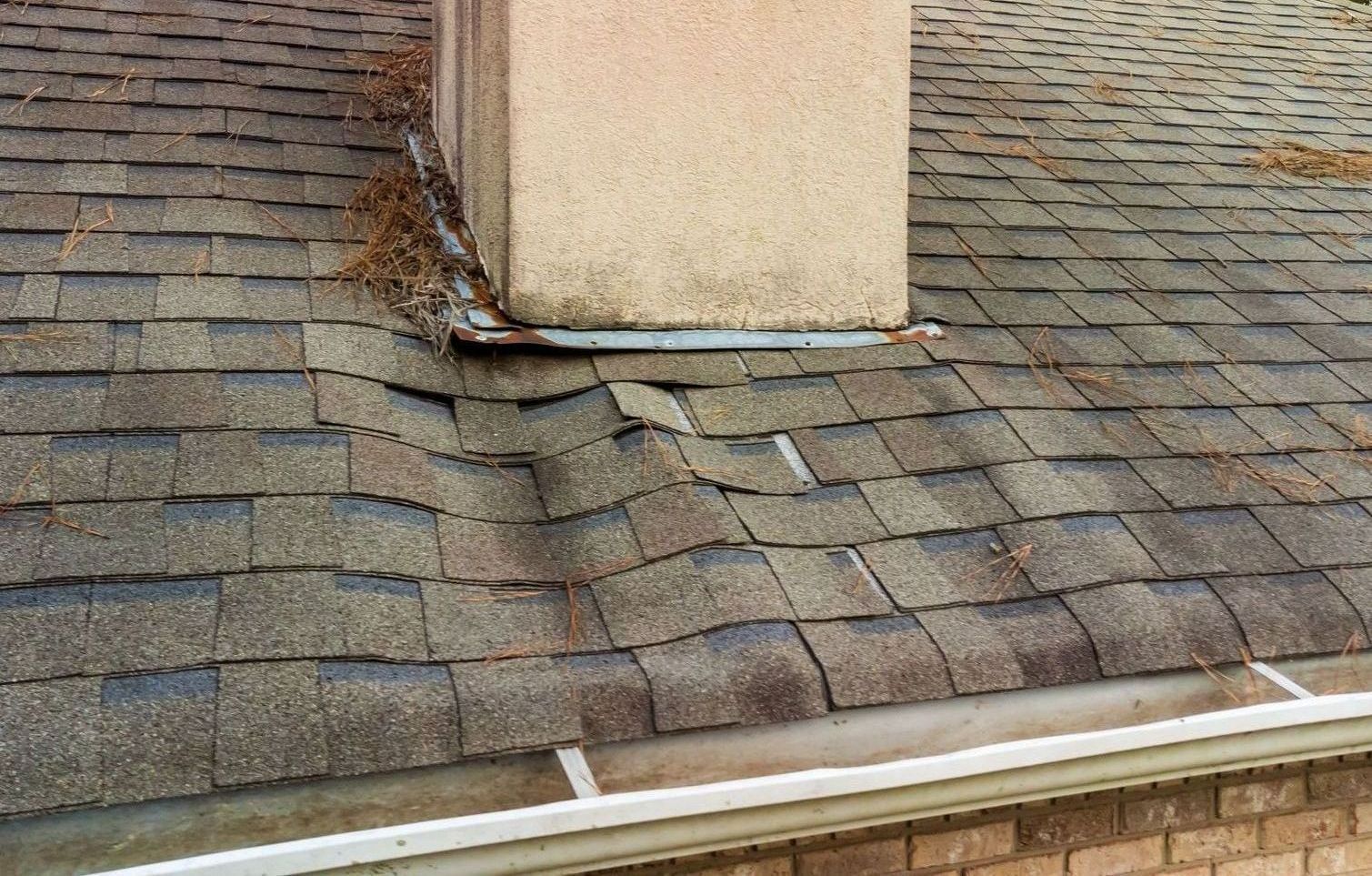
The East Medford production homes from the 1990s and early 2000s were designed with roofline complexity that distinguished them from the simpler ranch inventory of earlier Medford decades. Multiple gable ends, hip-to-gable transitions, dormers, and bay window roof sections created the visual character that sold these subdivisions. Each of those transitions created a valley intersection or a wall flashing point that has been cycling through Rogue Valley summers and winters for 20 to 30 years. The valley flashing at the intersection of a main roofline and a secondary gable on a Summerfield two-story has been expanding and contracting with Medford's 90-plus degree summers and below-freezing winter nights for two to three decades. The lap joint sealant on that flashing had a design life of 20 years.
Step Flashing at Bay Window and Dormer Transitions on Springbrook Road Homes
The bay window protrusions and bedroom dormers common on the 1990s two-story production inventory along Springbrook Road, Cedar Links Drive, and the Hamrick Road corridor create wall-to-roof transitions that carry step flashing assemblies with the same 20 to 30 year service history as the valley flashings on the same properties. A bay window that projects from the main exterior wall creates a three-sided intersection where two step flashing runs and a front apron meet at the wall base above the bay roof surface. When the step flashing at either side of that intersection separates from the vertical wall face, water enters the wall cavity rather than the roof deck, which means the interior staining pattern appears on an interior wall surface rather than on a ceiling, and the source is frequently misidentified as a plumbing leak or a window frame failure rather than a step flashing assembly failure at the bay transition above.
Shingle Surface Conditions on South and West Slopes Past the 20-Year Mark
The South Medford and East Medford subdivisions along the Crater Lake Highway and Hamrick Road corridors carry a substantial inventory of homes where the original roofing system installed at construction in the late 1990s or early 2000s is now 20 to 25 years old. East Medford's open exposure south and west-facing slopes receive the full intensity of Rogue Valley summer UV loading, with surface temperatures regularly exceeding 150 degrees on dark shingles through July and August. A shingle installed in 1998 on a south-facing slope in East Medford has accumulated 27 years of that loading. Granule loss on those slopes is not a warning sign of impending failure. It is documented current failure of the UV protection layer, and the asphalt binder beneath the depleted granule surface has been receiving direct UV exposure for the most recent portion of that service period.
Reading What Your East Medford Home Is Telling You Before Calling for a Quote
Ceiling Stain Location and What It Points To on a Two-Story East Medford Home
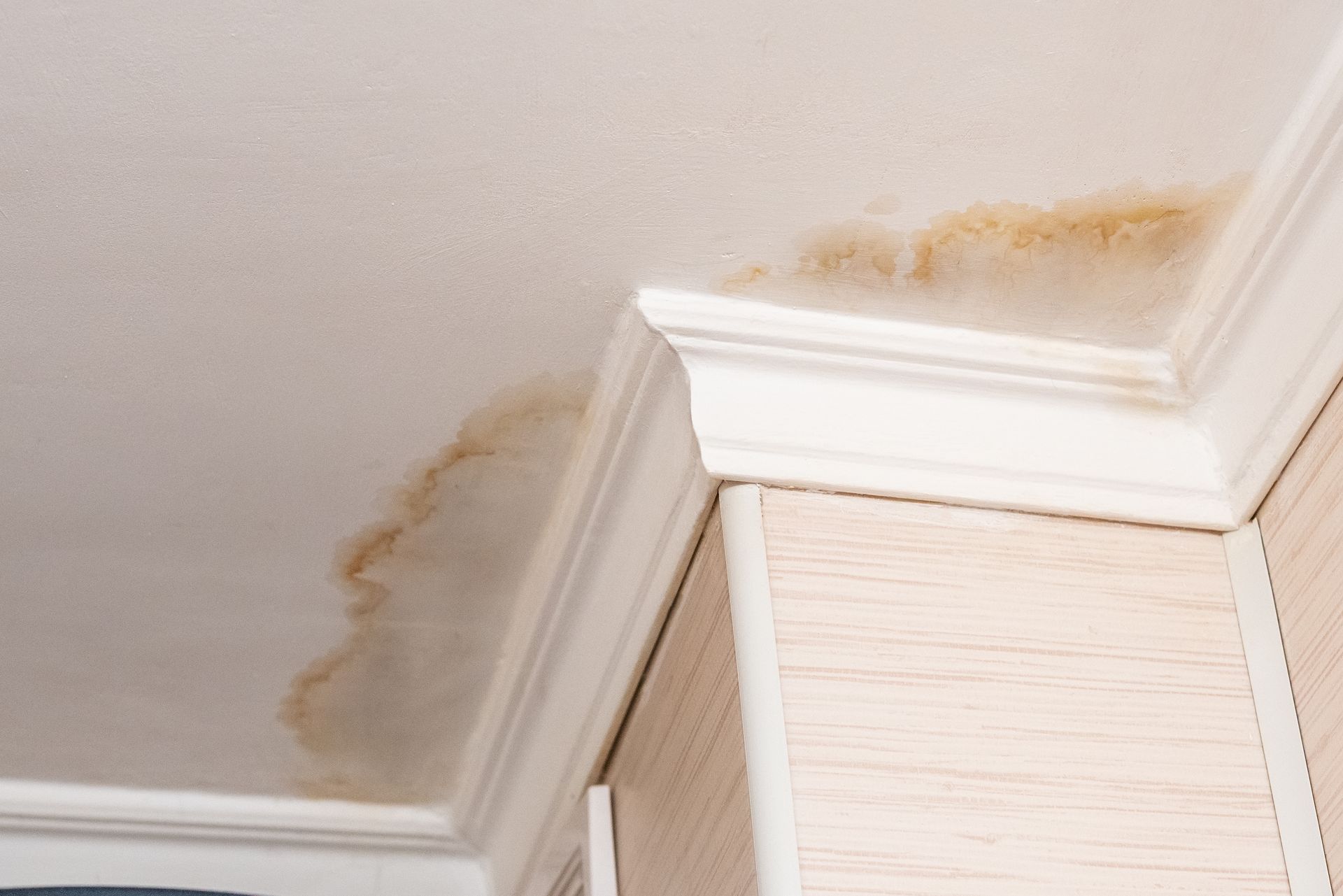
On a two-story East Medford production home, ceiling stain location is the first diagnostic tool before anyone gets on the roof. A stain on the upper-floor ceiling directly below a known HVAC penetration location, roughly circular in shape and less than 18 inches in diameter, points to the boot cluster above that location. A stain on the lower-floor ceiling near an exterior wall below a bay window points to the bay window step flashing transition above it rather than to the roof surface above the second floor. A stain on the upper-floor ceiling at a gable end wall junction points to the valley flashing at the gable transition below that ceiling location. The stain location tells the experienced inspector where to look first rather than requiring a full rooftop survey before the likely source is narrowed.
Multiple Small Stains in Adjacent Rooms Over Sequential Wet Seasons
If an East Medford homeowner has had two or three different ceiling stains appear in adjacent rooms over the past three to five wet seasons, each addressed by a different single-boot or single-flashing repair, and the stains keep appearing, the pattern is the cluster. Adjacent rooms sharing the same rear slope above them share the same boot cluster. A repair history showing sequential individual repairs on the same slope section is the clearest indicator that the cluster was never assessed as a whole.
Granule Volume Mismatch Between Front and Rear Slope Gutters
On East Medford two-story homes where the front slope faces north and the rear slope faces south, checking the granule accumulation in front gutters versus rear gutters after any significant rain event tells the story of where the surface is failing. Rear gutters carrying significantly more granule volume than front gutters on a home where the south-facing rear slope is over 20 years old confirms active granule loss above the level that standard UV aging produces at that age. The front slope, shaded from direct summer sun, holds its granule surface longer than the rear slope. A disproportionate rear gutter load is the ground-level indicator of a south slope at or past its UV protection threshold.
How Outlaw Roofing Inspects East Medford, OR Production Homes

Boot Cluster Assessment Before Any Individual Boot Is Quoted
Every Outlaw inspection on an East Medford two-story production home identifies the full boot cluster on the rear slope before any boot replacement is priced. Every boot in the cluster receives a physical collar compression test. Stiffness and early cracking at the collar-to-flange seam are assessed by hand rather than by visual inspection from below, because early-stage collar hardening is not visible from the yard or from the attic. The written proposal that follows identifies each boot individually: currently failed, within one to two seasons of failure, or at adequate collar condition. The homeowner receives a clear assessment of every boot in the cluster rather than a quote for the one boot above the reported stain.
Valley Flashing Assessment at Every Transition on Complex East Medford Rooflines
On East Medford production homes with multiple valleys, gable transitions, and hip intersections, every valley is assessed during the inspection regardless of which one the homeowner reported as a concern. Valley flashing that has not yet produced an interior stain can show active separation at the lap joint on the exterior, and lap joint separation that is currently shedding water above the underlayment threshold can produce a stain in the next weather event rather than the one after that. Outlaw documents every valley condition in the written findings so the homeowner understands the full roofline picture rather than only the one location they called about.
Bay Window and Dormer Step Flashing Examination on Springbrook Road Properties
On East Medford homes along Springbrook Road, Cedar Links Drive, and the Hamrick Road corridors where bay windows and bedroom dormers are common design elements, the step flashing condition at both wall transitions of each bay and each dormer cheek is examined during the inspection. The side step flashing runs on a bay window roof section are the failure locations most frequently missed because they are concealed behind the exterior siding at the wall return and require removing a section of lower siding to examine the flashing-to-wall substrate condition. Outlaw notes where concealed examination would be required to complete the assessment, and the written proposal distinguishes between confirmed findings and suspected conditions that require additional access.
City of Medford Building Division Permit Where Required
Repair work meeting the City of Medford permit threshold files with the Building Division at 411 W 8th Street, Medford, OR 97501, phone (541) 774-2340. East Medford properties within the city limits file with the City of Medford. Outlaw determines the permit requirement for every East Medford repair before any work is dispatched and files where required.
Materials Outlaw Specifies on East Medford, OR Repair Projects
EPDM Collars on All Boot Cluster Replacements
Every boot replacement in an East Medford production home cluster specifies EPDM rubber collars rather than standard neoprene. The distinction matters on rear south-facing slopes in East Medford where surface temperatures exceed 150 degrees through July and August. Neoprene collars on a south-facing East Medford slope have a realistic service life of 14 to 18 years. EPDM collars on the same slope deliver 20 to 30 years. Replacing a failed neoprene boot with another neoprene boot resets the failure clock to the same point. Replacing with EPDM extends the service interval past the remaining service life of the surrounding shingle system on most East Medford properties.
Self-Adhering Ice and Water Shield at Every Exposed Deck Section During Repair
On East Medford repair projects, any deck section exposed during repair receives ice and water shield before new surface material is installed. The concentration of penetrations on the rear slope of East Medford production homes means that boot replacement work on that slope exposes deck sections adjacent to multiple active penetrations simultaneously. Ice and water shield at each exposed section provides the redundant waterproofing layer that keeps the adjacent active penetrations from allowing water into the exposed area during the repair period.
26-Gauge Galvanized Step Flashing at Bay Window and Valley Transitions
Step flashing replacement at East Medford bay window and dormer transitions specifies 26-gauge galvanized steel rather than the lighter gauge material that some repair quotes use to reduce material cost. The 20 to 30 years of thermal cycling that the existing flashing has accumulated on these properties have tested the dimensional stability of the assembly at every expansion joint. Installing lighter gauge replacement material on a transition that has already demonstrated the mechanical stress it will apply to the flashing over time creates the same failure condition on a shorter timeline.
Repair or Replacement for East Medford, OR Production Subdivision Homes
When Cluster Boot Repair Is the Right Investment
A complete boot cluster replacement on an East Medford two-story where the surrounding roof surface is at 18 years on a north-facing front slope and 20 years on a south-facing rear slope, with granule condition on the north slope still within protective range and no active valley or wall flashing failures, is a repair that extends the practical service life of the system by eliminating the cluster as an ongoing failure source. The cluster replacement cost runs $800 to $1,600 depending on boot count. The five individual mobilization visits it replaces over the following six years would cost more than that in aggregate. See also: /residential-roofing-contractor-east-medford-or
When the East Medford Production Home System Points Toward Replacement
An East Medford Summerfield home where the rear south slope shows active granule loss and shingle brittleness at 24 years, the boot cluster has already had two individual replacements without the cluster being assessed, and the valley at the gable transition shows active interior staining that returned after a previous single-flashing repair, is not a repair situation. Replacement addresses the full system. Repair addresses the next failure point and defers the decision another two years while the remaining system continues aging. See also: /residential-roof-replacement-east-medford-or
Why East Medford's Climate Drives the Specific Failures It Does on Production Homes
East Medford's position on the open valley floor east of Medford's downtown core removes the topographic shielding that Roxy Ann Peak provides to some of the hillside and south Medford neighborhoods. The Rogue Valley summer UV loading hits East Medford's south and west-facing rear slopes on two-story production homes at full intensity from June through September, with surface temperatures on dark shingles regularly reaching 155 to 165 degrees on clear afternoons. That thermal loading is what drives neoprene collar degradation on the boot clusters and granule adhesion failure on south slopes at a timeline that is measurably shorter than the 30-year manufacturer estimates calibrated for moderate Pacific Northwest conditions.
East Medford also receives the Rogue Valley's concentrated winter rain events without significant geographic buffering. The multiple valley intersections on production home rooflines from the 1990s and early 2000s carry decades of sealant cycling from those events. A valley on a Stonegate Estates home that was correctly installed in 2001 has gone through 24 years of Medford's concentrated rain events, each one testing the lap joint sealant at the valley center. The 20-year design life of that sealant system expired four years ago.
East Medford's Production Subdivision Housing Stock and What It Means for Repair Scope
East Medford's residential character is defined by the production subdivision development that transformed the open Rogue Valley floor east of downtown Medford from the mid-1990s through the mid-2000s. Eagle Trace along the Springbrook Road and Cedar Links corridors, Summerfield near the Hamrick Road and Crater Lake Highway intersection, and Stonegate Estates adjacent to Rogue Valley Country Club represent the dominant housing type: two-story production homes in the 1,800 to 2,800 square foot range, built to similar floor plans by regional production builders, with the roofline complexity that distinguished the era's new construction from the simpler ranch inventory that preceded it.
These homes are now 20 to 30 years old, placing their original roofing systems at or past the replacement threshold under Rogue Valley climate conditions. The boot clusters on their rear slopes are at or past neoprene collar service life. The valley flashings at their multiple transitions are at or past sealant design life. The step flashing at their bay windows and dormers has been cycling through Medford's thermal range for two to three decades. Repair work on these properties is not addressing isolated failures on young systems. It is addressing the leading edge of systemic end-of-life conditions on a housing generation that has aged together.
A Recent Roof Repair in East Medford, OR: The Cluster That Three Previous Contractors Had Not Assessed
Last spring Outlaw completed a repair assessment on a 2001 two-story home in the Summerfield subdivision on a lot off Hamrick Road in East Medford. The homeowner had experienced ceiling stains in three different rooms over the previous four wet seasons. Each stain had appeared in a different upper-floor room. Each previous contractor had replaced the single boot above the reported stain and left. The homeowner had paid three separate mobilization and single-boot replacement costs over four years and now had a fourth stain appearing in a fourth room above the same rear slope.
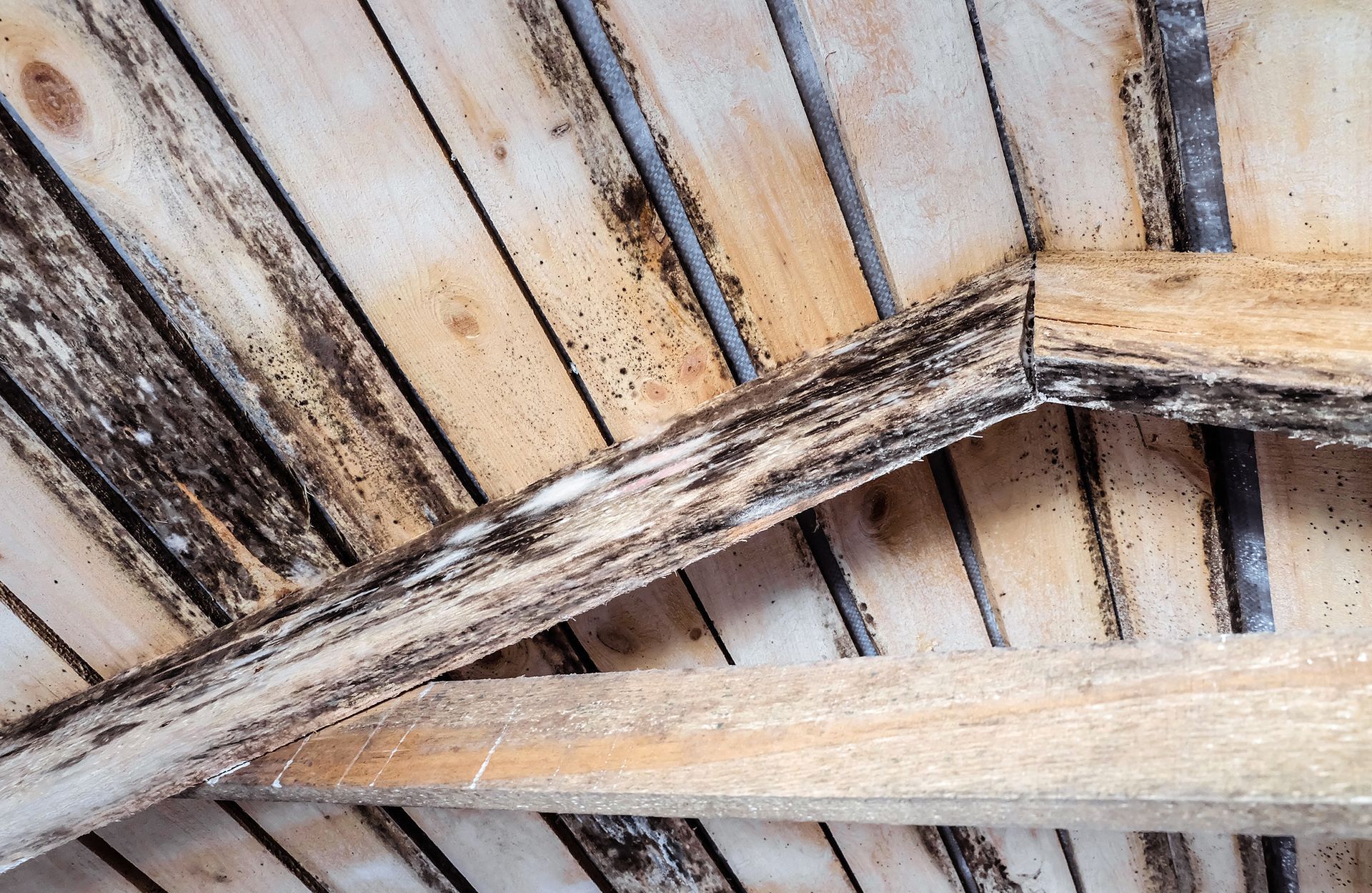
The Outlaw inspection assessed the full rear slope. Five pipe boots were identified within a seven-foot lateral span on the same south-facing slope section: two furnace flues, one water heater exhaust, one bath exhaust, and one HVAC fresh air intake. The two previously replaced boots had received neoprene collar replacements. Compression testing on the three unreplaced boots found one with an active crack at the south face of the collar flange, one with significant stiffness indicating collar hardening past the flexibility threshold, and one at adequate condition. The attic showed moisture staining at the deck boards below four of the five boot locations, confirming that three of the four previous winter stains had been from the same cluster rather than from different sources.
Outlaw's scope: EPDM collar replacement at the three boots requiring attention, including the active failure, the hardened collar, and the neoprene boot installed by a previous contractor that had been replaced with the same material and was already showing early stiffness, plus a valley inspection at the adjacent gable transition confirming no active valley failure at that location. City of Medford permit not required for this repair scope. Total: $1,100. The homeowner had spent approximately $1,400 on three single-boot replacements that had each addressed one failure while leaving the cluster intact. The cluster assessment and three-boot replacement in one mobilization cost less than two of those previous visits and ended the sequential failure pattern.
Why East Medford, OR Homeowners Choose Outlaw Roofing for Production Home Repair
✓ Veteran-Owned With Cluster Assessment as Standard Protocol on Every East Medford Two-Story
Riley approaches every East Medford two-story production home inspection with the cluster assessment built into the standard scope rather than as an optional service. The sequential single-boot repair pattern is not a homeowner failure. It is a contractor failure to assess the full context of the failure before pricing the repair.
✓ CCB#236299 — Oregon License Verifiable at oregon.gov/ccb
Search CCB#236299 at oregon.gov/ccb before authorizing any repair work on an East Medford property. The license is current and covers all roofing work in Jackson County including every East Medford production subdivision.
✓ Written Proposal That Assesses Every Boot in the Cluster and Every Valley on the Roofline
An East Medford repair proposal from Outlaw identifies every boot in the cluster by condition status, lists each valley on the roofline by assessment finding, and specifies the EPDM collar material before any work is authorized. No verbal estimates. No material substitutions. No scope items added after the crew arrives without the homeowner's documented written approval.
✓ City of Medford Building Division Permit Filed Where Required
Repair work meeting the City of Medford permit threshold files with the Building Division at 411 W 8th Street, phone (541) 774-2340 before any work begins. Outlaw determines the requirement for each East Medford repair scope and files where required.
What Roof Repair Costs in East Medford, OR by Problem Type and Scope
Full Boot Cluster Assessment and Replacement on Summerfield, Stonegate, and Eagle Trace Two-Stories: $800 to $1,600
Complete boot cluster assessment and replacement of all collars at or past service life on an East Medford two-story production home, including EPDM collar specification on all replaced boots, typically runs $800 to $1,600 depending on the number of boots requiring replacement in the cluster. A cluster where three of five boots require replacement runs differently than one where all five require replacement, and the written proposal identifies each boot and its replacement status separately.
Valley Flashing Repair at Gable and Hip Transitions on East Medford Production Rooflines: $900 to $2,100
Valley metal replacement at a single gable or hip transition on an East Medford production home, including ice and water shield at the base transition and step flashing replacement at adjacent wall courses where the valley terminates, typically runs $900 to $2,100. Valleys at gable ends where the valley terminates at an exterior wall rather than at the eave run toward the upper end because the wall flashing scope at the termination point adds to the total. Straightforward hip-to-gable valley runs without wall terminations run toward the lower end.
Bay Window and Dormer Step Flashing Repair: $700 to $1,800
Step flashing repair at a single bay window or bedroom dormer transition on an East Medford two-story, including cladding removal to access the concealed step flashing at the wall return and reinstallation at the correct clearance from the roof surface, typically runs $700 to $1,800. Properties where the original installation buried the step flashing under the siding at the wall return without leaving an accessible clearance gap require additional cladding work to reach the flashing assembly, which runs toward the upper end. City of Medford permit fees included as a separate line item where applicable.
What Experienced Inspectors Look for on East Medford Production Home Repair Properties
The rear slope boot cluster is the first priority on every East Medford two-story production home inspection. Before the ladder goes up, the attic is checked for the moisture stain pattern at the deck boards below the rear slope penetration zone. Multiple stain locations within a compressed attic area below the rear slope confirm the cluster is producing multiple entry points simultaneously rather than the single failure that the most recent ceiling stain suggested. The attic map narrows the roof inspection to the specific cluster zone before collar compression testing begins.
Valley condition mapping is the second priority. On a roofline with five or six valley intersections, each valley is identified by its transition type, its age based on the construction period, and its current visible condition from the attic and from the roof surface. Outlaw maps every valley before any is opened or disturbed, so the homeowner receives a condition assessment of the full valley inventory rather than only the one that produced the reported stain. The map also identifies which valleys share the same age and exposure history as the failing valley, because they are approaching the same threshold.
How Long Repair Work Lasts on East Medford, OR Production Home Rooflines
An EPDM cluster boot replacement on an East Medford south-facing rear slope delivers 20 to 30 years of reliable service, which exceeds the remaining service life of the surrounding asphalt shingle system on most 1990s and early 2000s East Medford production homes. The boot replacement does not become the next failure point on those properties. The shingle surface or the valley flashing becomes the next repair or replacement conversation, and that conversation is based on the system age and condition at that time rather than on the cluster returning.
Valley flashing replacement at an East Medford gable transition with ice and water shield at the base delivers 20 to 25 years of reliable service regardless of Rogue Valley's concentrated rain events. The ice and water shield membrane below the valley metal is what protects the deck when the valley sealant eventually deteriorates again, and membrane service life exceeds valley metal sealant life by a significant margin. Catching a failing valley sealant during an inspection while the membrane below is still intact costs a few hundred dollars more than a basic valley metal swap. Catching the same failing sealant after the membrane has also deteriorated costs deck repair in addition to the valley metal replacement.
Quick Answers About Roof Repair in East Medford, OR
How much does roof repair cost in East Medford, OR?
Full boot cluster assessment and replacement runs $800 to $1,600 depending on boot count. Valley flashing repair at gable transitions runs $900 to $2,100. Bay window and dormer step flashing repair runs $700 to $1,800. All Outlaw repairs begin with a free inspection and written proposal before any work is authorized.
Does roof repair in East Medford require a permit?
Some repair work requires a permit through the City of Medford Building Division at 411 W 8th Street, phone (541) 774-2340. Outlaw determines the permit requirement for every East Medford repair before work begins and files where required.
Why does my East Medford home keep getting different ceiling stains each wet season?
If the stains are appearing in adjacent rooms on the same floor below the same rear slope, the source is the boot cluster above that slope section. Each previous repair addressed one boot while leaving the remaining cluster at the same service age and the same collar condition. The sequential stain pattern stops when the full cluster is assessed and every collar at or past service life is replaced in a single mobilization.
My East Medford home was built in 1998. Is the original roof system still serviceable?
A 1998 East Medford production home carries a 27-year-old roofing system. Under Rogue Valley UV conditions, quality architectural asphalt on a south-facing slope delivers 22 to 25 years of reliable service. On a north-facing slope, 25 to 28 years. A 27-year-old system on a south slope is past its reliable service life. A 27-year-old system on a north slope is at the end of it. An inspection determines whether the specific condition of the system on your property matches those general estimates or has aged faster or slower based on its specific exposure and maintenance history.
Can I repair the boot cluster on my East Medford home if the rest of the roof is still serviceable?
Yes. A complete cluster boot replacement on a two-story East Medford home where the north-facing front slope is within its service life and the south-facing rear slope still shows adequate granule protection outside the penetration zone is a legitimate repair investment. The cluster replacement eliminates the sequential single-boot failure pattern while the surrounding system continues its service life.
Frequently Asked Questions About Roof Repair in East Medford, OR
How do I verify Outlaw Roofing's Oregon contractor license?
Go to oregon.gov/ccb and search for CCB#236299. The current license status displays immediately. Every roofing contractor performing repair work in East Medford is required to carry a current, verifiable CCB registration.
What is a boot cluster and how do I know if my East Medford home has one?
A boot cluster is a grouping of multiple pipe boots within a compressed zone on the same roof slope, typically on the rear slope of a two-story production home where mechanical systems route multiple penetrations through the roof within a few feet of each other. The clearest indicator of a cluster on your property is multiple penetrations visible from the attic within a five to eight-foot area on the same slope section. If you have had more than one ceiling stain appear in adjacent rooms above the same slope over the past three to five years, a cluster is almost certainly present.
Does my homeowner's insurance cover boot cluster failure on an East Medford production home?
Boot failure caused by sudden storm impact is typically a covered claim. Boot collar failure from UV-driven neoprene degradation over 18 to 20 years is typically classified as maintenance failure and is not covered. Outlaw's written inspection report documents the collar condition and the probable failure cause for each boot in the cluster in terms that support or clarify an insurance claim where applicable.
Does Outlaw Roofing offer financing for East Medford homeowners?
Yes. GreenSky financing up to 100 percent for qualified East Medford homeowners with fixed monthly payment terms. Military discount for veterans and active service members throughout the East Medford and broader Medford area.
What related services does Outlaw provide in East Medford?
East Medford homeowners whose inspection confirms that replacement rather than repair is the appropriate scope can reference the residential roof replacement East Medford OR page (/residential-roof-replacement-east-medford-or) for full replacement guidance. The residential roofing contractor East Medford OR page (/residential-roofing-contractor-east-medford-or) covers Outlaw's full certification structure and service area.
Residential Roofing Services We Provide in Jacksonville, OR
Residential Roof Repair
Targeted roof repair for East Medford, OR historic residential properties. Chimney counter-flashing restoration with physical mortar condition assessment before any scope is proposed. Step flashing replacement at historic wall transitions. Valley flashing repair at complex historic roofline intersections. East Medford County permit when required. CCB#236299.
Residential Roofing Contractor
Assessing whether your East Medford historic property needs repair or replacement? The complete decision framework for historic Rogue Valley residential properties is on our JEast Medford residential roofing contractor page
Residential Roof Replacemen
When the East Medford repair inspection finds concurrent failures across multiple elements on a system approaching end of service, Outlaw provides written replacement proposals for California Street Victorians, Oregon Street Craftsmans, and every property in the East Medford historic district. CCB#236299.
Metal Roofing
Standing seam metal for East Medford historic property owners ending the chimney flashing cycle permanently. 40-plus year service life. Class A fire rating. WeatherBond and PolyGlass certified installation.

East Medford Homeowners: Get Your Written Repair Estimate From Outlaw Roofing
A ceiling stain in an upper-floor room of an East Medford Summerfield or Stonegate two-story is not always just one boot. More often, it is one boot in a cluster where the surrounding boots are within one to two seasons of the same failure. Outlaw assesses the full cluster, writes what it found on every boot, and prices the repair before any crew is dispatched. Riley, veteran-owned, CCB#236299. GreenSky financing available. Military discount for veterans. Call (541) 275-6189 or schedule at /contact.