Residential Roof Repair in Ashland, OR
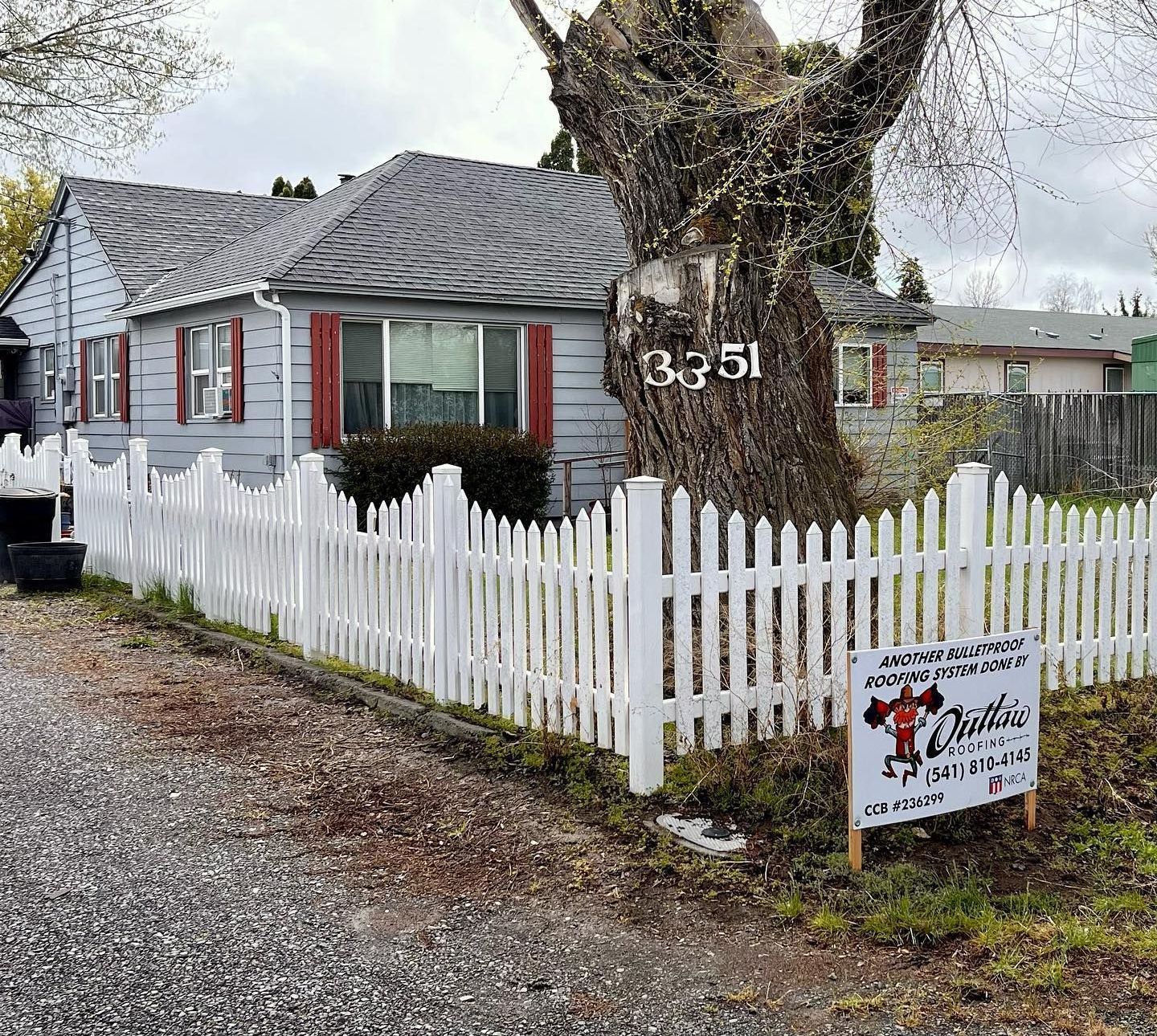
Roof Repair in Ashland, OR: The Dormer Valley Problem on Siskiyou Boulevard Historic Homes and What the Scope Needs to Include
Most Ashland homeowners calling about a repair after finding a ceiling stain in an upstairs bedroom already know roughly where the water is coming from. What they do not know is that the dormer valley flashing on Craftsman and Victorian homes along Siskiyou Boulevard, Hargadine Street, and the Gresham Street corridor within the Siskiyou-Hargadine Historic District carries a failure mode that most repair estimates treat as a standard valley metal swap. It is not. The dormers on these homes, many of them original construction from the 1890s through the 1920s, have roofline intersections where valley flashing, rake trim boards, and horizontal fascia have been moving at different rates through 100-plus years of Rogue Valley wet seasons. A repair estimate that prices this as one afternoon of valley metal installation has not accounted for what a century of thermal cycling has done to the wood substrate behind the rake trim at the valley base. That is why two legitimate quotes on the same Ashland dormer repair can differ by $900 to $1,600 and still be pricing entirely different scopes.
Our team, veteran-owned and operating under Oregon CCB license #236299, write repair proposals for Ashland properties that separate the valley flashing replacement scope from any substrate remediation discovered behind the dormer trim boards. City of Ashland Building Division permit at 51 Winburn Way, phone 541-488-5305, filed where required before any repair work begins. GAF, IKO, CertainTeed, WeatherBond, and PolyGlass certified. GreenSky financing available. Military discount for veterans and active service members. Call (541) 275-6189.
Common Repair Conditions on Ashland Historic and Hillside Properties

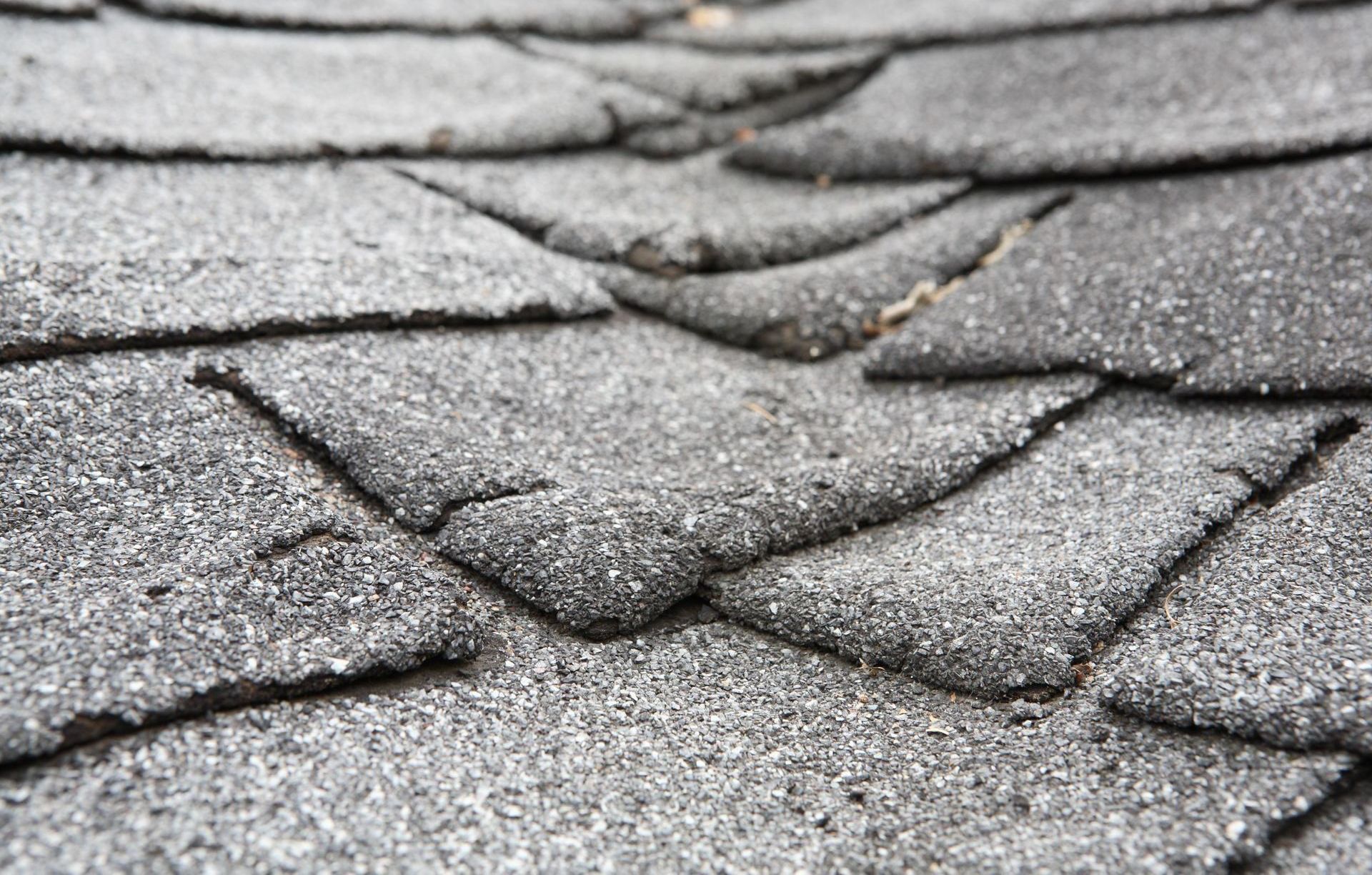
Chimney Counter-Flashing Failure on Victorian and Craftsman-Era Masonry
The dormer valley failure on Siskiyou-Hargadine historic homes is the most frequent repair call Outlaw receives from Ashland addresses, but the inspection rarely finds it in isolation. The same 100-year-old homes on Siskiyou Boulevard and the Granite and Church Street hillside corridors that develop dormer valley failures also carry secondary conditions that surface during the inspection. A homeowner who calls about the upstairs bedroom stain often has a pipe boot cracked at the base of a vintage bathroom exhaust stack or a chimney flashing that has been caulked rather than replaced at every previous maintenance interval.
Ashland Creek and its tributary channels create higher ambient moisture on the hillside lots above Lithia Park through the November to April wet season. Properties along Granite Street and the hillside streets feeding into the Siskiyou-Hargadine district experience this moisture loading in combination with the mature oak and maple canopy that shades north and west-facing roof sections through the wet season, accelerating biological growth on surfaces that never fully dry between rain events.
Warning Signs on Ashland Historic and Hillside Properties Before Calling for an Estimate
Upstairs Ceiling Staining at Dormer Wall Junctions on Siskiyou Boulevard and Hargadine Street Properties
A ceiling stain on the upper floor of an Ashland Craftsman or Victorian home that originates within two feet of where an interior wall meets the sloped ceiling above a dormer is the most precise repair indicator for this housing type. That stain is the end destination of water entering the dormer valley at the exterior roofline intersection, traveling along the valley substrate or down inside the rake board cavity, and appearing on the ceiling at the point where the interior trim meets the sloped surface. Every wet season that entry point remains open, the wood substrate inside the dormer cheek wall accumulates additional moisture cycles that expand and contract the framing against the flashing assembly it is supposed to hold in place.
Granule Accumulation at Dormer Base Gutters After Rogue Valley Rain Events
On Ashland homes where the dormer valley directs runoff into a lower gutter section, granule accumulation in that gutter section after rain events indicates the shingle surface feeding the valley has reached the granule depletion stage that precedes surface failure. When the valley itself is also carrying that granule load through concentrated runoff, flashing lap joints in the valley receive the abrasive action of that material with every storm event, accelerating the sealant degradation at those joints above the rate that open-exposure roof sections experience.
Visible Daylight at Rake Trim Joints on Dormers Above Lithia Park and the Granite Street Hillside
On the dormers of older Ashland properties in the hillside area above Lithia Park, the rake trim boards that frame the dormer roofline can pull away from the wall cladding below them as the wood expands and contracts through seasonal moisture cycling. When visible daylight appears at the joint between the rake trim base and the wall cladding, the valley flashing beneath that trim joint has been exposed to direct weather entry at every rain event since the separation opened. This is not a caulk repair. It is a substrate and flashing assembly failure at the trim base that requires the rake board to be removed before the condition can be accurately assessed.
Interior Chimney Flashing Staining on Homes Along the Siskiyou-Hargadine Historic Corridor
Ashland historic homes with original or early-replacement brick chimneys show a specific staining pattern that distinguishes chimney flashing failure from roof surface leaks. A stain on the interior plaster or drywall surface within 24 inches of the chimney face on any wall plane, appearing during or immediately after sustained rain, indicates counter flashing has separated from the mortar joint where it was set. The original counter flashing installation method on 1900s through 1930s Ashland chimneys used lead flashing set into the mortar rake. When that mortar deteriorates, the flashing pulls free at the wall face regardless of what the step flashing below it is doing.
How Outlaw Roofing Manages Roof Repair on Ashland, OR Properties

Step 1 - Free Inspection Including Dormer Valley Assessment and Chimney Flashing Evaluation
Every Outlaw inspection on an Ashland repair property specifically examines dormer valley flashing condition alongside the standard roofline evaluation. The dormer assessment examines valley metal condition at each lap joint, rake trim board attachment at the valley base, any visible separation between trim and cladding, and whether substrate deterioration exists inside the rake board cavity. An Ashland repair proposal that prices a dormer valley replacement as standard line-item work without noting substrate condition at the rake base has not been written by a contractor who removed the lower trim section and looked at what was behind it.
Step 2 - Written Proposal With Dormer Substrate Finding as a Separate Line Item
When the dormer assessment identifies wood deterioration behind the rake trim, that scope is listed as its own line item in the Outlaw written proposal, separate from the valley flashing replacement. The homeowner understands before any crew is dispatched what the flashing work involves and whether any substrate remediation is included in the scope they are approving.
Step 3 - City of Ashland Building Division Permit Where Required
Repair work meeting the City of Ashland permit threshold files with the Building Division at 51 Winburn Way, Ashland, OR 97520, phone 541-488-5305. Outlaw determines the permit requirement for every Ashland repair before any work begins and files where required. Properties within the Siskiyou-Hargadine Historic District may also require coordination with the Ashland Historic Preservation Advisory Commission depending on the scope and visibility of the repair work.
Step 4 - Valley Metal Replacement, Rake Trim Reinstallation, and Ice and Water Shield at Dormer Bases
New valley metal is installed at the full length of the dormer valley, overlapping the lower course by the distance the valley pitch and exposure require. Rake trim is reinstalled with the correct clearance from the roof surface to prevent future moisture wicking. Ice and water shield is installed beneath the new valley metal at the dormer base where the valley meets the main roof slope, providing the redundant membrane layer that valley metal geometry alone cannot deliver at this specific intersection. Chimney counter flashing is reset into the mortar joint where original installation has pulled free, with appropriate mortar repair at the attachment line.
Complete Cleanup and Final Walkthrough on Ashland Hillside and Historic Properties
Full debris removal from the property including material that can accumulate in the landscaping surrounding older Ashland hillside homes. Magnetic nail sweep across all accessible grade surfaces. Final walkthrough with the homeowner confirming the repair scope and any follow-up conditions documented during inspection.
Materials Used in Ashland, OR Roof Repair Work
Valley Metal Specifications for Historic Ashland Dormer Repairs
26-gauge galvanized steel valley metal is the standard specification for dormer valley repairs on Ashland historic properties. The gauge delivers the stiffness required to maintain correct lap geometry through Rogue Valley seasonal cycling without the thin-metal flutter that lighter material introduces at an open valley intersection. For properties in the historic district where a copper valley installation is more appropriate to the original construction period, Outlaw provides copper valley metal as an alternative with the corresponding cost difference noted in the written proposal.
Ice and Water Shield at Dormer Bases and Chimney Transitions
Self-adhering ice and water shield at the base of every dormer valley and at chimney step flashing transitions is the material specification that separates a repair holding for 15-plus years from one that allows water entry within the next three wet seasons. The membrane bonds directly to the substrate below the flashing and provides a watertight layer at the specific intersection points where valley metal geometry and thermal movement create gaps that standard underlayment cannot bridge.
Synthetic Underlayment on Any Exposed Deck Surface
Where repair work exposes deck surface adjacent to the flashing or substrate replacement, synthetic underlayment is installed rather than felt. On older Ashland homes where the original board sheathing has been through more than 80 wet seasons, maintaining dimensional stability in any newly exposed underlayment section matters. Felt absorbs moisture, swells, and loses its flat contact with board sheathing surfaces that are rarely perfectly even on original construction decking of this age.
Repair or Replacement for Ashland, OR Historic and Hillside Properties
When Repair Is the Right Answer on an Ashland Historic Property
A dormer valley failure on a Siskiyou Boulevard Craftsman home where the surrounding roofline has 10 or more years of remaining service life and the substrate assessment behind the rake trim finds no framing deterioration beyond surface weathering is a repair, not a replacement trigger. Isolated chimney flashing failures on a sound system are exactly what a correctly scoped repair addresses. Outlaw quotes both options when replacement is a genuine near-term consideration, and the written proposal shows the cost difference so the homeowner can make the decision with full system context. See also: /residential-roofing-contractor-ashland-or
When the Historic Ashland Property Condition Points Toward Full Replacement
A Hargadine Street Victorian where the inspection finds the dormer valley failure alongside granule depletion on south slopes past the 20-year mark, chimney flashing that has been caulked through multiple maintenance cycles, and board sheathing behind the dormer rake trim with moisture damage extending into the cheek wall framing is not a repair situation. The residential roof replacement Ashland OR scope is the right answer when the repair list approaches replacement cost with less than full system coverage. See also: /residential-roof-replacement-ashland-or
Why Ashland, OR's Climate Creates Specific Repair Pressure on Historic Rooflines
Ashland's position at the mouth of the Siskiyou Pass delivers a climate that produces roofing stress from two directions simultaneously. The wet season from November through April brings 19 to 21 inches of rainfall to the valley floor, with hillside properties above Lithia Park receiving additional moisture from the creek drainage and the canyon microclimate that keeps air humidity elevated through the extended wet period. The same Rogue Valley UV loading that accelerates shingle degradation on Central Point's flat ranch profiles hits Ashland's steep-pitch historic rooflines at angles that concentrate that exposure on south and west-facing dormer faces in ways that standard slope analysis does not fully capture.
The Siskiyou Pass wind events that track through Ashland from the south in late fall and winter create sustained uplift pressure on the rake trim and ridge cap assemblies of the historic homes along the Siskiyou Boulevard corridor. These wind events are directional rather than omnidirectional, and properties on the south side of the Boulevard with south-facing rake exposures experience the leading edge of those events without the shielding that north-facing properties receive from the hillside behind them. Ridge caps and rake board junctions on historic Ashland homes facing south along the Siskiyou corridor develop wind damage at a rate that comparable valley floor properties in Medford, OR or Central Point, OR do not experience.
The Housing Stock of Ashland, OR Along Siskiyou Boulevard, Hargadine Street, and the Granite Street Hillside
Ashland's residential character is defined by the historic district housing that developed along Siskiyou Boulevard and the hillside streets above Lithia Park from the 1880s through the 1930s. The Siskiyou-Hargadine Historic District, listed on the National Register of Historic Places in 2002, contains the earliest and most intact residential fabric in the city. Craftsman bungalows built between 1905 and 1930 dominate the boulevard-adjacent streets. Victorian and Queen Anne homes from the 1890s and early 1900s sit on the hillside lots above Lithia Park along Granite Street, Church Street, and Laurel Street. These properties carry the original structural and roofing characteristics of their construction era, modified through multiple generations of maintenance, and the rooflines reflect that layered history.
The dormer configurations on these homes range from simple shed dormers on Craftsman bungalows to complex gabled dormers with returning rakes on Victorian and Queen Anne structures. Each dormer type has its own specific valley and flashing failure mode, and the repair scope for a shed dormer on a 1915 Craftsman is structurally different from the scope for a gabled dormer on an 1898 Victorian even when the presenting symptom, the upstairs ceiling stain, looks identical. Newer residential construction in Ashland exists in the Railroad District and on the south side of town beyond the historic boundaries, and those properties carry more standard repair profiles consistent with 1980s through 2000s construction practices.
A Recent Roof Repair on an Ashland, OR Historic Property: What the Inspection Found
Last spring Outlaw completed a repair on a 1921 Craftsman bungalow on a lot off Hargadine Street in Ashland's historic district. The homeowner had been managing a water stain on the upper hallway ceiling that appeared every January and February and dried by March. A previous contractor had resealed the chimney flashing two years earlier. The stain had returned the following winter.
Our team's inspection found the chimney flashing was not the source. The dormer on the north-facing slope above the hallway had a valley where the rake trim at the valley base had separated from the cladding below it by nearly three-eighths of an inch. The gap had been caulked at some point, but the caulk had cracked through across the full length of the separation. Behind the lower rake trim board, the board sheathing showed moisture staining across a 22-inch band above the lower trim attachment line, with the staining pattern consistent with three or more winter seasons of water entry at the trim-to-cladding joint.
Outlaw's scope: lower rake trim board removed and set aside, board sheathing dried and treated at the stained band, new ice and water shield at the dormer base from the valley center to 18 inches up each slope, new 26-gauge valley metal at the full dormer valley length, rake trim reinstalled with a 3/4-inch clearance from the new surface, and counter flashing at the chimney reset into the mortar joint with appropriate mortar repair at the attachment line as a secondary item. City of Ashland permit not required for this repair scope. Total: $3,100. The chimney work the previous contractor had done was not incorrect. It simply was not addressing the actual source.
Why Ashland, OR Homeowners Choose Outlaw Roofing for Historic Property Repairs
✓ Veteran-Owned With Dormer Valley Assessment on Every Historic District Inspection
Riley brings the same accountability to a $3,100 Ashland repair that they bring to a full replacement project. The dormer assessment is not an optional service tier. It is a standard part of every inspection on an Ashland historic property with any dormer configuration on the roofline.
✓ CCB#236299 — Oregon License Verifiable at oregon.gov/ccb
Search CCB#236299 at oregon.gov/ccb before authorizing any repair work on an Ashland property. The license is current and covers all roofing work in Jackson County including historic district properties subject to Ashland's additional review requirements.
✓ City of Ashland Building Division Permit Filed Correctly Where Required
Repair work meeting the City of Ashland permit threshold files with the Building Division at 51 Winburn Way, Ashland, OR 97520, phone 541-488-5305. Outlaw determines the permit requirement for every Ashland repair before any work begins and coordinates with the historic district review process where applicable.
✓ Written Proposal Before Any Crew Is Dispatched
Every Ashland repair starts with a written proposal listing scope, materials, permit status, and cost before any work is authorized. No verbal estimates. No scope added without written approval from the homeowner. On historic district properties where the repair scope requires removing original trim elements, the written proposal specifies the reinstallation approach before work begins.
What Roof Repair Costs in Ashland, OR by Property Type and Problem
Dormer Valley Repair on Siskiyou Boulevard and Hargadine Street Historic Homes: $2,100 to $3,800
Valley metal replacement at a single dormer valley on an Ashland Craftsman or Victorian, including rake trim removal and reinstallation, ice and water shield at the dormer base, and substrate assessment behind the lower rake trim, typically runs $2,100 to $3,800. The range reflects substrate condition. A dormer where the sheathing is sound behind the trim runs toward the lower end. A dormer where moisture damage requires sheathing repair or cheek wall framing treatment runs toward the upper end as the scope expands beyond the flashing and trim work alone.
Chimney Flashing Reset on Ashland Historic Properties: $1,200 to $2,400
Counter flashing removal and reinstallation at a single Ashland brick chimney, including mortar joint repair at the counter flashing attachment line and step flashing replacement at all courses, typically runs $1,200 to $2,400. Chimneys with deteriorated mortar requiring more extensive repointing before counter flashing can be properly reset run toward the upper end. The condition of the original chimney cap and crown also affects the scope, as cracked chimney crowns allow water entry at the chimney top that step and counter flashing cannot address.
Pipe Boot Replacement and Minor Penetration Repairs: $350 to $800
Cracked pipe boot replacement on an Ashland residential roof, including any shingle surface disturbance required to access the boot base, typically runs $350 to $800 depending on boot diameter and shingle condition in the surrounding area. City of Ashland permit not typically required for this repair scope. Military discount and GreenSky financing available on all Outlaw repair projects.
Pipe Boot Replacement: $375 to $650 per penetration
Standard single pipe boot replacement on a Jacksonville property runs $375 to $550 per accessible penetration. Multiple penetrations in the same visit run $275 to $425 per additional boot after the first.
What Contractors and Inspectors Look for on Ashland Historic Repair Properties
The dormer valley is the first inspection priority on every Ashland historic home with a dormer configuration above an occupied upper-floor space. A contractor who does not assess the rake trim separation at the valley base, check the sheathing condition behind the lower trim board, and look at the valley metal lap condition at each course joint has not completed an Ashland dormer inspection. The visible indicators at the dormer base are trim-to-cladding gaps, caulk failure at previous repair points, and staining on the painted trim surface below the valley that indicates water has been running inside the trim board cavity.
The chimney is the second inspection priority on Ashland historic properties, and specifically the counter flashing condition at the mortar joint where the flashing was set. Step flashing below a counter flashing that has separated from the mortar joint is irrelevant to the moisture entry problem because water enters above the step courses at the open counter flashing face. Assessing the chimney crown and cap condition is the third priority because entry at the crown bypasses the entire flashing assembly.
Lifespan of Roofing Components on Ashland, OR Historic and Hillside Properties
Standard architectural asphalt on an Ashland hillside home has a Rogue Valley service life of 18 to 22 years on south-facing slopes exposed to Siskiyou Pass UV loading, and 22 to 26 years on north-facing slopes with partial tree shading from the Ashland Creek canyon canopy. Valley metal at a historic dormer intersection has a practical service life of 25 to 35 years under correct installation conditions, but on dormers where the rake trim-to-cladding joint has been moving for decades, that lifespan resets from the most recent maintenance event because the movement is ongoing regardless of how new the valley metal is. Ice and water shield installed beneath the valley metal at the dormer base adds 15 to 20 years of redundant protection regardless of what the valley metal above it does in the interim.
Quick Answers About Roof Repair in Ashland, OR
How much does roof repair cost in Ashland, OR?
Roof repair in Ashland typically runs $1,200 to $3,800 depending on the problem type and property. Dormer valley repairs on historic homes run $2,100 to $3,800. Chimney flashing resets run $1,200 to $2,400. Pipe boot and minor penetration repairs run $350 to $800. All Outlaw repairs begin with a free inspection and written proposal before any work is authorized.
Does roof repair in Ashland require a permit?
Some repair work in Ashland requires a permit through the City of Ashland Building Division at 51 Winburn Way, phone 541-488-5305. Outlaw determines the permit requirement for every repair scope before work begins and files where required. Properties within the Siskiyou-Hargadine Historic District may require additional coordination with the historic preservation review process depending on scope.
How do I know if my Ashland historic home needs repair or full replacement?
Repair is the right answer when the failure is isolated to one or two specific components and the surrounding system has meaningful remaining service life. Replacement makes more sense when the inspection finds failures at multiple locations across the roofline, granule depletion on primary slope sections, and substrate conditions requiring remediation in multiple areas simultaneously.
What causes the upper-floor ceiling stain near a dormer on an Ashland Craftsman home?
The most common cause is valley flashing failure at the dormer valley base combined with rake trim separation from the wall cladding below. Water enters at the open joint between the trim base and the cladding, travels inside the rake board cavity or along the sheathing surface, and appears on the upper-floor ceiling at the junction of the interior wall and sloped ceiling surface. This is a trim-and-flashing assembly failure, not a roof surface leak at the shingle level.
How long does a correctly installed dormer valley repair last on an Ashland historic property?
A correctly scoped dormer repair with new valley metal, rake trim reinstallation at proper clearance, and ice and water shield at the dormer base typically holds 15 to 20 years. A repair that applies new caulk over an existing rake trim separation without replacing the valley metal and correcting the trim clearance holds until the caulk fails, typically two to five years depending on the directional wind exposure at that specific dormer orientation.
Frequently Asked Questions About Roof Repair in Ashland, OR
Can I repair just the dormer valley and leave the rest of the Ashland historic home's roof?
Yes, if the inspection confirms the surrounding system has adequate remaining service life. Outlaw's inspection assesses the full roofline and delivers a written finding on system condition alongside the dormer repair scope. A homeowner who wants to repair the dormer now and plan for full replacement in five to eight years gets that information in the proposal so the repair decision is made with full system context.
Does my homeowner's insurance cover dormer valley repair on an Ashland historic property?
Repair caused by a sudden wind or hail event during a named storm is typically a covered claim. Repair caused by gradual flashing deterioration, failed trim maintenance, or the age of the valley assembly is typically not covered. Outlaw's written inspection report documents the condition and probable cause of each failure point in terms that support or clarify an insurance claim where applicable.
What is the difference between valley flashing and chimney flashing on an Ashland historic home?
Valley flashing is the metal installed at the intersection of two roof slopes, directing water down and off the roof surface. Chimney flashing is the assembly at the junction of the roof slope and the chimney masonry, consisting of step flashing at each shingle course and counter flashing set into the mortar joint above it. Both can fail independently, and finding a stain near a chimney does not confirm the chimney flashing is the source unless the counter flashing separation at the mortar joint has been directly observed.
Should I get multiple quotes for an Ashland historic home roof repair?
Yes. When comparing quotes, look at whether each proposal addresses the same scope. A dormer valley repair quote that lists valley metal replacement without noting the rake trim removal and substrate assessment is not quoting the same scope as one that assessed the substrate and included a finding. The scope difference, not the margin difference, is what drives meaningful price variation between legitimate repair contractors on Ashland historic properties.
Related Services for Ashland, OR Homeowners
Ashland homeowners with active repair needs and questions about replacement timelines can reference the residential roof replacement Ashland OR page (/residential-roof-replacement-ashland-or) for full scope guidance. The residential roofing contractor Ashland OR page (/residential-roofing-contractor-ashland-or) covers Outlaw's certification structure, veteran-owned background, and the full Jackson County service area.
Does GreenSky financing apply to Jacksonville repair projects?
GreenSky financing is available for qualifying Jacksonville homeowners through Outlaw for repair projects where the scope reaches a qualifying threshold. For smaller single-element repairs, payment is due at project completion. Riley reviews financing availability during the free inspection consultation.
Residential Roofing Services We Provide in Ashland, OR
Residential Roof Repair
Targeted roof repair for Ashland, OR historic residential properties. Chimney counter-flashing restoration with physical mortar condition assessment before any scope is proposed. Step flashing replacement at historic wall transitions. Valley flashing repair at complex historic roofline intersections. Ashland County permit when required. CCB#236299.
Residential Roofing Contractor
Assessing whether your Ashland historic property needs repair or replacement? The complete decision framework for historic Rogue Valley residential properties is on our Ashland residential roofing contractor page
Residential Roof Replacemen
When the Ashland repair inspection finds concurrent failures across multiple elements on a system approaching end of service, Outlaw provides written replacement proposals for California Street Victorians, Oregon Street Craftsmans, and every property in the Ashland historic district. CCB#236299.
Metal Roofing
Standing seam metal for Ashland historic property owners ending the chimney flashing cycle permanently. 40-plus year service life. Class A fire rating. WeatherBond and PolyGlass certified installation.

Ashland Homeowners: Get Your Written Repair Estimate From Outlaw Roofing
A ceiling stain in the upper floor of an Ashland historic home near a dormer has a specific cause and a specific repair scope. Outlaw's inspection finds it, documents it in writing, and prices it before any crew is dispatched. Riley, veteran-owned, CCB#236299. GreenSky financing available. Military discount for veterans. Call (541) 275-6189 or schedule at /contact.